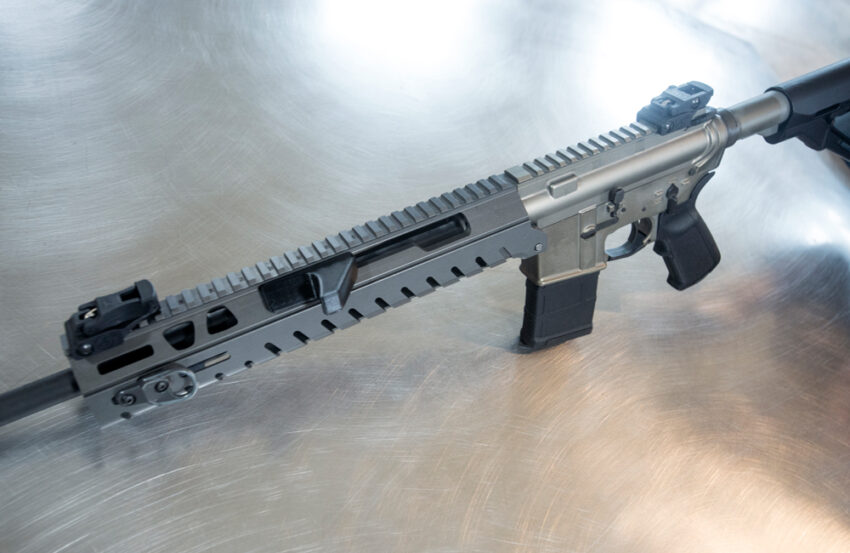
AR15 Side Charging Handle. If you’ve been shooting an AR15 for any length of time, you’ve probably felt the awkwardness of reaching over your optic to rack the standard charging handle. It’s not exactly the most ergonomic setup, especially when you’re trying to maintain your sight picture or work in tight spaces. That’s where an AR15 side charging handle comes into play, and trust me, once you try one, you’ll wonder why you didn’t make the switch sooner.
What Is an AR15 Side Charging Handle?
An AR15 side charging handle is an aftermarket upgrade that relocates the charging mechanism from the rear of the upper receiver to the side. Instead of pulling back a T-shaped handle at the rear of the rifle, you’ll operate a handle mounted on the left or right side of the upper receiver. This modification fundamentally changes how you manipulate your rifle, offering several practical advantages that traditional rear-charging systems simply can’t match.
The side charging system typically involves replacing your entire upper receiver or installing a specialized upper receiver designed specifically for side charging operations. Some manufacturers offer drop-in side charging handles that work with your existing upper, though these are less common. The mechanism usually features a reciprocating or non-reciprocating bolt carrier group, depending on the design you choose.
Why Shooters Are Switching to Side Charging Handles
The popularity of AR15 side charging handles has exploded in recent years, and there are solid reasons behind this trend. First and foremost, side charging systems allow you to charge your rifle without breaking your cheek weld or losing your sight picture. When you’re running a low-mounted optic or using night vision equipment, traditional rear charging handles force you into awkward positions that can cost precious seconds in competitive shooting or tactical situations.
Key benefits include:
- Improved ergonomics – Your support hand naturally reaches the side charging handle without contorting around your optic
- Better for suppressed shooting – Keeps gas blowback away from your face compared to rear charging systems
- Ambidextrous options – Many designs work equally well for left and right-handed shooters
- Faster manipulation – Side charging allows for quicker charging strokes with less wasted motion
- Enhanced tactical advantage – Easier to operate in vehicles, doorways, and confined spaces
According to shooting industry data, approximately 23% of AR15 owners have either upgraded to side charging systems or are considering the modification within the next year. That’s a significant chunk of the market recognizing the practical advantages these systems offer.
Types of AR15 Side Charging Handle Systems
Non-Reciprocating Side Charging Handles
Non-reciprocating side charging handles remain stationary during firing. After you charge the rifle, the handle stays in place while the bolt carrier group cycles independently. This design is preferred by many shooters because there’s no moving handle near your support hand while shooting, reducing the risk of interference with your grip or accessories mounted on the handguard.
The non-reciprocating design also prevents the handle from smacking your hand during rapid fire sequences. Brands like Gibbz Arms and JP Enterprises have perfected this design, creating reliable systems that maintain the AR15’s legendary reliability while adding side charging convenience. These systems typically cost between $200-$400 for complete upper receivers.
Reciprocating Side Charging Handles
Reciprocating designs move back and forth with each shot fired. The charging handle remains connected to the bolt carrier group throughout the firing cycle. While this adds a moving component near your support hand, some shooters prefer the positive feedback of seeing and feeling the action cycle. It’s also considered more mechanically simple by some manufacturers.
The reciprocating AR15 side charging handle design is often found on piston-driven systems and some direct impingement conversions. Companies like Devil Dog Arms and BCA offer reciprocating options that run reliably. Just be mindful of hand placement and accessory mounting when running reciprocating systems, as the moving handle can interfere with poorly positioned lights or grips.
Installation and Compatibility Considerations
Installing a side charging handle on your AR15 isn’t as simple as swapping out a standard part. Most quality side charging systems require a complete upper receiver replacement. Your existing lower receiver, trigger group, and other components typically remain compatible, but you’ll need to invest in a purpose-built side charging upper to make the switch properly.
Some manufacturers offer complete side charging upper receivers that are drop-in ready for your existing lower. These typically range from $300-$800 depending on the quality level and included components. You’ll want to verify that your bolt carrier group is compatible with the side charging system, as some designs require proprietary BCGs while others work with mil-spec parts.
Compatibility checklist:
- Verify your lower receiver is mil-spec
- Check if the side charging upper requires a proprietary BCG
- Confirm your handguard will clear the charging handle
- Ensure your optic mount won’t interfere with charging motion
- Verify magazine compatibility (most work with standard PMAGS and USGI mags)
Top Brands and Manufacturers
Gibbz Arms G4 Side Charging Upper
The Gibbz Arms G4 represents the gold standard in non-reciprocating side charging handle technology. Their patented design features a robust charging handle that locks solidly into the upper receiver when not in use. Shooters praise the G4 for its smooth operation and rock-solid reliability across thousands of rounds. The system works with standard AR15 bolt carrier groups, making it versatile for various builds.
Price point sits around $380 for the stripped upper receiver, which positions it as a premium option. However, the machining quality and reliability justify the cost for serious shooters who demand the best. The G4 features M4 feed ramps and is available in both left and right-hand configurations, accommodating shooters of all preferences.
JP Enterprises Side Charging Upper
JP Enterprises brings their competition shooting expertise to the AR15 side charging handle market with their SCR-11 upper receiver. This billet aluminum design features a non-reciprocating side charging system that integrates seamlessly with JP’s low-mass bolt carrier groups. The result is a lightning-fast system that excels in 3-gun and precision rifle competitions.
The JP system costs approximately $575 for the complete upper assembly, making it one of the pricier options available. That price includes their match-grade barrel and ultra-reliable charging system. Professional shooters consistently choose JP components for their builds, and their side charging upper maintains that reputation for excellence.
Bear Creek Arsenal (BCA) Side Charging Upper
For budget-conscious builders, Bear Creek Arsenal offers side charging handles that won’t break the bank. Their reciprocating design typically sells for $150-$250, making it accessible for shooters who want to try side charging without major investment. While BCA doesn’t offer the same refinement as premium brands, many users report satisfactory performance for recreational shooting.
The BCA side charging upper uses a reciprocating design with their proprietary bolt carrier group. Quality control can be inconsistent compared to higher-priced options, but many shooters find these uppers reliable after a proper break-in period. It’s an excellent entry point for experiencing side charging benefits without premium pricing.
Performance Comparison: Side Charging vs Traditional
Let’s talk real-world performance differences between side charging handles and traditional rear charging systems. In timed charging drills, experienced shooters typically complete charging manipulations 0.3-0.5 seconds faster with side charging systems. That might not sound significant, but in competition or defensive scenarios, half a second can make the difference between winning and losing.
| Feature | Side Charging | Traditional Rear |
|---|---|---|
| Charging Speed | 1.2-1.5 seconds | 1.7-2.0 seconds |
| Optic Interference | Minimal | Significant |
| Ambidextrous Use | Excellent | Poor |
| Gas Blowback | Reduced | Direct to face |
| Initial Cost | $200-$800 | $20-$50 |
| Maintenance | Moderate | Simple |
Reliability testing from independent sources shows quality AR15 side charging handles maintaining 99%+ function rates across 10,000+ round torture tests. That matches or exceeds traditional charging handle reliability when properly maintained. The key factor is choosing reputable manufacturers who use quality materials and proven designs.
Suppressor Use and Gas Management
Running a suppressed AR15 with a traditional charging handle means eating a face full of gas with every shot. The side charging handle design significantly reduces this problem because the charging handle port is located on the side rather than directly beneath your face. Shooters who run suppressors full-time report substantially better shooting experiences with side charging systems.
The gas issue isn’t just about comfort—excessive gas blowback can fog optics, irritate eyes, and create breathing difficulties during extended shooting sessions. Side charging systems redirect much of this gas away from the shooter’s face. Combined with an adjustable gas block, a side charging AR15 becomes one of the most pleasant suppressed shooting experiences available.
Some manufacturers specifically design their side charging systems with suppressor use in mind. Features like enhanced gas seals and modified ejection port covers further minimize blowback. If you’re serious about suppressed shooting, the combination of a quality side charging handle and proper gas system tuning is worth every penny.
Building Your Side Charging AR15
Constructing an AR15 with a side charging handle requires careful planning and component selection. Start by choosing your side charging upper receiver from a reputable manufacturer. This forms the foundation of your build and determines compatibility with other components. Most builders recommend investing in quality here rather than cutting corners on the upper receiver.
Your bolt carrier group must be compatible with your chosen side charging system. Some manufacturers require proprietary BCGs while others work with mil-spec carriers. Research this carefully before purchasing. A mismatched BCG can cause reliability issues or even damage your expensive side charging upper receiver.
Essential build components:
- Side charging upper receiver (left or right-handed based on preference)
- Compatible bolt carrier group and bolt
- Barrel with appropriate gas system length
- Handguard that clears the charging handle
- Standard lower receiver and parts kit
- Optic mount that doesn’t interfere with charging motion
Budget for approximately $800-$1,200 for a complete side charging upper assembly with quality components. This includes the upper receiver, BCG, barrel, and handguard. Your existing lower receiver and trigger components typically transfer over without issues, saving money on the conversion.
Maintenance and Long-Term Reliability
Maintaining a side charging handle system requires slightly more attention than traditional charging handles. The side charging mechanism introduces additional moving parts and seals that need periodic cleaning and lubrication. Plan on field stripping and cleaning your side charging system every 500-1,000 rounds depending on ammunition quality and environmental conditions.
The charging handle port represents a potential entry point for debris and moisture. Quality manufacturers design their systems with robust seals and covers to minimize this concern. During cleaning, pay special attention to the charging handle track and locking mechanism. Remove carbon buildup and apply appropriate lubricant to ensure smooth operation.
Long-term reliability data from users running AR15 side charging handles shows these systems matching traditional charging handle longevity when properly maintained. Springs and detents may require replacement every 5,000-10,000 rounds, similar to other AR15 components. Keep spare parts on hand for quick field repairs if needed.
Legal and Compliance Considerations
The AR15 side charging handle itself doesn’t create any legal complications in most jurisdictions. It’s considered a standard firearm component modification similar to changing stocks or grips. However, always verify local laws before modifying your rifle, as some states have specific regulations about AR15 configurations and modifications.
When purchasing a complete side charging upper receiver, ensure the seller ships to your state legally. Most reputable dealers handle compliance automatically, but it’s your responsibility to know local laws. The side charging mechanism doesn’t affect overall rifle length, barrel length, or other ATF-regulated specifications when installed on a standard lower receiver.
If you’re building a pistol or SBR (Short Barreled Rifle), the same NFA regulations apply regardless of charging handle type. The side charging handle modification doesn’t circumvent or complicate existing firearm regulations. It’s simply an ergonomic enhancement that works within standard AR15 platform parameters.
Cost Analysis: Is It Worth the Investment?
Let’s break down the real costs of switching to a side charging handle system. A quality side charging upper receiver costs $300-$800. Add a compatible BCG for $150-$250, and you’re looking at $450-$1,050 just for the core components. Compare this to a standard upper receiver assembly at $150-$400, and the premium is significant.
However, consider the long-term value proposition. Competitive shooters report improved stage times that justify the investment through better match performance. Tactical shooters appreciate the enhanced manipulation speed and reduced gas blowback. Recreational shooters enjoy the improved ergonomics and unique shooting experience. The question becomes: what’s your shooting experience worth?
Cost breakdown for typical build:
- Side charging upper receiver: $350-$600
- Compatible BCG: $150-$250
- Installation and setup: $0-$100 (DIY vs gunsmith)
- Additional accessories: $50-$150
- Total investment: $550-$1,100
For many shooters, the AR15 side charging handle upgrade ranks among their favorite modifications. The daily usability improvements justify the upfront cost. If you shoot regularly and value ergonomics and performance, the investment makes sense. Casual shooters who only hit the range occasionally might find traditional charging handles adequate for their needs.
Competitive Shooting Applications
Competitive shooters have embraced side charging handles enthusiastically, particularly in 3-gun and precision rifle competitions. The ability to charge the rifle without losing your sight picture or breaking position shaves valuable seconds from stage times. Professional competitors report stage time improvements of 2-5 seconds on courses requiring multiple charging manipulations.
The side charging AR15 excels in barricade shooting stages where traditional charging handles prove awkward. When shooting from behind cover or through ports, the side charging handle allows manipulation without exposing yourself unnecessarily. This tactical advantage translates directly to better stage performance and higher scores.
USPSA and 3-Gun Nation rules allow side charging handles without restriction in most divisions. Always verify specific match rules before competing, but generally these modifications fall under acceptable equipment modifications. Top competitors increasingly choose side charging systems for their builds, setting trends that trickle down to recreational shooters.
Tactical and Home Defense Considerations
For home defense applications, the AR15 side charging handle offers distinct advantages in close quarters. The ability to charge your rifle single-handed while maintaining weapon control with your primary hand proves valuable in confined spaces. Traditional charging handles require both hands or awkward manipulations that compromise weapon retention.
The reduced gas blowback from suppressed fire matters significantly in indoor defensive scenarios. Shooting a suppressed AR15 indoors creates substantial gas accumulation. The side charging handle directs this gas away from your face, maintaining better visibility and breathing capacity during high-stress defensive encounters.
Law enforcement agencies testing side charging AR15 platforms report favorable impressions for vehicle operations and building clearing. The ergonomic advantages prove particularly valuable when operating in vehicles where space constraints make traditional charging handles cumbersome. Several agencies have adopted side charging systems for specialized units.
Common Problems and Troubleshooting
Even quality side charging handles occasionally experience issues that require troubleshooting. The most common problem involves the charging handle not fully seating or locking into battery. This usually indicates debris in the charging track or insufficient lubrication. Thorough cleaning and proper lube typically resolve this issue quickly.
Some shooters report their AR15 side charging handle becoming stiff or difficult to operate after extended firing sessions. Carbon buildup in the charging mechanism causes this problem. Regular cleaning prevents this issue, but if it occurs, complete disassembly and cleaning of the charging system usually restores smooth operation.
Troubleshooting checklist:
- Clean charging handle track thoroughly
- Inspect charging handle for wear or damage
- Verify proper BCG compatibility and installation
- Check for handguard interference with charging handle travel
- Ensure charging handle spring and detent are properly installed
- Lubricate all moving parts appropriately
If problems persist after thorough cleaning and inspection, contact the manufacturer. Quality companies stand behind their products and typically offer excellent customer support. Many issues stem from installation errors or incompatible components rather than manufacturing defects.
Customization and Aftermarket Options
The side charging handle market includes numerous customization options beyond basic function. Extended charging handles provide additional leverage for easier manipulation while wearing gloves. Lightweight aluminum handles reduce reciprocating mass on reciprocating systems. Some manufacturers offer different handle shapes optimized for specific grip styles.
Charging handle finishes range from basic black anodizing to premium Cerakote colors and patterns. Match your AR15 side charging handle to your rifle’s overall aesthetic with coordinated colors. Some builders create striking two-tone effects by contrasting the side charging handle finish with the upper receiver color.
Performance upgrades include titanium charging handles for weight savings and enhanced corrosion resistance. Competition-focused handles feature aggressive serrations for positive grip even with wet or gloved hands. Tactical handles incorporate reduced profiles to minimize snag points on gear and equipment.
For those interested in broader charging solutions beyond firearms, exploring options like berliner stadtwerke charging station demonstrates how charging technology applies across different industries and applications.
Real User Experiences and Case Studies
Case Study 1: Competition Shooter Upgrade
Mark, a 3-gun competitor from Texas, switched to a Gibbz Arms side charging handle system after struggling with his rear charging handle during barricade stages. His average stage times decreased by 3.2 seconds across a full season after making the switch. The investment paid for itself through improved match placements and prize money.
“The difference is night and day,” Mark reports. “I can charge my rifle without thinking about it now. My transitions are faster, and I never lose my sight picture. It’s one of the best upgrades I’ve made to my competition gun.”
Case Study 2: Suppressed Shooting Conversion
Sarah, a recreational shooter and suppressor enthusiast, installed a JP Enterprises AR15 side charging handle specifically for suppressed shooting. She previously struggled with gas blowback making her eyes water during range sessions. The side charging system combined with an adjustable gas block eliminated her discomfort.
“I can finally enjoy shooting my suppressed AR15 without getting smoked out,” Sarah explains. “The side charging handle made a bigger difference than I expected. I actually shoot better now because I’m not flinching from gas in my face.”
Case Study 3: Left-Handed Shooter Solution
David, a left-handed shooter, fought with traditional charging handles his entire shooting career. Switching to a left-side charging handle transformed his shooting experience. “Everything just works naturally now,” he says. “I spent years developing workarounds for right-handed charging handles. With my side charging upper, I can manipulate my rifle as smoothly as right-handed shooters do with standard setups.”
Frequently Asked Questions
What is an AR15 side charging handle?
An AR15 side charging handle is an aftermarket upper receiver modification that relocates the charging mechanism from the rear of the rifle to the left or right side of the upper receiver. This allows shooters to charge their rifle without reaching over their optic or breaking their cheek weld, providing improved ergonomics and faster manipulation compared to traditional rear-charging systems.
Are side charging handles reliable?
Quality side charging handles from reputable manufacturers demonstrate reliability equal to or exceeding traditional charging systems. Independent testing shows properly maintained side charging uppers achieving 99%+ function rates across 10,000+ round tests. Key factors include choosing proven manufacturers, using compatible components, and following proper maintenance procedures.
Can I install a side charging handle on my existing AR15?
Most AR15 side charging handle systems require replacing your entire upper receiver rather than modifying your existing one. Your current lower receiver, trigger group, and most other components remain compatible. Some manufacturers offer drop-in solutions, but complete upper receiver replacements provide the most reliable performance and are the industry standard approach.
Do side charging handles work with suppressors?
Side charging handles work excellently with suppressors and actually provide significant advantages for suppressed shooting. The side-mounted charging mechanism directs gas blowback away from the shooter’s face, reducing the discomfort and visibility issues common with traditionally charged suppressed AR15s. Many shooters specifically choose side charging systems for their suppressed rifles.
What’s the difference between reciprocating and non-reciprocating side charging handles?
Non-reciprocating side charging handles remain stationary during firing after charging the rifle, while reciprocating designs move back and forth with each shot. Non-reciprocating systems prevent the handle from interfering with your support hand grip during shooting but typically cost more. Reciprocating systems are mechanically simpler and often less expensive but require careful hand placement during firing.
How much does a side charging upper cost?
Quality AR15 side charging handle upper receivers typically cost between $300-$800 depending on the manufacturer and included features. Budget options start around $150-$250 but may sacrifice refinement and reliability. Premium options from companies like Gibbz Arms and JP Enterprises range from $380-$575. Factor in additional costs for compatible bolt carrier groups and installation.
Are side charging handles legal?
Side charging handles are legal in most jurisdictions as they’re considered standard firearm component modifications similar to changing stocks or triggers. They don’t affect overall rifle length, barrel length, or other federally regulated specifications. Always verify local and state laws before modifying your rifle, as some jurisdictions have specific regulations about AR15 modifications and configurations.
Which side should I choose for my charging handle?
Most right-handed shooters prefer left-side charging handles as this allows manipulation with the support hand while maintaining firing grip. Left-handed shooters typically choose right-side charging handles for the same reason. Some manufacturers offer ambidextrous options or allow the charging handle to be installed on either side, providing flexibility for different shooting preferences and situations.
Ready to upgrade your AR15? Explore quality AR15 side charging handle options from trusted manufacturers and experience the ergonomic advantages for yourself. Your shooting performance deserves the best components available.
Sources and Citations:
- AR15 Parts and Accessories Data – Brownells Industry Research 2024
- Gibbz Arms Technical Specifications – Manufacturer Documentation
- JP Enterprises Product Testing – Independent Firearm Review 2024
- Competition Shooting Performance Metrics – USPSA Statistical Analysis