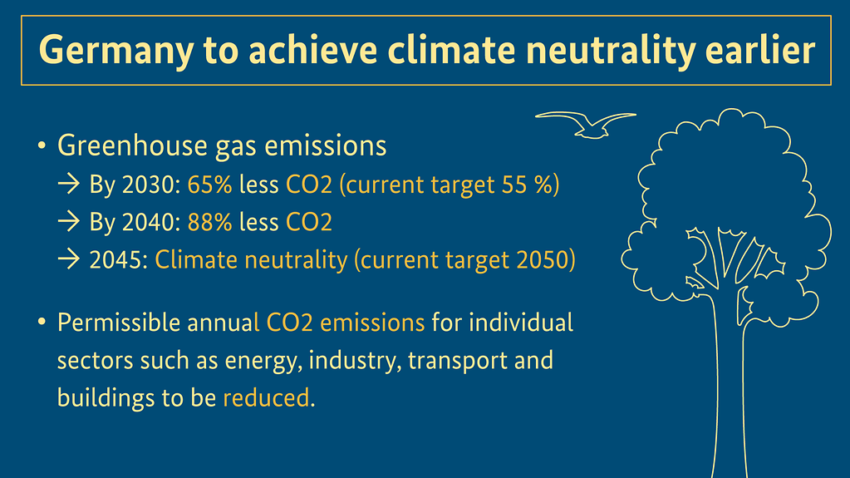
Germany has set one of the world’s most ambitious climate targets, committing to achieve climate neutrality by 2045. This bold objective positions the country as a global leader in climate action, aiming to reach net-zero greenhouse gas emissions five years ahead of the European Union’s 2050 target. Understanding this transformative journey is essential for businesses, policymakers, and individuals preparing for a sustainable future.
The path to climate neutrality by 2045 represents more than an environmental goal. It signifies a fundamental restructuring of Germany’s economy, energy systems, transportation networks, and industrial processes. With intermediate targets demanding a 65% emissions reduction by 2030 and 88% by 2040 compared to 1990 levels, the timeline requires immediate and sustained action across all sectors.
What Does Climate Neutrality by 2045 Mean?
Climate neutrality by 2045 refers to achieving a balance between greenhouse gas emissions released into the atmosphere and those removed from it. Unlike carbon neutrality, which focuses solely on CO₂, climate neutrality encompasses all greenhouse gases including methane, nitrous oxide, and fluorinated gases.
Germany’s Federal Climate Change Act legally enshrines this target, creating binding obligations for emission reductions. The legislation sets annual emission budgets for six key sectors including energy, industry, buildings, transport, agriculture, and waste. Each sector must meet specific reduction targets, with oversight from the Council of Experts for Climate Matters.
By 2045, Germany aims to achieve net-zero emissions through a combination of drastic emission reductions and carbon removal technologies. Post-2050, the country targets negative emissions, meaning it will remove more greenhouse gases than it releases. This ambitious trajectory requires technological innovation, massive infrastructure investments, and societal transformation.
The Legal Framework Behind Climate Neutrality by 2045
The journey toward climate neutrality by 2045 gained legal force following a landmark German Constitutional Court ruling in April 2021. The court determined that previous climate protection measures were insufficient because they failed to specify emission reduction requirements beyond 2030, thereby unfairly burdening future generations.
In response, the German Federal Government amended the Climate Change Act in August 2021, advancing the climate neutrality deadline from 2050 to 2045. This amendment established legally binding intermediate targets designed to ensure steady progress toward the ultimate goal.
Key Legal Milestones:
- 2030 Target: 65% emissions reduction compared to 1990 levels
- 2040 Target: 88% emissions reduction compared to 1990 levels
- 2045 Target: Complete greenhouse gas neutrality
- Post-2050: Negative emissions balance through enhanced carbon sinks
The revised legislation also strengthened monitoring mechanisms, requiring the Federal Environment Agency to publish annual emissions assessments each March. When sectors miss their targets, responsible ministries must develop immediate action programs within three months to realign with climate objectives.
Financial Investment Required for Climate Neutrality by 2045
Achieving climate neutrality by 2045 demands unprecedented financial commitment. Research estimates indicate Germany requires approximately €5 trillion in total investments, including €500 billion in public funding, to meet its climate targets successfully.
The German government established the Climate and Transformation Fund to channel public resources toward critical decarbonization initiatives. This fund supports energy-efficient building renovations, industrial decarbonization projects, and electromobility infrastructure expansion.
KfW Research, the research division of Germany’s government-owned banking institution, calculated that an additional €1.9 trillion in public and private investments is necessary beyond current spending levels. These investments must accelerate dramatically in the coming years to avoid falling behind the established timeline.
Investment Distribution by Sector:
| Sector | Investment Focus | Priority Technologies |
|---|---|---|
| Energy | Renewable expansion, grid infrastructure | Wind power, solar PV, hydrogen production |
| Buildings | Thermal retrofitting, heating systems | Heat pumps, insulation, district heating |
| Transport | E-mobility, charging infrastructure | Electric vehicles, rail networks, e-roads |
| Industry | Process transformation, carbon capture | Green hydrogen, electrification, CCS |
The scale of required investment presents both challenges and opportunities. While the financial burden appears substantial, these investments generate economic returns through job creation, technological innovation, and reduced fossil fuel dependency.
The Energy Sector Transformation for Climate Neutrality by 2045
Energy sector transformation represents the cornerstone of Germany’s climate neutrality by 2045 strategy. The country must fundamentally redesign its electricity generation, distribution, and consumption patterns to eliminate fossil fuel dependence.
Renewable energy capacity must double by 2030 to meet intermediate climate targets. In 2023, renewable sources exceeded 50% of Germany’s gross electricity consumption for the first time, demonstrating significant progress. By the first half of 2024, this share reached 58%, setting new records for clean energy generation.
Wind power and solar photovoltaics form the foundation of renewable expansion plans. Germany requires massive increases in both technologies, with wind capacity expanding from approximately 6 GW in 2020 to at least 11 GW by 2030 and 19 GW by 2045. Solar PV must similarly scale from 1 GW to 5 GW in 2030 and 10 GW by 2045.
Coal power faces rapid phase-out under the climate neutrality framework. While originally scheduled to end by 2038, market forces and climate pressure now push for complete coal exit by 2030. In 2023, renewable energy growth already began displacing coal generation, with lignite and hard coal plants operating at significantly reduced capacity.
Grid infrastructure requires extensive modernization to accommodate increased renewable generation and changing consumption patterns. The government plans approximately 4,400 kilometers of new high-voltage lines by 2025, essential for integrating renewable sources and ensuring supply security across regions.
Hydrogen Economy: Critical Component for Climate Neutrality by 2045
Green hydrogen emerges as a game-changing technology for achieving climate neutrality by 2045. This versatile energy carrier addresses decarbonization challenges in sectors where direct electrification proves difficult or impossible, particularly heavy industry and long-distance transport.
Germany’s National Hydrogen Strategy envisions domestic production of 30-56 TWh by 2030, focusing exclusively on green hydrogen produced through electrolysis powered by renewable energy. By 2045, total hydrogen demand could reach 300-600 TWh annually, with substantial imports supplementing domestic production.
Hydrogen infrastructure development accelerates rapidly across Germany. The country plans 1,200 MW of electrolysis capacity by 2030, expanding to 4,800 MW by 2045. These large-scale facilities will convert renewable electricity into hydrogen for industrial processes, energy storage, and transportation applications.
Hydrogen Applications by Sector:
Major industrial sectors depend heavily on hydrogen for decarbonization. Steel production requires hydrogen to replace coal in blast furnaces, eliminating millions of tonnes of CO₂ emissions annually. Chemical industries utilize hydrogen for ammonia synthesis and other processes traditionally relying on fossil fuels.
The transportation sector employs hydrogen for applications where battery electric vehicles prove less practical. Heavy trucks, buses, trains on non-electrified routes, and maritime vessels benefit from hydrogen fuel cells offering extended range without emissions.
Building heating represents another hydrogen application area. While heat pumps dominate residential heating transitions, hydrogen provides solutions for existing buildings where complete system replacement proves economically prohibitive. Blending hydrogen into existing gas networks offers a transitional pathway toward full decarbonization.
Transport Sector Decarbonization Strategy
Transportation constitutes one of the most challenging sectors for climate neutrality by 2045. Germany’s transport emissions have proven particularly stubborn, with the sector consistently missing annual reduction targets under previous climate legislation.
Electric mobility dominates passenger vehicle decarbonization strategies. Germany requires more than 9 million purely electric cars by 2030, rising to 14 million when including plug-in hybrids. By 2045, virtually all new passenger vehicle sales must be zero-emission models.
Charging infrastructure expansion supports this electric vehicle transition. The government’s Charging Infrastructure Master Plan coordinates nationwide deployment of charging stations, ensuring adequate coverage in urban, suburban, and rural areas. Public funding accelerates installation at strategic locations including highways, shopping centers, and residential neighborhoods.
Public transportation electrification proceeds simultaneously with private vehicle transitions. Electric buses increasingly replace diesel models in urban transit systems. Rail network electrification continues expanding, with remaining diesel routes targeted for conversion to electric or hydrogen-powered trains.
Freight transport presents unique decarbonization challenges requiring multiple technology solutions. Light commercial vehicles readily convert to battery-electric powertrains. Heavy trucks employ combinations of battery-electric systems for shorter routes, hydrogen fuel cells for long-haul applications, and electrified highway systems (e-roads) providing dynamic charging capabilities.
Aviation and maritime transport rely heavily on synthetic fuels produced using green hydrogen and captured CO₂. These Power-to-Liquid (PtL) fuels enable emission reductions in sectors where direct electrification remains technologically unfeasible with current technology.
Building Sector: Achieving Climate Neutrality by 2045
Germany’s building sector faces enormous transformation challenges to achieve climate neutrality by 2045. Existing buildings, many constructed decades ago with minimal energy efficiency considerations, require comprehensive retrofitting to meet climate targets.
Energy renovation rates must double to 1.9% annually, addressing insulation, windows, roofing, and building envelope improvements. Current renovation rates fall significantly below required levels, creating an urgent need for accelerated action and increased financial incentives.
Heating system transitions dominate building sector decarbonization efforts. Fossil fuel boilers burning oil and natural gas must be replaced with climate-friendly alternatives. Heat pumps emerge as the primary technology solution, with projections indicating 4.1 million installations in residential buildings by 2030, expanding to 9 million by 2045.
District heating networks undergo simultaneous transformation toward renewable energy sources. Geothermal energy, large-scale heat pumps, solar thermal systems, and waste heat from industrial processes replace fossil fuel-based heat generation. District heating must expand to supply 63% of heating needs, primarily in areas currently served by natural gas infrastructure.
The Buildings Energy Act establishes progressively stricter standards for new construction and renovations. From 2024, new heating systems must derive 65% of energy from renewable sources. Building codes continue tightening through 2045, ensuring new constructions achieve near-zero energy consumption.
Federal funding programs provide financial support for energy-efficient renovations and heating system replacements. These programs balance climate objectives with affordability concerns, particularly for lower-income households facing higher upfront investment costs for efficient technologies.
Industrial Transformation Toward Climate Neutrality by 2045
German industry must undergo radical transformation to align with climate neutrality by 2045 objectives. As Europe’s largest industrial economy, Germany faces the dual challenge of eliminating emissions while maintaining international competitiveness.
Industrial emissions require reductions averaging 8 million tonnes of CO₂ annually throughout this decade. The most significant transformations occur in steel and chemical industries, historically among the largest industrial emission sources.
Steel production transitions from traditional blast furnaces using coal to direct reduction processes utilizing green hydrogen. This technological shift eliminates over 30% of Germany’s industrial CO₂ emissions. Several pilot projects demonstrate technical feasibility, with commercial-scale deployment accelerating toward 2030.
Chemical industry decarbonization employs multiple strategies including electrification of production processes, substitution of fossil feedstocks with renewable alternatives, and implementation of carbon capture technologies for unavoidable emissions. Circular economy principles minimize raw material consumption while reducing waste generation.
Cement production faces particular challenges due to process emissions inherent in calcium carbonate decomposition. Carbon capture and storage (CCS) technologies become essential for cement plants, capturing CO₂ at the source for permanent geological storage or utilization in synthetic fuel production.
Energy-intensive industries benefit from carbon contracts for difference (CCfDs), innovative funding mechanisms bridging cost gaps between conventional and climate-friendly production methods. These contracts provide investment security for capital-intensive industrial transformation projects.
Industrial electrification drives dramatic increases in electricity consumption across manufacturing sectors. Production processes historically powered by fossil fuels convert to electric alternatives wherever technically feasible, contributing to projected electricity demand increases of 30-40% by 2045.
Agriculture and Land Use for Climate Neutrality by 2045
Agricultural transformation contributes significantly to Germany’s climate neutrality by 2045 vision. While agriculture emissions decline more gradually than other sectors, targeted interventions address methane from livestock, nitrous oxide from fertilizers, and land use practices.
Sustainable farming practices reduce emissions while maintaining food security. Precision agriculture technologies optimize fertilizer application, minimizing nitrous oxide releases. Improved animal feed formulations decrease methane emissions from ruminant livestock, particularly cattle.
Dietary shifts toward plant-based proteins complement agricultural emission reductions. While not mandated by climate legislation, evolving consumer preferences and public awareness campaigns encourage reduced meat consumption, indirectly decreasing demand for emission-intensive livestock farming.
Natural carbon sinks play crucial roles in achieving net-zero emissions. Forests, peatlands, and other ecosystems remove CO₂ from the atmosphere through photosynthesis and soil carbon sequestration. The Climate Change Act establishes specific targets for enhancing these natural sinks.
Forest management strategies maximize carbon storage while maintaining ecosystem health and biodiversity. By 2030, the land use sector must deliver net carbon removal of at least 25 million tonnes CO₂ annually, expanding to 35 million tonnes by 2040 and 40 million tonnes by 2045.
Peatland restoration represents a critical intervention for carbon sink enhancement. Drained peatlands currently emit significant quantities of CO₂; rewetting these areas transforms them from emission sources into carbon sinks. Restoration programs target thousands of hectares of degraded peatlands across Germany.
Carbon Capture and Storage Technologies
Carbon capture, utilization, and storage (CCUS) technologies address unavoidable emissions in the pathway toward climate neutrality by 2045. Certain industrial processes and economic activities generate CO₂ emissions that cannot be eliminated through fuel switching or electrification alone.
Direct air capture (DAC) technologies remove CO₂ directly from the atmosphere, contributing to negative emissions objectives post-2050. While currently expensive and energy-intensive, ongoing technological development aims to reduce costs and improve efficiency for large-scale deployment.
Point-source carbon capture targets high-concentration CO₂ streams from industrial facilities including cement plants, waste incinerators, and chemical production sites. Captured CO₂ faces two primary pathways: permanent geological storage or utilization in synthetic fuel production.
Carbon capture for utilization (CCU) converts captured CO₂ into valuable products including synthetic aviation fuels, chemical feedstocks, and building materials. This circular approach reduces both emissions and fossil resource consumption simultaneously.
Geological storage involves injecting captured CO₂ into deep underground rock formations for permanent sequestration. Germany explores suitable storage sites in depleted gas fields and saline aquifers, ensuring long-term containment security through rigorous monitoring protocols.
Public acceptance challenges surround carbon capture technologies, particularly regarding storage safety and energy requirements. Transparent communication about technology safety, environmental impacts, and necessity for achieving climate targets helps build social acceptance for CCUS deployment.
Economic Opportunities in Climate Neutrality by 2045
Germany’s transition toward climate neutrality by 2045 creates substantial economic opportunities alongside decarbonization requirements. Strategic positioning as a lead market for climate technologies generates competitive advantages in emerging global green technology markets.
Export potential for climate-friendly technologies positions German companies favorably in international markets. As countries worldwide pursue their own climate targets, demand for renewable energy systems, hydrogen technologies, energy storage solutions, and industrial decarbonization equipment expands dramatically.
Job creation accompanies energy transition investments across multiple sectors. Renewable energy installations, building retrofitting programs, electric vehicle manufacturing, and hydrogen infrastructure development generate employment opportunities for skilled workers, engineers, technicians, and researchers.
Green technology innovation strengthens Germany’s industrial competitiveness in future-oriented sectors. Companies developing cutting-edge solutions for climate challenges establish market leadership positions, securing long-term economic advantages as global climate action intensifies.
Energy security improves through reduced fossil fuel imports. Germany’s historical dependence on imported oil, gas, and coal creates economic vulnerabilities and geopolitical dependencies. Domestic renewable energy production enhances sovereignty while keeping energy expenditures within the national economy.
Cost reductions in clean technologies accelerate adoption timelines. Solar PV and wind power already achieve cost parity or advantages compared to fossil alternatives in many applications. Continued learning curve effects and scale economies drive further price decreases, making climate action increasingly economically attractive.
Social Equity and Just Transition
Achieving climate neutrality by 2045 requires attention to social equity considerations ensuring no communities or demographic groups bear disproportionate transition burdens. Just transition principles guide policy development, balancing climate ambitions with fairness and inclusion.
Coal mining regions face particular transition challenges as the coal phase-out eliminates traditional employment sources. Structural change programs provide financial support for economic diversification, retraining initiatives, and infrastructure investments creating alternative employment opportunities in affected areas.
Energy affordability concerns influence policy design for building retrofitting and heating system transitions. Low-income households face difficulties financing upfront investments in energy efficiency improvements despite long-term savings potential. Targeted subsidies and financing mechanisms address these affordability barriers.
Worker retraining programs prepare employees in declining industries for opportunities in emerging clean technology sectors. Comprehensive programs combine technical skill development with placement assistance, facilitating successful career transitions for affected workers.
Regional disparities in transition impacts require customized support approaches. Rural areas face different challenges than urban centers regarding public transportation access, charging infrastructure availability, and district heating network expansion feasibility.
Democratic participation in transition planning ensures diverse voices influence policy decisions. Stakeholder consultations, citizen assemblies, and public comment periods incorporate community perspectives into climate action frameworks, building broad-based support for transformation initiatives.
International Cooperation for Climate Neutrality by 2045
Germany’s climate neutrality by 2045 trajectory integrates with broader European and international climate frameworks. No country achieves climate neutrality in isolation; international cooperation multiplies effectiveness while addressing global challenges requiring coordinated responses.
European Union climate policy establishes overarching frameworks within which German targets operate. The European Green Deal commits the EU to climate neutrality by 2050, with Germany’s 2045 target exceeding this baseline ambition. EU emissions trading systems, renewable energy directives, and regulatory standards create consistent policy environments across member states.
Cross-border energy infrastructure enables renewable energy sharing and grid stability. Interconnected electricity networks allow countries to balance variable renewable generation, exporting surplus power during high production periods while importing when local generation proves insufficient.
Hydrogen import strategies recognize Germany’s domestic production limitations. International partnerships with countries possessing abundant renewable resources facilitate large-scale green hydrogen imports via pipelines and shipping. North Africa, Eastern Europe, and the Middle East emerge as potential major hydrogen suppliers.
Technology transfer and development assistance support climate action in developing countries. Germany provides climate finance for adaptation and mitigation projects, recognizing historical emission responsibilities while fostering global transition toward sustainable development pathways.
International climate negotiations position Germany as an advocate for ambitious emission reduction commitments. The country’s domestic climate leadership strengthens its credibility in advocating for stronger global action through United Nations climate conferences and bilateral diplomatic engagement.
Challenges and Risks on the Path to Climate Neutrality by 2045
Despite comprehensive planning and legal frameworks, Germany faces significant challenges potentially impeding progress toward climate neutrality by 2045. Identifying these obstacles enables proactive mitigation strategies ensuring the country remains on track for its climate objectives.
Implementation gaps between legislative targets and on-the-ground action create concerning delays. Renewable energy expansion repeatedly falls short of required deployment rates due to permitting bottlenecks, grid connection delays, and local opposition to infrastructure projects.
Workforce shortages in critical sectors constrain transition speed. Installation technicians for heat pumps and solar panels, electricians for grid upgrades, and engineers for hydrogen facilities represent pressing labor market needs requiring expanded training programs and immigration policy adjustments.
Supply chain dependencies create vulnerabilities for clean technology deployment. Germany relies heavily on imports for solar panels, battery components, and rare earth materials essential for electric motors and wind turbines. Diversifying supply sources and developing domestic production capacities mitigate these risks.
Public acceptance challenges emerge regarding infrastructure projects and lifestyle changes. Wind turbine installations face local opposition over visual impacts and noise concerns. Heating system transition mandates generate political controversy over costs and implementation timelines.
Technology uncertainties surround some critical decarbonization pathways. Large-scale hydrogen production, transport, and utilization remain relatively unproven at commercial scales. Carbon capture technologies face questions about long-term storage security and overall climate benefits.
Financial constraints limit public funding availability for all transition programs simultaneously. Competing budget priorities and fiscal discipline requirements force difficult allocation decisions among climate investments, social spending, defense, and infrastructure needs.
Monitoring Progress Toward Climate Neutrality by 2045
Robust monitoring systems track Germany’s advancement toward climate neutrality by 2045, ensuring transparency and accountability in meeting established climate targets. Multiple institutions participate in oversight, creating checks and balances preventing complacency or backsliding.
The Federal Environment Agency publishes annual emission estimates every March 15th, providing comprehensive assessments of greenhouse gas releases by sector. These reports enable rapid identification of target deviations, triggering immediate response mechanisms when sectors fall short of annual emission budgets.
The Council of Experts for Climate Matters, an independent advisory body, prepares biennial reports evaluating achieved goals, effectiveness of implemented measures, and emission trends. This expert assessment provides scientific credibility to progress evaluations while identifying necessary policy adjustments.
Sector-specific monitoring assigns clear responsibility to relevant federal ministries. When energy, transport, building, industrial, agricultural, or waste sectors miss their annual targets, corresponding ministers must develop immediate action programs within three months proposing corrective measures.
Public data accessibility ensures civil society organizations, media, and citizens can independently verify climate progress claims. Open data policies provide detailed emission statistics, renewable energy deployment figures, and technology adoption rates supporting informed public discourse.
International reporting obligations through United Nations Framework Convention on Climate Change (UNFCCC) and European Union mechanisms create additional accountability layers. Regular reviews by international bodies assess Germany’s climate performance against commitments and peer comparisons with other countries.
The Role of Innovation and Technology Development
Technological innovation accelerates progress toward climate neutrality by 2045 by reducing costs, improving performance, and creating new solutions for previously intractable challenges. Germany’s research and development investments target breakthrough technologies enabling more rapid and cost-effective transitions.
Next-generation solar cells promise higher conversion efficiencies and lower production costs than current technologies. Perovskite solar cells, tandem architectures, and organic photovoltaics represent promising research directions potentially revolutionizing solar energy economics.
Advanced battery technologies improve electric vehicle performance while reducing costs and environmental impacts. Solid-state batteries offer higher energy densities, faster charging, and improved safety compared to current lithium-ion technologies. Alternative battery chemistries reduce dependence on scarce materials.
Green steel production methods eliminate coal from steelmaking through hydrogen-based direct reduction processes. Pilot facilities demonstrate technical feasibility while commercial-scale plants prepare for operation, potentially transforming one of industry’s most emission-intensive sectors.
Synthetic fuel production efficiency improvements reduce energy requirements and costs for Power-to-Liquid technologies. Advanced catalysts, optimized reaction conditions, and integrated production systems enhance conversion efficiencies making synthetic aviation and maritime fuels increasingly competitive.
Artificial intelligence and machine learning optimize energy systems, predict maintenance needs, and improve grid management. AI algorithms forecast renewable generation, balance supply and demand, and identify efficiency improvements throughout energy value chains.
Climate Neutrality by 2045: A Model for Other Nations
Germany’s commitment to climate neutrality by 2045 positions the country as a potential model for other industrialized nations pursuing ambitious climate targets. Success in meeting these objectives demonstrates feasibility while providing valuable lessons for countries beginning their own transition journeys.
Early mover advantages in clean technology development create economic opportunities while advancing global climate action. German companies establishing leadership in hydrogen technologies, renewable energy systems, and industrial decarbonization solutions gain competitive positions as international climate action intensifies.
Policy innovation demonstrates effective regulatory approaches balancing climate ambitions with economic competitiveness and social equity. Germany’s experiences with carbon pricing, sectoral emission budgets, and just transition programs inform policy development in other countries facing similar challenges.
International partnerships facilitate knowledge transfer and technology cooperation. Germany’s bilateral climate agreements, development assistance programs, and participation in international research consortia multiply transition impacts beyond national borders.
Replication potential varies across countries depending on economic structures, resource endowments, and political systems. Germany’s industrial economy model particularly informs other manufacturing-intensive nations, while renewable resource availability determines technology pathway suitability.
Learning from challenges and setbacks provides valuable insights for countries planning their transitions. Germany’s experiences with permitting delays, public acceptance issues, and workforce constraints help others anticipate and proactively address similar obstacles.
Take Action on Climate Neutrality by 2045
Every individual, business, and organization can contribute to Germany’s climate neutrality by 2045 objectives. Collective action across all societal segments multiplies impact while distributing transition burdens fairly.
Individuals support climate neutrality through consumption choices, energy use patterns, and transportation decisions. Choosing renewable energy suppliers, improving home energy efficiency, reducing meat consumption, and utilizing public transportation all contribute meaningfully to emission reductions.
Businesses accelerate transitions by setting ambitious corporate climate targets, investing in clean technologies, and redesigning products and services for sustainability. Companies establishing science-based emission reduction targets demonstrate leadership while preparing for future regulatory requirements.
Municipalities implement local climate action plans addressing building energy use, transportation systems, and waste management. Cities establishing climate neutrality targets ahead of national deadlines create innovation laboratories testing solutions subsequently scaled nationally.
Financial institutions direct capital toward climate-positive investments while divesting from fossil fuel industries. Banks, pension funds, and insurance companies increasingly integrate climate risk assessments into investment decisions, accelerating capital reallocation toward sustainable activities.
Citizens engage politically supporting ambitious climate policies through voting, advocacy, and democratic participation. Public pressure maintains political momentum for climate action, counterbalancing industry lobbying efforts seeking to delay or weaken climate regulations.
Educational institutions prepare future workforces for the clean energy economy through updated curricula emphasizing sustainability skills. Universities, vocational schools, and training programs develop expertise in renewable energy, energy efficiency, circular economy, and climate adaptation.
Frequently Asked Questions About Climate Neutrality by 2045
What exactly is climate neutrality by 2045?
Climate neutrality by 2045 means Germany will achieve a balance between greenhouse gas emissions released into the atmosphere and those removed through carbon sinks and capture technologies. This target requires reducing emissions by approximately 95% compared to 1990 levels, with remaining emissions offset through carbon removal methods including reforestation and direct air capture.
How does Germany’s 2045 target compare to other countries?
Germany’s climate neutrality by 2045 target is among the world’s most ambitious, preceding the European Union’s 2050 goal by five years. Only Sweden shares an equally ambitious 2045 target among major economies. The United Kingdom targets 2050 while China aims for 2060, demonstrating Germany’s climate leadership position.
What are the intermediate milestones toward climate neutrality by 2045?
Germany established legally binding intermediate targets of 65% emissions reduction by 2030 and 88% reduction by 2040, both compared to 1990 baseline levels. Annual emission budgets for each sector ensure steady progress, with mandatory corrective action programs when targets are missed.
How much will achieving climate neutrality by 2045 cost?
Reaching climate neutrality by 2045 requires approximately €5 trillion in total investments, including €500 billion in public funding. These investments span renewable energy infrastructure, building retrofits, transportation electrification, industrial transformation, and hydrogen economy development over the next two decades.
Will climate neutrality by 2045 harm Germany’s economy?
Economic analyses suggest climate neutrality by 2045 will transform rather than harm Germany’s economy. While certain industries face challenges, overall economic opportunities through clean technology exports, job creation, and energy security improvements likely outweigh transition costs. Delaying action would prove far more economically damaging than proactive transformation.
What role does hydrogen play in achieving climate neutrality by 2045?
Green hydrogen serves as a critical enabler for climate neutrality by 2045, particularly in hard-to-decarbonize sectors like steel production, chemicals, heavy transport, and aviation. Germany plans to develop 30-56 TWh of domestic hydrogen production capacity by 2030, supplemented by substantial imports to meet total demand of 300-600 TWh by 2045.
How will climate neutrality by 2045 affect my daily life?
Climate neutrality by 2045 will gradually transform daily life through changes in transportation (more electric vehicles), home heating (heat pumps replacing gas boilers), energy sources (renewable electricity), and possibly dietary habits. These changes aim to improve quality of life through cleaner air, lower energy costs, and sustainable communities rather than imposing hardships.
Can Germany realistically achieve climate neutrality by 2045?
Multiple scientific studies conclude climate neutrality by 2045 is technically and economically feasible with immediate, sustained action. However, success requires accelerating current implementation rates, particularly in renewable energy deployment, building renovations, and industrial transformation. Political will and public support remain critical success factors.
What happens if Germany misses its climate neutrality by 2045 target?
Missing the 2045 target would have serious consequences including increased climate damages, international credibility losses, and potential economic disadvantages as other regions advance clean technology development. The legal framework requires continuous policy adjustments to maintain progress, though ultimate enforcement mechanisms remain politically determined.
How can I contribute to Germany’s climate neutrality by 2045?
Individuals contribute through various actions including improving home energy efficiency, choosing electric or public transportation, supporting renewable energy, reducing consumption, advocating for strong climate policies, and making sustainable career choices. Collective individual actions complement government and corporate initiatives in achieving climate neutrality.
Sources: