The electric vehicle revolution is transforming how we think about transportation, and at the heart of this transformation lies the CCS1 charger—North America’s dominant fast-charging standard. Whether you’re a current EV owner, prospective buyer, or simply curious about the technology powering tomorrow’s vehicles, understanding the CCS1 charging system is essential for navigating the electric vehicle landscape. This comprehensive guide explores the technical specifications, compatibility, charging speeds, costs, and future outlook of CCS1 chargers, providing you with the in-depth knowledge needed to make informed decisions about electric vehicle charging.
What is a CCS1 Charger?
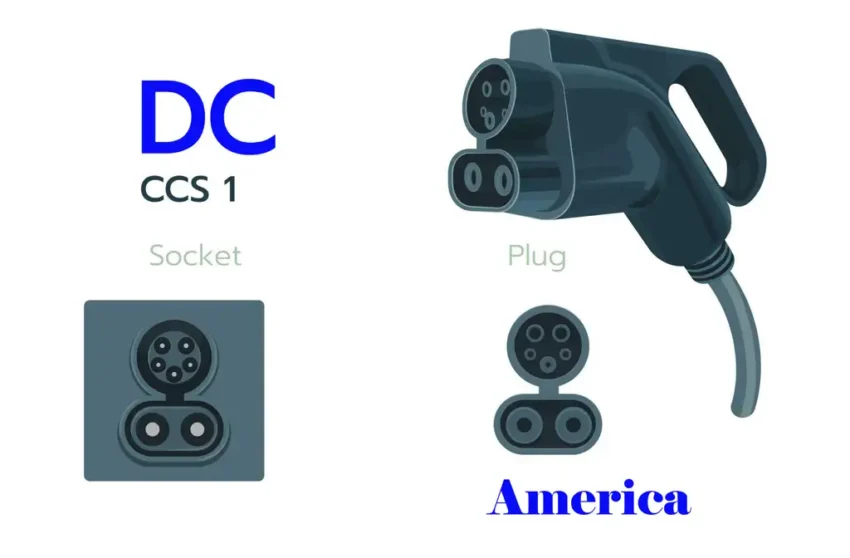
A CCS1 charger (Combined Charging System Type 1) represents the standardized DC fast-charging connector used primarily in North American electric vehicles. The system earned its “combined” designation because it ingeniously integrates both AC charging capabilities through the J1772 plug and DC fast-charging functionality through two additional power pins located below the standard five-pin AC connector. This dual-functionality design eliminates the need for multiple charging ports on vehicles, streamlining the charging experience while maintaining backward compatibility with Level 2 AC charging infrastructure.
The CCS1 standard was developed through collaboration between major automotive manufacturers including General Motors, Ford, Chrysler, BMW, and Volkswagen, alongside the Society of Automotive Engineers (SAE). Released as the SAE J1772 Combo standard, the CCS1 charger was designed to create a unified charging solution that could support both current and future charging needs. Unlike proprietary systems, the CCS1 charger operates as an open standard, allowing any manufacturer to adopt the technology without licensing fees, which has accelerated its widespread adoption across the North American automotive industry.
The physical connector itself features a distinctive design that measures approximately 2.36 inches in width and incorporates seven pins total—five for AC charging inherited from the J1772 standard, plus two additional high-power DC pins. The system supports communication protocols that enable the vehicle and charging station to negotiate power delivery rates, monitor battery temperature, and ensure safe charging operations throughout the entire charging session.
CCS1 Charger vs Other Charging Standards
CCS1 vs Tesla NACS (North American Charging Standard)
The competitive landscape between CCS1 chargers and Tesla’s NACS connector has evolved dramatically in recent years. Tesla’s proprietary connector, now rebranded as the North American Charging Standard, features a more compact design with approximately 40% smaller physical footprint compared to CCS1. The NACS connector supports up to 1 megawatt of power delivery theoretically, though current implementations typically max out at 250 kW, similar to many CCS1 installations.
However, the distinction between these standards has become increasingly blurred following major announcements in 2023 and 2024. Ford, General Motors, Rivian, Volvo, Polestar, Mercedes-Benz, and numerous other manufacturers committed to adopting NACS connectors in future vehicle models while maintaining CCS1 compatibility through adapters. This shift doesn’t render CCS1 chargers obsolete—instead, it creates a transitional period where both standards coexist, with Tesla opening approximately 12,000 Supercharger stations to non-Tesla vehicles equipped with appropriate adapters.
CCS1 vs CHAdeMO
The CHAdeMO standard, developed primarily by Japanese automakers including Nissan and Mitsubishi, represents an earlier approach to DC fast charging that has seen declining adoption in North America. While CHAdeMO was first to market with DC fast-charging capabilities, the CCS1 charger has surpassed it in several key metrics. CCS1 installations in North America now outnumber CHAdeMO stations by approximately 3:1, and newer CHAdeMO versions supporting ultra-high power charging (up to 500 kW) have seen limited deployment compared to the growing CCS1 infrastructure.
The technical differences are substantial: CHAdeMO requires a completely separate connector from AC charging ports, meaning vehicles need two distinct charging ports, whereas the CCS1 charger combines both functions in a single inlet. Additionally, CCS1’s communication protocol uses Power Line Communication (PLC) over the charging cable itself, while CHAdeMO relies on CAN bus communication, representing fundamentally different approaches to vehicle-charger data exchange.
CCS1 vs CCS2
While CCS1 dominates North America, the CCS2 variant serves as the European standard, showcasing regional differences in charging infrastructure development. The primary distinction lies in the AC charging portion: CCS2 incorporates the Type 2 Mennekes connector supporting three-phase AC charging (common in Europe), while CCS1 chargers use the single-phase J1772 connector standard in North America. Both systems share identical DC charging pins and protocols, meaning the fundamental fast-charging capabilities remain equivalent.
The practical implications affect travelers and imported vehicles: a European EV with CCS2 cannot directly connect to North American CCS1 chargers without a physical adapter, though such adapters are becoming increasingly available. The power delivery capabilities show similar ranges, with both supporting charging rates from 50 kW entry-level stations up to 350+ kW ultra-fast charging installations, though the actual charging speed depends more on vehicle capabilities than connector type.
How Fast Does a CCS1 Charger Work?
Power Levels and Charging Speeds
CCS1 charger stations operate across a broad spectrum of power levels, each delivering dramatically different charging experiences. Entry-level DC fast chargers typically provide 50 kW, adding approximately 100-150 miles of range per hour for most electric vehicles—a significant improvement over Level 2 AC charging but modest compared to newer installations. Mid-range stations offering 150 kW represent the current sweet spot in the North American charging network, capable of replenishing 200-300 miles of range per hour depending on vehicle acceptance rates and battery state of charge.
Suggested read: Compleo Charging Station: Everything You Need to Know About Smart EV Charging Solutions
The cutting edge of CCS1 charger technology manifests in 350 kW ultra-fast charging stations, primarily deployed by networks like Electrify America and EVgo. These installations can theoretically add 20 miles of range per minute under optimal conditions, translating to 200+ miles in approximately 10-15 minutes for vehicles with compatible 800-volt architectures. The Porsche Taycan, Hyundai Ioniq 5, and Kia EV6 showcase peak charging rates exceeding 200 kW when connected to these high-power CCS1 chargers, demonstrating the standard’s capability to support next-generation EVs.
Real-world charging speeds depend on multiple variables beyond station capacity: battery temperature significantly impacts acceptance rates, with cold batteries potentially limiting charging to 50-75 kW even on 350 kW stations until thermal management systems warm the pack. State of charge curves mean that charging slows considerably above 80% battery capacity, as protective algorithms prevent battery degradation—a CCS1 charger might deliver 150 kW from 10-50% SOC, dropping to 75 kW at 70%, and potentially just 25-30 kW above 90%.
Factors Affecting Charging Speed
Vehicle architecture fundamentally determines maximum CCS1 charger utilization: 400-volt systems typically peak between 150-180 kW, while 800-volt architectures enable 200-350 kW charging rates. The Chevrolet Bolt, operating on a 400V system, maxes out at approximately 55 kW regardless of charger capacity, whereas the Lucid Air’s 900V+ architecture can sustain over 300 kW under ideal conditions. Battery chemistry also plays a crucial role, with newer lithium iron phosphate (LFP) cells exhibiting different charging curves than nickel manganese cobalt (NMC) formulations.
Environmental conditions create substantial variation in CCS1 charger performance: ambient temperatures below 32°F (0°C) can reduce charging speeds by 25-40% until battery heating systems activate, while extreme heat above 95°F (35°C) may also trigger thermal management protocols that temporarily reduce power delivery. Many modern EVs include battery preconditioning features that optimize temperature before arriving at DC fast chargers, potentially improving charging rates by 30-50% in cold weather scenarios.
Station sharing and power distribution represent often-overlooked factors affecting CCS1 charger speeds. Many charging locations feature power cabinets shared between multiple dispensers, meaning two vehicles charging simultaneously may split the available power—a 350 kW cabinet serving two dispensers might provide only 175 kW to each vehicle. Additionally, electrical grid constraints during peak demand periods can force charging networks to implement load management, temporarily reducing available power across entire stations during afternoon or early evening hours.
Compatible Vehicles with CCS1 Chargers
American Manufacturers
Virtually all modern electric vehicles from American automakers embrace the CCS1 charger standard as their primary DC fast-charging interface. General Motors has committed fully to CCS1 across their expanding EV lineup, including the Chevrolet Bolt EV and EUV (55 kW max), Chevrolet Blazer EV (190 kW), Chevrolet Equinox EV (150 kW), GMC Hummer EV (350 kW capable), and the Cadillac Lyriq (190 kW). The upcoming Chevrolet Silverado EV and GMC Sierra EV will support charging rates up to 350 kW when connected to compatible CCS1 chargers, showcasing GM’s investment in high-power charging infrastructure.
Ford’s electric vehicle portfolio similarly relies exclusively on CCS1 chargers for DC fast charging, with the Mustang Mach-E supporting up to 150 kW, the F-150 Lightning capable of 155 kW, and the E-Transit commercial van accepting up to 115 kW. Ford’s adoption of Tesla’s NACS for 2025 model year vehicles and beyond doesn’t eliminate CCS1 compatibility—rather, Ford is including NACS ports while providing CCS1 adapters, ensuring owners can access both charging networks during the transitional period.
Rivian’s adventure-focused EVs including the R1T pickup and R1S SUV utilize CCS1 chargers with peak charging rates of approximately 220 kW, particularly impressive given their large battery packs ranging from 105 kWh to 180 kWh. The Rivian models demonstrate excellent real-world charging performance, often sustaining high power delivery rates further into the charging session compared to competitors, maximizing the benefits of high-power CCS1 charger installations.
European Manufacturers
BMW, Mercedes-Benz, Audi, Volkswagen, and Porsche have comprehensively adopted CCS1 chargers for their North American EV offerings. The Porsche Taycan exemplifies the standard’s capabilities, supporting up to 270 kW charging rates thanks to its 800-volt architecture, enabling 5-80% charges in approximately 22 minutes on Electrify America’s 350 kW stations. The Audi e-tron GT shares this platform and similar charging capabilities, demonstrating how premium European brands are leveraging CCS1 charger infrastructure to deliver compelling charging experiences.
Volkswagen’s ID.4 represents the mass-market implementation of CCS1 technology, with 135 kW peak charging enabling practical road-trip capability despite its more affordable positioning. The upcoming ID.Buzz electric van will similarly rely on CCS1 chargers, continuing VW’s commitment to the standard across their electrification strategy. Mercedes-Benz entries including the EQS sedan (200 kW), EQE (170 kW), and EQS SUV (200 kW) all feature CCS1 charger compatibility, with the brand’s upcoming electric G-Class expected to follow suit.
BMW’s electric vehicle lineup including the i4 (205 kW), iX (195 kW), and i7 (195 kW) demonstrates consistent CCS1 charger integration across segments from sporty sedans to luxury SUVs and flagship limousines. The charging speeds reflect BMW’s 400-volt architecture, competitive within this voltage class though not matching the peak rates of 800-volt competitors. Polestar, Volvo’s performance electric brand, equips both the Polestar 2 (155 kW) and Polestar 3 (250 kW) with CCS1 chargers, with the latter’s higher rate reflecting its more advanced electrical architecture.
Asian Manufacturers
Hyundai Motor Group’s North American EVs showcase some of the most impressive CCS1 charger utilization in the industry. The Hyundai Ioniq 5 and Kia EV6 both feature 800-volt E-GMP platforms supporting up to 240 kW charging, capable of 10-80% charges in approximately 18 minutes under ideal conditions. The Ioniq 6 sedan extends this capability with slightly optimized aerodynamics and efficiency, while the larger Kia EV9 three-row SUV maintains 210 kW peak charging despite its substantial size and weight.
Genesis, Hyundai’s luxury division, equips the GV60, Electrified GV70, and Electrified G80 with CCS1 chargers supporting between 175-240 kW depending on model and architecture. These vehicles demonstrate how the charging standard scales across price points and segments while maintaining consistent user experience. Honda’s Prologue, developed in partnership with GM, utilizes CCS1 chargers with approximately 155 kW peak rates, representing Honda’s entry into the North American fast-charging ecosystem.
Nissan presents an interesting case study in charging standard transitions: while the Leaf pioneered mainstream EVs using CHAdeMO, the upcoming Nissan Ariya marks the brand’s shift to CCS1 chargers with 130 kW maximum charging rate. This transition reflects industry-wide recognition of CCS1’s dominance in North America and ensures Ariya owners enjoy access to the broadest possible charging network. Toyota’s bZ4X similarly adopts CCS1 charger compatibility with 150 kW peak charging, signaling the Japanese giant’s commitment to the standard despite arriving relatively late to the battery-electric market.
CCS1 Charger Network and Availability
Major Charging Networks
Electrify America operates the most extensive high-power CCS1 charger network in North America, with over 900 charging stations featuring approximately 4,000 individual dispensers as of early 2025. The network focuses on 150 kW and 350 kW installations strategically positioned along highway corridors and in metropolitan areas, with stations typically featuring 4-10 charging dispensers per location. Electrify America’s infrastructure investment, funded partially through the Volkswagen diesel emissions settlement, has created comprehensive coast-to-coast coverage enabling long-distance EV travel using CCS1 chargers.
EVgo complements this coverage with over 3,000 DC fast charging locations, though individual stations tend toward smaller formats with 1-4 dispensers. EVgo’s network includes a mix of 50 kW, 100 kW, and 350 kW CCS1 chargers, with the company actively upgrading older installations to higher power levels. The network’s strategic focus on urban and suburban locations makes it particularly valuable for EV drivers without home charging access, offering consistent CCS1 charger availability in grocery store parking lots, shopping centers, and transit hubs.
ChargePoint operates the largest charging network overall in North America, though the majority consists of Level 2 AC charging rather than DC fast charging. However, ChargePoint’s DC fast charging footprint continues expanding, with several hundred locations offering CCS1 charger access typically ranging from 50-125 kW. The company’s open-network model allows site hosts to own and operate ChargePoint-branded equipment, creating diverse locations from workplace campuses to public parking facilities.
Tesla Supercharger Access
The landscape of CCS1 charger access transformed dramatically with Tesla’s announcement of opening select Supercharger stations to non-Tesla EVs. As of early 2025, approximately 12,000 Tesla Supercharger stalls in North America have been retrofitted with CCS1 connectors or “Magic Dock” adapters enabling CCS1 vehicle charging. This expansion effectively doubles the available DC fast charging infrastructure for CCS1 charger-equipped vehicles, addressing one of the most significant advantages previously exclusive to Tesla owners.
The integration process requires non-Tesla drivers to use the Tesla smartphone app to initiate and pay for charging sessions at compatible Supercharger locations. Pricing typically runs higher for non-Tesla vehicles compared to Tesla’s own cars, with per-kWh rates ranging from $0.48-$0.60 depending on location and time of day, though some automakers including Ford and GM have negotiated access to Tesla member pricing for their customers. The charging speeds at these CCS1 charger-compatible Superchargers vary by station generation, with V2 stations limited to approximately 150 kW while V3 and V4 installations can deliver up to 250 kW.
Practical considerations affect the CCS1 charger experience at Supercharger locations: cable length sometimes proves inadequate for vehicles with charge ports in different locations than Tesla vehicles, occasionally requiring parking across two spaces. Additionally, the charging stall power sharing at V2 Superchargers (where paired stalls split available power) can reduce charging speeds if neighboring stalls are occupied, similar to challenges at other CCS1 charger networks.
Regional Coverage and Gaps
West Coast states benefit from the densest CCS1 charger coverage in North America, with California leading all regions with over 1,500 public DC fast charging locations. Major highway corridors including Interstate 5, Highway 101, and Interstate 80 feature charging stations every 30-75 miles, enabling reliable long-distance travel for EV drivers. Oregon and Washington similarly provide strong coverage along primary routes, though rural areas and mountain passes sometimes feature wider gaps between CCS1 charger installations.
The Eastern Seaboard corridor from Boston through New York, Philadelphia, Baltimore, Washington DC, and extending to Atlanta and Miami demonstrates robust CCS1 charger deployment, with Electrify America, EVgo, and regional operators ensuring interstate highway coverage. Urban areas throughout this region offer multiple charging options within city limits, though competition for available CCS1 chargers during peak times can create wait times at popular locations, particularly around holidays and weekends.
Midwest and central states present more varied CCS1 charger availability, with excellent coverage along major interstate highways (I-70, I-80, I-90, I-94) but thinner distribution in rural areas. Cities like Chicago, Detroit, Minneapolis, and Kansas City provide comprehensive metropolitan coverage, while stretches of highway through less populated regions may have 100+ mile gaps between CCS1 charger installations. Texas represents an interesting case with strong coverage in the Dallas-Fort Worth, Houston, San Antonio, and Austin urban areas, but limited options in West Texas and rural regions.
Cost of CCS1 Charging
Pricing Models and Rate Structures
CCS1 charger pricing varies dramatically across networks, locations, and even times of day, creating a complex landscape for EV owners to navigate. Electrify America employs a predominantly per-kWh pricing model, charging $0.43-$0.48 per kilowatt-hour at most locations, with slight premiums for their highest-power 350 kW stations. The network also offers Pass+ membership at $4/month providing reduced rates of $0.36-$0.40 per kWh, potentially saving frequent users $15-30 monthly depending on charging habits.
Suggested read: Instant Power Battery Charger: Everything You Need to Know About Portable Jump Starters and Emergency Charging Solutions
EVgo utilizes more variable pricing with both per-kWh and per-minute billing depending on state regulations—some jurisdictions prohibit per-kWh electricity resale by non-utilities, forcing CCS1 charger networks to bill by time instead. In per-minute states, EVgo typically charges $0.24-$0.56 per minute depending on charger power level and membership status, with their EVgo Plus subscription ($6.99/month) offering approximately 25% savings on per-session costs. This creates situations where slow-charging vehicles pay similar amounts to fast-charging ones, penalizing older EVs with lower acceptance rates.
ChargePoint’s CCS1 charger pricing reflects their open-network model where individual site hosts set rates, resulting in the widest price variation in the industry. Rates range from $0.20 per kWh at some municipal installations to $0.60+ per kWh at premium locations like urban parking garages or popular tourist destinations. Some ChargePoint hosts implement time-of-use pricing with lower overnight rates, while others add idle fees ($0.50-$1.00 per minute) after charging sessions complete to encourage drivers to free up occupied CCS1 chargers.
Cost Comparison: DC Fast Charging vs Home Charging
The economics of CCS1 charger usage versus home charging reveal substantial differences that influence EV ownership costs. Average residential electricity rates in the United States hover around $0.14-$0.16 per kWh nationally, though this varies from under $0.10 in states like Idaho and Louisiana to over $0.30 in Hawaii and parts of California. Charging a typical EV with a 75 kWh battery at home costs approximately $10.50-$12.00 for a complete 0-100% charge, translating to roughly $0.04-$0.05 per mile for vehicles achieving 3-4 miles per kWh efficiency.
The same charging session using public CCS1 chargers at average network rates ($0.43-$0.48 per kWh) costs approximately $32-$36 for 75 kWh, nearly triple the home charging expense. This translates to $0.12-$0.14 per mile, still considerably cheaper than gasoline in most markets but representing a 200-250% premium over home electricity. The financial impact compounds for drivers relying primarily on public charging: covering 12,000 annual miles costs roughly $480-$600 charging at home versus $1,440-$1,680 using predominantly CCS1 chargers, a difference exceeding $1,000 annually.
However, this comparison oversimplifies the value proposition of CCS1 charger networks. The speed advantage proves crucial for road trips and time-sensitive situations—adding 200 miles of range in 15-20 minutes at a $15 premium over home charging becomes economically rational when the alternative involves waiting 8-10 hours for Level 2 charging. Additionally, urban EV owners without dedicated parking or home charging access have no practical alternative to public CCS1 chargers, making the cost comparison against home charging irrelevant to their circumstances.
Hidden Costs and Fees
Beyond base charging rates, CCS1 charger users encounter various additional fees that impact total costs. Idle fees represent the most common surcharge, implemented to encourage turnover at busy stations—most networks charge $0.40-$1.00 per minute once charging completes, creating substantial penalties for drivers who don’t promptly move their vehicles. A 30-minute delay after charging finishes could add $12-$30 to the session cost, sometimes exceeding the electricity charge itself.
Session fees or connection fees add flat charges to each CCS1 charger use regardless of electricity consumed, typically ranging from $0.99-$3.00 per session. These fees disproportionately affect short charging sessions, potentially doubling the effective per-kWh rate for someone adding just 10-15 kWh. Networks justify these fees as covering transaction processing costs and equipment maintenance, though they create frustration among users making brief stops to top up batteries rather than charging to 80%+.
Reservation fees have emerged at some premium CCS1 charger locations, allowing drivers to guarantee availability by pre-booking specific time slots for $2-$5 per reservation. While this fee typically credits toward the charging session cost, it adds complexity to the payment structure and represents another variable in trip planning. Network membership fees themselves, while offering per-kWh discounts, require break-even analysis: a $4-$7 monthly subscription makes financial sense only for drivers using CCS1 chargers for 50+ kWh monthly, roughly equivalent to 15,000+ miles of annual driving without home charging access.
Installing CCS1 Chargers: Home and Business
Home Installation Considerations
Installing a CCS1 charger at residential properties faces significant technical and financial barriers compared to standard Level 2 AC charging. True DC fast charging equipment suitable for home use remains extremely rare and prohibitively expensive, with costs ranging from $20,000-$50,000 for the equipment alone, before electrical service upgrades and installation labor. The electrical requirements prove daunting: even a modest 25 kW DC fast charger demands 100+ amps of 240V service, while higher-power units exceed typical residential service capacity entirely.
Most homeowners seeking faster charging choose instead to maximize their Level 2 AC charging capabilities rather than attempting CCS1 charger installation. High-power Level 2 equipment operating at 48 amps on 240V circuits delivers approximately 11.5 kW, adding 40-45 miles of range per hour—sufficient for overnight charging of even large-battery EVs. This approach costs $500-$2,000 for equipment and installation versus the five-figure expense of residential DC fast charging, representing a more practical solution for the vast majority of home charging scenarios.
The few residential CCS1 charger installations that do exist typically serve specific use cases: luxury properties with multiple high-end EVs, commercial properties with mixed residential use, or EV enthusiast households willing to invest substantially for convenience. These installations often opt for 25-50 kW charging power to manage electrical service requirements, providing a middle ground between Level 2 AC and public DC fast charging speeds. Permitting, electrical service upgrades (often requiring transformer replacements), and ongoing demand charges from utilities add to the total cost of ownership for residential CCS1 chargers.
Commercial and Fleet Installation
Business installations of CCS1 chargers follow dramatically different economics and motivations compared to residential considerations. Retail locations, hotels, shopping centers, and restaurants view DC fast charging as a customer amenity that drives foot traffic and extends visit duration—a customer spending 20-30 minutes at a CCS1 charger represents potential revenue in stores, restaurants, or entertainment venues. The installation costs range from $50,000-$150,000 per dual-port dispenser depending on power level and necessary electrical infrastructure upgrades.
Federal tax credits and state incentives significantly offset CCS1 charger installation costs for commercial entities. The Alternative Fuel Infrastructure Tax Credit provides up to 30% of installation costs (maximum $100,000 per charger) for qualifying projects, while California’s CALeVIP program offers rebates of $60,000-$80,000 per DC fast charger in designated areas. Utilities in many states provide additional make-ready programs covering electrical service upgrades from the transformer to the charger location, potentially reducing site host costs to 25-40% of the total project expense.
Fleet operations deploying CCS1 chargers evaluate different metrics focused on vehicle utilization and total cost of ownership. A commercial fleet operating 10-20 electric delivery vans might install one or two 50-75 kW CCS1 chargers enabling rapid turnover during shift changes or mid-day top-ups, maximizing vehicle availability compared to exclusively overnight Level 2 charging. The payback calculations incorporate avoided fuel costs, reduced maintenance, potential vehicle range increases (allowing longer routes), and improved operational flexibility, with many fleet operators achieving 2-4 year payback periods on CCS1 charger infrastructure investments.
Utility Programs and Demand Charges
Utility programs specifically supporting CCS1 charger deployment have proliferated as electric companies recognize transportation electrification’s long-term load growth implications. Southern California Edison’s Charge Ready program funds make-ready infrastructure supporting over 1,000 public charging locations, while Pacific Gas & Electric’s EV Fleet program subsidizes infrastructure costs for commercial fleet operators installing CCS1 chargers. These programs typically cover trenching, transformer upgrades, and dedicated circuit installation, leaving site hosts responsible only for charging equipment purchase and final connections.
Demand charges represent a critical economic consideration for commercial CCS1 charger operations, potentially overwhelming revenue in the absence of careful management. Many commercial utility rate structures impose charges of $10-$20 per kW of peak monthly demand, meaning a single 150 kW CCS1 charger operating at full power could trigger $1,500-$3,000 in monthly demand charges regardless of total energy delivered. This creates situations where lightly-utilized chargers lose substantial money, as demand charges accrue based on peak power draw rather than total consumption.
Battery energy storage systems increasingly pair with CCS1 charger installations to manage demand charges while improving grid resilience. A 200 kWh battery system can buffer demand spikes, drawing grid power slowly over time and discharging rapidly into vehicles, effectively reducing the facility’s peak demand from utility perspective. These systems cost $100,000-$300,000 installed but can reduce monthly demand charges by 60-80%, achieving payback periods of 3-5 years at sites with high utilization. Additionally, batteries enable CCS1 charger operation during grid outages and can participate in utility demand response programs for additional revenue streams.
Technical Specifications of CCS1 Chargers
Electrical Architecture and Protocols
The CCS1 charger system operates on sophisticated communication protocols enabling safe, efficient power delivery between charging stations and vehicles. The charging process initiates with the HomePlug Green PHY (HPGP) communication standard running over the Power Line Communication (PLC) method, where digital signals transmit through the charging cable itself rather than requiring separate data connections. This handshake establishes vehicle identity, battery status, maximum acceptance rate, and desired charge level before any power flows.
Once communication establishes, the CCS1 charger implements ISO 15118 protocol standards governing the entire charging session. This protocol enables automatic authentication through Plug & Charge functionality, where the vehicle identifies itself to the charging station and authorizes payment without requiring separate apps, RFID cards, or credit card swipes. The protocol continuously monitors battery temperature, voltage, current, and state of charge, adjusting power delivery millisecond-by-millisecond to optimize charging speed while protecting battery longevity.
The physical power delivery in CCS1 chargers operates on DC voltage ranging from 50-1,000 volts and current up to 500 amps, with most contemporary installations providing 200-920 volts at 125-500 amps depending on power level. A 350 kW CCS1 charger typically delivers approximately 920 volts at 380 amps, though the exact parameters vary based on vehicle battery voltage and acceptance characteristics. The system includes extensive safety features: ground fault detection responds within 5 milliseconds, insulation monitoring prevents shock hazards, and thermal sensors throughout the cable and connector halt charging if temperatures exceed safe thresholds.
Connector Design and Cable Management
The physical CCS1 charger connector incorporates multiple design elements ensuring reliable, safe connections across hundreds of charge cycles. The seven-pin configuration includes the original J1772 pins (two AC power, one ground, one control pilot, one proximity detection) plus two high-current DC pins rated for the full 500-amp maximum current. The connector housing features a locking mechanism that mechanically secures the plug during charging, preventing disconnection from vehicle movement or cable tension while enabling emergency manual release.
Cable design for CCS1 chargers reflects the significant engineering challenges of high-power delivery. The cables typically measure 8-12 feet in length, balancing reach to various vehicle charge port locations against weight and flexibility constraints. Higher-power installations use liquid-cooled cables incorporating coolant circulation systems maintaining cable temperatures below 122°F (50°C) even during sustained 350 kW charging sessions. These cooled cables weigh approximately 20-25 pounds, substantially lighter than equivalent air-cooled cables which would require much larger conductor cross-sections.
The connector pins themselves utilize silver-plated copper alloys optimized for high current density and minimal contact resistance. Each DC pin features a contact area of approximately 100 square millimeters, distributing the high current to limit heating and wear. The design includes spring-loaded contacts maintaining consistent pressure against vehicle inlet pins despite thermal expansion and mechanical wear over thousands of connection cycles. Testing standards require CCS1 charger connectors to survive 10,000 mating cycles while maintaining electrical contact resistance below 0.5 milliohms, ensuring long-term reliability across the expected 10-15 year operational lifespan of charging equipment.
Safety Systems and Certifications
CCS1 charger installations incorporate multiple redundant safety systems protecting both users and vehicles. Ground Fault Circuit Interrupter (GFCI) protection monitors for current leakage indicating potential shock hazards, interrupting power within 25 milliseconds if ground fault exceeds 20 milliamps. Insulation monitoring systems continuously verify the integrity of cable insulation, detecting degradation before failures occur and preventing energization of damaged cables. Arc fault detection circuitry identifies the characteristic electromagnetic signatures of electrical arcing, shutting down the CCS1 charger before arc faults can cause fires or equipment damage.
Suggested read: 48 Volt Charger: Everything You Need to Know About Selecting and Using High-Performance Battery Charging Solutions
Environmental protection systems ensure CCS1 charger operation across diverse conditions. The charging dispensers carry NEMA 3R or IP54 ratings minimum, providing protection against rain, sleet, and snow while preventing dust ingress. Many installations achieve higher ratings (NEMA 4 or IP65), enabling operation in coastal environments, industrial areas, or other harsh conditions. Temperature monitoring prevents charging when ambient conditions exceed equipment ratings, typically -40°F to 122°F (-40°C to 50°C) for outdoor installations, while internal heaters maintain operability in extreme cold climates.
Certification requirements for CCS1 chargers include rigorous testing by nationally recognized testing laboratories. UL 2202 (Electric Vehicle Charging System Equipment) certification verifies safety across normal operation and fault conditions, while UL 2231 standards address personnel protection systems. FCC Part 15 certification ensures electromagnetic compatibility, preventing the high-power switching in DC fast chargers from interfering with radio communications or other electronic equipment. Additional certifications from ENERGY STAR verify efficiency claims, while Americans with Disabilities Act (ADA) compliance ensures accessibility including reach ranges, operating forces, and visual/tactile indicators.
Future of CCS1 Chargers
Megawatt Charging System (MCS)
The next evolution beyond current CCS1 charger technology manifests in the Megawatt Charging System (MCS), specifically designed for heavy-duty commercial vehicles including electric semi-trucks, buses, and construction equipment. MCS charging delivers power levels of 1-3.75 megawatts, approximately 3-10 times higher than the most powerful contemporary CCS1 chargers, enabling 300-500 mile range recovery in 30-45 minute breaks aligned with driver rest regulations. The CharIN consortium responsible for CCS standards is developing MCS as a complementary technology rather than a replacement for passenger vehicle CCS1 chargers.
The MCS connector features entirely new design elements accommodating the extreme power levels: significantly larger physical size compared to CCS1 chargers, mandatory liquid cooling throughout the cable and connector assembly, and voltage ranges extending to 1,500 volts. The current specifications target 3,000 amps maximum, requiring conductor cross-sections and thermal management capabilities far exceeding anything in the passenger vehicle charging domain. Early MCS installations are expected in 2025-2026 along major freight corridors, with Tesla, Daimler, Volvo, and Paccar all committing to MCS compatibility in their electric heavy-duty vehicles.
The relationship between MCS and passenger vehicle CCS1 chargers remains complementary rather than competitive. While some future high-end passenger EVs might incorporate MCS compatibility for ultimate charging speed, the cost and complexity make widespread adoption unlikely. Instead, the technologies will coexist serving different market segments: CCS1 chargers handling light-duty vehicles (passenger cars, SUVs, pickups, light commercial vans) while MCS addresses the heavy-duty commercial segment where charging time directly impacts operational economics and regulatory compliance.
Wireless Charging Integration
Wireless charging technology represents another frontier potentially integrating with or supplementing CCS1 charger infrastructure, though the technology remains primarily in pilot and demonstration phases. Wireless Electric Vehicle Charging (WEVC) uses magnetic resonance coupling between ground-mounted pads and vehicle-mounted receivers to transfer power without physical connectors, enabling automated charging in residential garages, parking structures, or even dynamic charging while driving on equipped roadways. Current wireless systems transfer 7-20 kW, well below CCS1 charger capabilities but sufficient for overnight charging or opportunity charging during parking.
The advantages of wireless charging include convenience (no plugging required), accessibility benefits (assisting users with mobility limitations), and potential for autonomous vehicle integration (self-driving vehicles could charge themselves without human intervention). However, wireless systems exhibit lower efficiency than wired CCS1 chargers, typically transferring 85-93% of input energy to the vehicle versus 92-96% for DC fast charging. This efficiency gap translates to additional electricity costs and waste heat generation, creating economic and environmental tradeoffs.
The most likely scenario involves wireless and CCS1 charger technologies coexisting in complementary roles: wireless charging dominating low-power residential and workplace applications where convenience justifies the efficiency penalty, while CCS1 chargers continue handling high-power public charging where speed and efficiency remain paramount. Some forward-looking infrastructure plans incorporate both technologies, with parking structures featuring wireless charging pads for regular parked charging and CCS1 chargers for rapid top-ups before departure.
Bidirectional Charging and Vehicle-to-Grid
Vehicle-to-Grid (V2G) technology represents transformative potential for CCS1 charger infrastructure, enabling electric vehicles to not just consume electricity but return it to the grid during peak demand periods. The CCS standard includes bidirectional power flow specifications, theoretically allowing any CCS1 charger to both charge and discharge vehicle batteries, though implementation requires additional software and utility integration. Early V2G pilots demonstrate EV owners can earn $500-$1,200 annually by allowing grid operators to draw power from their vehicles during critical demand periods, offsetting charging costs while supporting grid stability.
The technical implementation of bidirectional CCS1 chargers requires upgraded power electronics capable of controlling power flow in both directions, additional communication protocols negotiating discharge parameters with vehicles and grid operators, and utility interconnection agreements authorizing distributed energy resources. The Ford F-150 Lightning, Nissan Leaf (though using CHAdeMO), and several upcoming EV models incorporate the necessary onboard hardware to support V2G, while charging networks including Fermata Energy and Nuvve have deployed pilot programs demonstrating commercial viability.
Beyond grid services, bidirectional CCS1 chargers enable Vehicle-to-Home (V2H) and Vehicle-to-Building (V2B) applications where EVs serve as backup power sources during outages or reduce demand charges by peak shaving. A typical EV’s 60-100 kWh battery can power an average home for 2-3 days during outages, providing resilience against increasingly common grid disruptions from extreme weather. Commercial applications prove even more compelling: a fleet of 20 electric vans with 75 kWh batteries represents 1.5 MWh of distributed storage, capable of substantially reducing facility demand charges while providing emergency backup power.
Comparing CCS1 Charger Networks by Performance
| Network | Average Station Power | Typical Cost (per kWh) | Number of Locations | Reliability Rating | Geographic Coverage |
|---|---|---|---|---|---|
| Electrify America | 150-350 kW | $0.43-$0.48 | 900+ | 4.2/5 | Nationwide, highway focus |
| EVgo | 50-350 kW | $0.40-$0.56 | 3,000+ | 4.0/5 | Urban/suburban focused |
| ChargePoint | 50-125 kW | $0.20-$0.60 | 400+ DC stations | 4.1/5 | Nationwide, varied locations |
| Tesla Supercharger (CCS1) | 150-250 kW | $0.48-$0.60 (non-Tesla) | 12,000+ stalls | 4.7/5 | Nationwide, comprehensive |
| Shell Recharge | 50-175 kW | $0.45-$0.55 | 500+ | 3.9/5 | Growing, urban focus |
| Francis Energy | 150-350 kW | $0.40-$0.48 | 200+ | 4.3/5 | Midwest/South regional |
This comparison highlights significant variation in CCS1 charger network characteristics, influencing which services best suit different user needs. Tesla’s Supercharger network achieves the highest reliability ratings due to extensive redundancy (typically 8-20 stalls per location) and proactive maintenance, though non-Tesla pricing premiums erode some value proposition. Electrify America offers the highest typical power levels and strong geographic coverage, making it the preferred choice for long-distance highway travel in non-Tesla EVs equipped with CCS1 chargers.
EVgo’s urban-focused strategy provides the most locations for city dwellers, though smaller station formats (often just 2-4 dispensers) can lead to availability issues during peak times. ChargePoint’s open-network model creates the widest pricing variation, with some municipally-operated CCS1 chargers offering excellent value while others in premium locations charge substantially above-market rates. Understanding these network characteristics helps EV drivers optimize their charging strategy and manage costs effectively.
Real-World CCS1 Charging Performance Case Studies
Long-Distance Road Trip: New York to Florida
A practical case study examining CCS1 charger performance during a 1,250-mile journey from New York City to Miami demonstrates real-world charging realities. The trip utilized a 2024 Hyundai Ioniq 5 with 77.4 kWh battery pack and 303-mile EPA range, planning stops at Electrify America stations along Interstate 95. The vehicle’s 800-volt architecture and 240 kW peak charging rate theoretically enable rapid stops, though actual performance varied significantly by location and conditions.
The northernmost charging stop in Delaware encountered a station where both 350 kW dispensers were occupied, requiring use of a 150 kW unit that delivered peak rates of 148 kW from 18-52% state of charge before tapering to 75 kW at 70%. The charging session added 35 kWh in 18 minutes at a cost of $16.80 ($0.48/kWh), providing approximately 115 miles of range—slightly below optimal due to the lower-power CCS1 charger unit. This demonstrated how station congestion forces use of lower-power equipment, impacting trip efficiency.
Subsequent stops in North Carolina and South Carolina showcased optimal CCS1 charger performance, with 350 kW units delivering 220-235 kW peak rates in favorable 68°F weather with battery properly preconditioned. These sessions achieved 10-80% charges in 19-21 minutes, adding 55-58 kWh at costs of $26.40-$27.84 per session. The Georgia stop encountered issues with one non-functional dispenser and significant power sharing between working units, limiting charging to 165 kW peak despite selecting a 350 kW-rated CCS1 charger—highlighting network reliability concerns that continue affecting user experience.
Urban Charging Without Home Access
A six-month case study following an urban EV driver in San Francisco without home charging access provides insights into exclusive reliance on public CCS1 chargers and Level 2 stations. The driver operated a 2023 Chevrolet Bolt EUV with 65 kWh battery and 55 kW maximum DC fast charging rate, averaging 1,100 miles monthly split between work commute, errands, and weekend trips. Without home charging, all charging occurred at public infrastructure, creating unique usage patterns and cost implications.
The driver’s primary strategy involved overnight Level 2 charging at workplace facilities (free employee benefit) supplemented by weekly CCS1 charger sessions for longer trips or when workplace chargers were fully occupied. Monthly CCS1 charger usage averaged 4-6 sessions totaling 120-180 kWh, costing $57.60-$86.40 at EVgo’s $0.48/kWh rates. Combined with approximately 180-220 kWh of free workplace Level 2 charging, total monthly electricity costs remained significantly below the $160-180 gasoline budget for the replaced vehicle, despite public charging premiums.
Challenges included weekend charging competition at popular CCS1 charger locations, occasionally requiring multiple sites before finding availability. The Bolt EUV’s modest 55 kW charging rate meant 10-80% sessions required 45-50 minutes, substantially longer than faster-charging vehicles, though the driver adapted by combining charging stops with grocery shopping or meals. The case study demonstrated that while exclusive reliance on public CCS1 chargers remains workable, the combination of free workplace charging and selective DC fast charging proves most economically viable for urban residents without home charging access.
Commercial Fleet Deployment
A delivery service operating in the Pacific Northwest provides a compelling CCS1 charger deployment case study, converting a 25-vehicle fleet from diesel vans to electric alternatives over 18 months. The operation installed three 75 kW CCS1 chargers at their central depot alongside fifteen Level 2 stations, enabling a mixed charging strategy supporting varied route lengths. The 75 kW power level represented a balance between installation costs, electrical service requirements, and operational needs for mid-day top-ups on longer routes.
The fleet’s charging strategy designated CCS1 chargers for vehicles running extended routes (150+ miles daily) requiring mid-day charging to complete shifts, while shorter-route vehicles (80-120 miles daily) relied exclusively on overnight Level 2 charging. The DC fast chargers enabled 30-minute mid-day sessions adding 100-120 miles of range, allowing vehicles to complete 200+ mile daily routes that would exceed single-charge capabilities. This flexibility increased the percentage of routes serviceable by electric vehicles from approximately 60% to 95% of the fleet’s requirements.
Economic analysis after the first year of operation revealed $87,000 in fuel savings versus diesel equivalents, offset by $28,000 in electricity costs and $12,000 in additional demand charges attributable to CCS1 charger usage. The net $47,000 annual operational savings combined with reduced maintenance costs ($14,000 annually) delivered total first-year benefits of $61,000, on track for 3.2-year payback of the $195,000 charging infrastructure investment. The case demonstrates how strategic CCS1 charger deployment enables commercial fleet electrification even for operations exceeding typical single-charge range capabilities.
Troubleshooting Common CCS1 Charger Issues
Connection and Authentication Problems
Failed handshakes represent the most common CCS1 charger issue, where the vehicle and charging station cannot establish communication to initiate charging. This manifests as error messages on the charging station screen, typically occurring within 10-30 seconds of plugging in. The root causes vary: dirty or corroded connector pins, software incompatibilities between vehicle and charger, or communication protocol timeouts. The recommended troubleshooting sequence begins with disconnecting and reconnecting the cable, ensuring the connector seats firmly with a distinct “click” indicating proper mechanical engagement.
Suggested read: DC DC Charging: Everything You Need to Know About Fast Electric Vehicle Power Solutions
If reconnection fails, inspect the CCS1 charger connector for visible debris, ice, or corrosion on pins. Gently cleaning pins with a dry microfiber cloth often resolves contact issues, though avoid introducing moisture which can worsen electrical contact problems. Many charging networks provide emergency contact numbers posted on stations, enabling technical support to remotely diagnose issues—approximately 40% of failed handshakes resolve through station reboots initiated by support staff, suggesting software rather than hardware faults.
Payment and authentication issues plague CCS1 charger users despite technological advances. Credit card readers malfunction in extreme weather, RFID cards occasionally fail to scan properly, and smartphone apps lose cellular connectivity in certain locations. The Plug & Charge functionality theoretically eliminates these concerns through automatic vehicle authentication, but implementation remains inconsistent across networks and vehicle models. As backup, maintaining multiple payment methods (credit card, network-specific RFID card, and smartphone app) ensures access to CCS1 chargers when one method fails.
Slow Charging or Power Reduction
Experiencing dramatically slower charging than expected represents a frustrating CCS1 charger issue with numerous potential causes. The most common culprit involves battery temperature outside optimal ranges: cold batteries below 32°F (0°C) may charge at 25-40% of normal rates until warming systems raise pack temperature, while hot batteries above 95°F (35°C) trigger thermal management protocols limiting charging to 60-75% of peak rates. Preconditioning the battery using vehicle navigation systems or manufacturer apps can mitigate temperature-related slowdowns by 30-50% in extreme weather.
State of charge significantly impacts CCS1 charger speeds through battery management algorithms: the charging curve for most EVs shows rapid power delivery from 10-50% SOC, moderate rates 50-80%, and dramatically reduced power above 80% to prevent cell damage. A vehicle accepting 150 kW at 30% SOC might drop to 75 kW at 70% and just 25 kW at 90%—this isn’t a malfunction but rather normal battery protection. Understanding these curves helps set realistic expectations and optimize charging strategies (typically charging to 80% rather than 100% at CCS1 chargers).
Power sharing between dispensers represents an infrastructure-related limitation affecting CCS1 charger speeds. Many stations feature power cabinets supplying multiple dispensers, splitting available power when vehicles charge simultaneously. A station with a single 350 kW cabinet serving two dispensers might provide 175 kW to each vehicle when both are in use, versus the full 350 kW when only one charges. Some networks communicate power sharing through station screens or apps, while others leave users unaware of the limitation, creating confusion when charging speeds fall below dispenser ratings.
Network and Reliability Issues
Charging network reliability varies substantially, with some CCS1 charger operators achieving 95%+ uptime while others struggle to maintain 85% operational availability. Common reliability issues include non-functional dispensers displaying error codes, payment system failures preventing session initiation, and communication system outages blocking Plug & Charge authentication. Trip planning apps like PlugShare and ChargePoint help identify problematic locations through user reviews and real-time status updates, enabling drivers to route around unreliable CCS1 chargers.
The notification systems for broken CCS1 chargers remain inadequate across most networks, with operators often unaware of issues until users report problems. Some stations sit non-functional for days or weeks, particularly in rural or lightly-traveled locations where failure detection relies solely on user reports. This creates anxious situations for road-tripping EV drivers who arrive at remote CCS1 charger locations only to find non-functional equipment and no nearby alternatives.
Backup planning represents essential risk mitigation for CCS1 charger dependence: maintaining buffer range beyond the minimum required to reach planned charging stops, identifying alternative charging locations along routes, and considering slower Level 2 charging as emergency fallback. Many experienced EV drivers maintain memberships across multiple charging networks specifically to ensure payment method redundancy, as authentication failures at one network’s CCS1 chargers don’t affect access to competitors’ infrastructure.
Environmental Impact of CCS1 Charging
Grid Carbon Intensity and Charging
The environmental benefits of CCS1 charger usage vary dramatically based on regional electricity generation mix, creating situations where identical vehicles charging in different locations produce vastly different carbon footprints. An EV charging via CCS1 chargers in Washington state (73% hydroelectric generation) produces approximately 50-75 grams CO2 per kWh, while the same vehicle charging in West Virginia (91% coal generation) generates 850-900 grams CO2 per kWh—over 10 times higher emissions despite identical vehicle and charger technology.
National average electricity grid carbon intensity of approximately 385 grams CO2 per kWh translates to roughly 115 grams CO2 per mile for EVs achieving 3 miles per kWh efficiency. This compares favorably to gasoline vehicles averaging 250-350 grams CO2 per mile, demonstrating meaningful emissions reductions even in relatively carbon-intensive grid regions. However, the environmental advantage narrows substantially in coal-heavy states, where efficient hybrid vehicles may match or slightly outperform grid-charged EVs on an emissions basis until grid generation becomes cleaner.
Time-of-use considerations add complexity to CCS1 charger environmental impact. Grid carbon intensity varies throughout the day, typically lowest overnight when coal plants reduce output and renewable generation may surplus, and highest during evening peak demand when natural gas peaker plants operate. Daytime CCS1 charger usage during solar generation peaks may access relatively clean electricity in sunny regions, while evening charging draws from higher-carbon marginal generation sources. Smart charging strategies considering grid carbon intensity can reduce EV lifecycle emissions by 15-25% compared to time-indifferent charging.
Manufacturing and Infrastructure Emissions
The embodied carbon in CCS1 charger infrastructure represents a often-overlooked component of EV environmental impact. Manufacturing a 150 kW DC fast charger generates approximately 12-15 metric tons of CO2 equivalent, primarily from power electronics, transformer production, and steel/aluminum enclosures. A 350 kW ultra-fast CCS1 charger embodies roughly 20-25 metric tons CO2e due to higher-capacity components and cooling systems. Installation activities add 2-5 metric tons CO2e per station for electrical service upgrades, concrete pads, and trenching equipment operation.
The lifecycle carbon payback period for CCS1 charger infrastructure depends heavily on utilization rates and displaced fuel type. A busy highway station serving 50+ vehicles daily amortizes its embodied emissions over millions of kWh dispensed annually, achieving carbon payback within 6-12 months versus gasoline alternative. Conversely, lightly-utilized rural CCS1 chargers serving just 5-10 vehicles daily may require 3-5 years to offset manufacturing emissions, though the infrastructure enables broader EV adoption creating indirect environmental benefits.
The minerals required for CCS1 charger power electronics include copper for conductors and transformers, rare earth elements for power conversion circuits, and various conflict minerals in electronic components. While the quantities per charger pale compared to vehicle battery requirements, the rapid scaling of DC fast charging infrastructure raises supply chain and ethical sourcing concerns. Industry initiatives promoting responsible sourcing, increased recycling of end-of-life charging equipment (recovering copper, aluminum, and rare earth elements), and power electronics designs minimizing critical material requirements can mitigate these impacts as CCS1 charger deployment accelerates.
Renewable Energy Integration
Solar-powered CCS1 charger installations demonstrate the potential for near-zero-emission EV charging when infrastructure directly integrates renewable generation. Several charging networks including Electrify America and EVgo have committed to renewable energy procurement, either through on-site solar installations, power purchase agreements with renewable generators, or renewable energy credits. A typical CCS1 charger site with 50 kW of solar capacity might generate 65,000-85,000 kWh annually in sunny regions, offsetting 40-60% of site electricity consumption depending on utilization patterns.
Battery storage integration further enhances renewable CCS1 charger operations by storing excess solar generation for evening charging sessions when grid electricity carries higher carbon intensity. A 200 kWh battery system can capture mid-day solar surplus and discharge during evening peak hours, effectively time-shifting renewable generation to match demand patterns. These systems also provide grid services through frequency regulation and demand response, generating additional revenue streams that improve economic viability while supporting grid decarbonization.
The ultimate vision for zero-emission CCS1 charger infrastructure involves locations powered entirely by on-site renewables and storage, operating grid-independent or with minimal grid interaction. While economically challenging in many locations due to solar intermittency and land requirements, such installations demonstrate technical feasibility and provide compelling marketing value. As renewable energy costs continue declining and battery storage achieves better economics, the percentage of CCS1 charger installations incorporating substantial on-site renewable generation is projected to grow from current levels below 5% to 25-35% by 2030.
Frequently Asked Questions About CCS1 Chargers
What vehicles are compatible with CCS1 chargers?
The vast majority of non-Tesla electric vehicles sold in North America since 2018 feature CCS1 charger compatibility as their primary DC fast-charging standard. This includes all electric vehicles from General Motors (Chevrolet Bolt, GMC Hummer EV, Cadillac Lyriq), Ford (Mustang Mach-E, F-150 Lightning), Volkswagen Group (ID.4, Audi e-tron, Porsche Taycan), BMW, Mercedes-Benz, Hyundai, Kia, Genesis, Rivian, Lucid, Polestar, and many others. Notable exceptions include older Nissan Leaf models using CHAdeMO and Tesla vehicles using their proprietary connector, though many newer Teslas now include CCS1 adapters for broader charging network access.
How much does it cost to charge at a CCS1 charger?
Charging costs at CCS1 chargers typically range from $0.40-$0.60 per kilowatt-hour depending on network, location, and membership status, translating to approximately $30-45 for a complete 0-80% charge of a typical 75 kWh battery. This costs roughly 2.5-3 times more than home charging on average residential electricity rates, though the time savings often justify the premium for road trips and time-sensitive situations. Some networks offer subscription programs reducing per-kWh costs by 15-25% for frequent users, while others implement per-minute billing in states prohibiting per-kWh electricity resale by non-utilities.
How long does it take to charge a car with a CCS1 charger?
Charging time using a CCS1 charger varies dramatically based on station power level, vehicle acceptance rate, battery size, and starting state of charge. On a 350 kW ultra-fast charger, capable vehicles like the Hyundai Ioniq 5 or Kia EV6 can charge from 10-80% in approximately 18-22 minutes, adding 200+ miles of range. More typical 150 kW stations require 25-35 minutes for similar charge sessions, while older 50 kW installations may take 45-60 minutes. Importantly, charging slows significantly above 80% battery capacity, so rapid charging sessions typically target 80% rather than 100% to optimize time efficiency.
Can I install a CCS1 charger at home?
Suggested read: How to Charge a 12V Battery: Everything You Need to Know About 12V Battery Charging
While technically possible, installing a true DC fast CCS1 charger at residential properties remains impractical for most homeowners due to costs exceeding $20,000-$50,000 for equipment alone, plus substantial electrical service upgrades often requiring transformer replacements and utility coordination. The more practical solution involves maximizing Level 2 AC charging capability with 11.5 kW equipment (48-amp, 240V circuit) providing 40-45 miles of range per hour—sufficient for overnight charging of even large-battery EVs at fraction of the cost. Residential CCS1 charger installations make sense only for specific scenarios like luxury estates with multiple high-end EVs or commercial properties with mixed residential use.
What’s the difference between CCS1 and Tesla Superchargers?
CCS1 chargers represent an open industry standard adopted by most automakers, while Tesla Superchargers historically used a proprietary connector exclusive to Tesla vehicles. However, this distinction has blurred significantly as Tesla retrofits thousands of Supercharger locations with CCS1 compatibility via “Magic Dock” adapters, enabling non-Tesla EVs to charge at these stations. The charging speeds prove comparable, with both systems supporting 150-250+ kW power delivery, though Tesla’s network generally achieves higher reliability ratings due to extensive redundancy and proactive maintenance. Pricing at Tesla Superchargers typically runs higher for non-Tesla vehicles compared to Tesla’s own cars, partially offsetting the network’s advantages for CCS1-equipped vehicles.
Are CCS1 chargers reliable?
CCS1 charger reliability varies significantly across networks and locations, with industry-wide operational availability averaging 85-92% according to recent studies. Premium networks like Tesla’s CCS1-compatible Superchargers achieve 95%+ uptime through extensive redundancy and responsive maintenance, while some regional operators struggle with 80-85% availability. Common reliability issues include non-functional dispensers, payment system failures, and communication errors preventing session initiation. Trip planning apps incorporating real-time charger status and user reviews help identify problematic locations, while maintaining backup charging plans (alternative stations, buffer range) mitigates reliability risks inherent in current CCS1 charger infrastructure.
Will CCS1 chargers become obsolete with new charging standards?
CCS1 chargers will remain relevant infrastructure for decades despite Tesla’s NACS gaining adoption among automakers for future vehicles. The transition involves a multi-year period where both standards coexist, with manufacturers either providing both connector types or including adapters enabling CCS1 compatibility. The massive installed base of over 50,000 CCS1 charger installations represents billions in infrastructure investment that won’t be abandoned—instead, locations will likely add NACS connectors alongside existing CCS1 equipment. For consumers, this means CCS1 chargers will continue serving millions of existing vehicles while newer dual-standard or NACS-equipped vehicles maintain backward compatibility, ensuring long-term utility of current infrastructure investments.
Take Action: Plan Your CCS1 Charging Strategy
Understanding CCS1 charger technology, networks, and best practices empowers you to make informed decisions about electric vehicle ownership and charging infrastructure. Whether you’re considering your first EV purchase, planning a cross-country road trip, or evaluating charging infrastructure for your business, the comprehensive knowledge provided here equips you to navigate the rapidly evolving electric vehicle landscape with confidence.
Download popular charging network apps like PlugShare, Electrify America, and ChargePoint to locate CCS1 chargers along your routes, compare pricing, and access real-time availability information. Consider signing up for network membership programs if you anticipate regular DC fast charging needs, as the monthly subscription fees often pay for themselves after just 3-5 charging sessions. Most importantly, test drive electric vehicles to experience CCS1 charger convenience firsthand and determine which models best match your driving patterns and charging requirements.
For those ready to embrace electric transportation, research which vehicles offer the CCS1 charger capabilities that match your needs—whether that’s ultra-fast 350 kW charging for road trip adventures or reliable 150 kW charging for practical daily driving. Check out our guide on charger jacket accessories to protect your charging cables and keep your equipment in optimal condition. The electric future is here, and CCS1 chargers provide the infrastructure making that future accessible, practical, and increasingly convenient for millions of drivers nationwide.
Sources and Citations:
- Society of Automotive Engineers (SAE) J1772 Standard Documentation
- CharIN (Charging Interface Initiative) Technical Specifications
- U.S. Department of Energy Alternative Fuels Data Center
- Electrify America Network Coverage Maps and Specifications
- EVgo Charging Network Technical Documentation
- Tesla Supercharger CCS1 Compatibility Announcements
- International Energy Agency Global EV Outlook Reports