
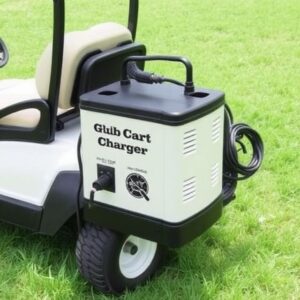
 If you own a Club Car golf cart, one thing you absolutely cannot overlook is the battery charger. A dead or improperly charged battery pack does not just leave you stranded on the fairway — it can permanently damage expensive batteries, cost you hundreds in replacements, and shorten the overall lifespan of your cart. Choosing the right club car golf cart battery charger is one of the most important maintenance decisions you will make as a golf cart owner.
This article breaks down everything you need to know: how Club Car chargers work, which models are compatible with your cart, what features to look for, how to troubleshoot common charging problems, and which products offer the best value. Whether you own a DS, Precedent, or Onward model, this post has you covered.
What Is a Club Car Golf Cart Battery Charger?
A Club Car golf cart battery charger is a device specifically designed to replenish the energy stored in your golf cart’s battery pack. Unlike a standard car battery charger, golf cart chargers are engineered to handle the deep-cycle lead-acid or lithium battery systems that power electric golf carts.
Club Car is one of the most recognized names in the golf cart industry, known for manufacturing carts used on courses worldwide and in residential communities. Their electric carts run on battery packs that typically range from 36-volt to 48-volt systems, and the charger you use must match the voltage of your specific cart.
“Using the wrong charger on a golf cart battery system is one of the most common — and most preventable — causes of premature battery failure.” — Golf Cart Resource, 2023
Deep-cycle batteries behave very differently from the starter batteries in your car. They are designed to be discharged deeply and recharged hundreds of times over their lifespan. This means the charging process needs to be slower, more controlled, and voltage-specific. A charger that pushes too much current too quickly, or one that does not cut off at the right time, can overheat battery cells and cause irreversible damage.
Suggested read: Cart Battery Charger: Everything You Need to Know Before You Buy
Why the Right Club Car Battery Charger Matters
Many golf cart owners underestimate how much their charger affects battery longevity. The battery pack in a Club Car golf cart can cost anywhere from $600 to $1,500 or more, depending on the configuration. A quality charger that costs $150–$300 is a small investment compared to replacing a full set of batteries every two years instead of five.
Here is a quick breakdown of what happens when you use the wrong charger:
| Problem | Cause | Effect on Battery |
|---|---|---|
| Overcharging | Charger doesn’t auto-shutoff | Cell damage, electrolyte loss |
| Undercharging | Low-amperage or wrong voltage | Sulfation, reduced capacity |
| Wrong voltage | Mismatched charger | Blown fuses, cell failure |
| Slow/no charge | Damaged cord or connector | Deep discharge, dead cells |
| Overheating | High-amp rapid charger | Warped plates, leaks |
Club Car Golf Cart Models and Their Voltage Requirements
Before purchasing a Club Car golf cart battery charger, you need to know your cart’s voltage. Club Car has produced several models over the decades, and not all use the same battery system.
Club Car DS (1982–Present)
- Voltage: 36V or 48V depending on year
- Early DS models (pre-2000) commonly used 36V systems
- Post-2000 DS carts largely transitioned to 48V
- Charger Receptacle: OBC (On-Board Computer) style plug
Club Car Precedent (2004–Present)
- Voltage: 48V standard
- Uses the Lester Summit Series OBC charging system
- Requires a charger compatible with the onboard computer
- Charger Receptacle: 3-pin DC connector (D-style plug)
Club Car Onward (2017–Present)
- Voltage: 48V (Lead-Acid or Lithium options)
- Lithium versions require a dedicated lithium-compatible charger
- Charger Receptacle: Same D-style plug as Precedent
⚠️ Important: Never assume your charger is compatible based on plug shape alone. Always verify the voltage and chemistry (lead-acid vs. lithium) before charging.
Types of Club Car Golf Cart Battery Chargers
Not all chargers are created equal. Here are the main types you will encounter when shopping for a golf cart battery charger for Club Car models.
1. OEM (Original Equipment Manufacturer) Chargers
These are the chargers that come directly from Club Car or their authorized partners (like Lester Electrical, which has been Club Car’s primary OEM charger partner for decades). OEM chargers are designed to work seamlessly with your cart’s onboard computer (OBC) and battery management system.
Pros:
- Perfect compatibility guaranteed
- Designed for your specific battery chemistry
- Automatic shutoff when fully charged
- Warranty protection maintained
Cons:
- More expensive (typically $250–$400+)
- Fewer options for customization
2. Aftermarket Chargers
Aftermarket chargers from brands like Delta-Q, Schauer, PowerDrive, and Lester Summit offer solid alternatives at more competitive price points. Many of these are actually used as OEM chargers by various manufacturers anyway.
Pros:
- More affordable
- Wide range of amp ratings available
- Often include advanced charging algorithms
Cons:
- Compatibility must be carefully verified
- Some may void warranty if used on newer carts
3. Smart Chargers
Smart chargers use multi-stage charging algorithms — typically bulk charge, absorption, and float/maintenance stages — to maximize battery health. These are the gold standard for deep-cycle battery care.
Multi-Stage Charging Process:
Suggested read: The Ultimate Guide to Club Car 48V Chargers: Everything You Need to Know Before You Buy
- Bulk Stage – Delivers maximum current until battery reaches ~80% capacity
- Absorption Stage – Reduces current as voltage rises to 100%
- Float/Maintenance Stage – Trickle charges to maintain full capacity without overcharging
4. Lithium Battery Chargers
If your Club Car Onward or converted cart uses a lithium iron phosphate (LiFePO4) battery pack, you must use a lithium-compatible charger. Charging lithium batteries with a lead-acid charger is dangerous and will destroy your battery pack.
Lithium chargers typically charge faster (2–4 hours vs. 8–10 hours for lead-acid) and use a CC/CV (Constant Current/Constant Voltage) charging profile.
Top Club Car Golf Cart Battery Chargers Reviewed
Here are some of the most trusted options on the market today for Club Car owners:
🏆 1. Lester Summit Series II — Best Overall
The Lester Summit Series II is the gold standard in Club Car charging. Lester Electrical has been Club Car’s OEM partner for years, and the Summit Series II is their flagship smart charger.
- Voltage Options: 36V and 48V
- Amperage: 15A or 25A
- Charging Algorithm: Multi-stage with automatic desulfation mode
- Compatibility: All Club Car DS, Precedent, Onward with lead-acid batteries
- Price Range: $275–$350
- Key Feature: OBC bypass capability for carts with disabled onboard computers
⚡ 2. Delta-Q QuiQ — Best Smart Charger
The Delta-Q QuiQ is widely respected in the golf cart industry for its precision charging profiles and compatibility across multiple battery chemistries.
- Voltage Options: 36V, 48V, 72V
- Amperage: Up to 15A
- Algorithm Count: 22 pre-loaded charging profiles
- Compatibility: Lead-acid and lithium with the right profile selected
- Price Range: $220–$300
💰 3. Schauer Charge-It Series — Best Budget Option
For Club Car owners on a budget who don’t want to sacrifice quality, the Schauer Charge-It is a reliable workhorse.
- Voltage Options: 36V or 48V
- Amperage: 10A–15A
- Best For: Older DS models with flooded lead-acid batteries
- Price Range: $120–$180
🔋 4. Club Car 48V Lithium Charger (OEM) — Best for Lithium
For Club Car Onward models with factory lithium packs, the OEM lithium charger ensures perfect compatibility and safe charging.
- Voltage: 48V
- Charging Time: ~3–4 hours from empty
- Price Range: $300–$400
- Key Feature: BMS communication for safe cell balancing
How to Choose the Right Club Car Golf Cart Charger
Choosing a charger is not complicated if you follow a simple checklist. Here is what to verify before purchasing:
Step 1 – Identify Your Voltage Check your battery compartment. Count the batteries and add up their individual voltages (most are 6V or 8V each). Six 6V batteries = 36V. Six 8V batteries = 48V.
Step 2 – Identify Your Battery Chemistry Lead-acid (flooded or AGM) and lithium require very different chargers. Do not guess — check your battery labels.
Step 3 – Check Your Charging Receptacle Club Car uses a few different plug styles depending on the model and year. The most common are:
- 3-Pin D-Style Plug (most Precedent and Onward models)
- 2-Pin Powerwise Plug (some older DS models)
- Round EZ-Go Style (not Club Car, but often confused)
Step 4 – Choose Your Amperage Higher amperage = faster charging, but more heat. For most home users, a 15A charger strikes the best balance between speed and battery longevity. Commercial or fleet users may prefer 25A.
Step 5 – Decide on Smart vs. Basic For any cart that is more than two or three years old or has a battery pack worth over $500, invest in a smart charger with automatic multi-stage charging and shutoff.
How to Use a Club Car Golf Cart Battery Charger Safely
Proper charging habits can double the life of your battery pack. Follow these best practices every time you charge:
Suggested read: Best Battery Charger for RV Battery: Everything You Need to Know Before You Buy
- Charge after every use — even if you only used the cart for 20 minutes. Allowing batteries to sit in a discharged state causes sulfation.
- Charge in a well-ventilated area — lead-acid batteries emit hydrogen gas during charging.
- Do not charge in freezing temperatures — charging below 32°F (0°C) can cause battery damage.
- Never leave a non-smart charger unattended — without automatic shutoff, you risk overcharging.
- Inspect the charger cord and plug regularly — frayed wires or corroded connectors cause inefficient charging and fire hazards.
- Keep the battery tops clean and dry — dirty battery terminals can cause short circuits and inaccurate charge readings.
- Store partially charged in winter — if storing your cart for the season, keep batteries at 50–70% charge and use a maintenance charger.
Club Car Battery Charger Troubleshooting
Even with the best charger, problems can arise. Here are the most common issues and how to fix them:
Problem 1: Charger Turns On But Battery Won’t Charge
Possible Causes:
- Battery voltage is too low for the charger to detect
- Loose or corroded battery terminals
- Faulty OBC (On-Board Computer) on the cart
Fix: Use a voltmeter to check individual battery voltages. If one or more batteries are below 2V per cell, you may need to manually “wake” the battery using a 12V automotive charger briefly. Check all terminal connections and clean with a baking soda solution.
Problem 2: Charger Runs Indefinitely
Possible Causes:
- One or more batteries are not accepting a charge
- Charger is not calibrated to your battery chemistry
- Faulty automatic shutoff circuit
Fix: Conduct a load test on each battery individually. Replace any battery that fails the load test. If all batteries test fine, the charger itself may need repair or replacement.
Problem 3: Charger Gets Very Hot
Possible Causes:
- Obstructed ventilation around the charger unit
- Internal fan failure
- Using a charger with too high an amp rating for your battery size
Fix: Ensure the charger is placed in an open, ventilated area during use. Listen for the cooling fan — if it is not running, the charger likely needs servicing.
Problem 4: Charger Shows “Error” or Fault Code
Possible Causes:
- Most smart chargers will fault if battery voltage is outside the expected range
- Common fault codes include open circuit (no battery detected) or reverse polarity
Fix: Refer to your charger’s manual for specific fault code definitions. Delta-Q and Lester chargers both offer LED blink codes to diagnose issues.
Club Car Battery Charger: Cost and Value Analysis
Here is a realistic cost breakdown to help you make a smart purchasing decision:
| Charger Type | Price Range | Battery Life Impact | Best For |
|---|---|---|---|
| Basic manual charger | $60–$100 | Reduces battery life | Rarely recommended |
| Standard automatic | $100–$180 | Neutral | Budget-conscious buyers |
| Smart multi-stage charger | $180–$350 | Extends battery life by 20–30% | Most homeowners |
| OEM Club Car charger | $250–$400 | Best compatibility | New cart owners |
| Lithium charger | $250–$500 | Essential for Li packs | Lithium battery owners |
A 2023 study by the Electric Vehicle Research Institute found that golf cart owners who used properly matched smart chargers reported battery pack lifespans of 4.5 to 6 years, compared to just 2.5 to 3.5 years for those using mismatched or basic chargers. Over a typical cart ownership period of 8–10 years, this translates to saving one full battery replacement cycle — or approximately $800–$1,200.
Case Study: How the Right Charger Saved One Club Car Owner $1,100
Background: A Florida retirement community resident owned a 2016 Club Car Precedent 48V. After purchasing the cart used, he continued using the previous owner’s generic 48V charger he found in the garage.
Problem: Within 18 months, three of his six 8V batteries tested below capacity. A cart repair shop quoted him $1,100 for a full battery replacement.
Suggested read: Rattan Charger: Everything You Need to Know Before You Buy or Replace Yours
Discovery: A technician found that the generic charger being used did not communicate with the cart’s OBC and was continuously overcharging the pack by approximately 1.5V above the proper cutoff level.
Solution: Before replacing all batteries, the technician replaced only the two most damaged batteries ($240) and installed a Lester Summit Series II 48V charger ($299).
Result: Two years later, all batteries are testing at full capacity. Total cost: $539 instead of $1,100+. Savings: $560+ — and counting.
This case illustrates why investing in the right Club Car golf cart battery charger pays for itself many times over.
Club Car Golf Cart Battery Charger Maintenance Tips
Your charger itself needs a little care to keep performing well:
- Store indoors — extreme heat or cold shortens charger component life
- Keep the cord untangled — kinked cords develop internal wire breaks over time
- Clean the plug contacts — use a dry cloth or electrical contact cleaner every few months
- Do not leave plugged in permanently — even smart chargers should be disconnected after the charge cycle completes to reduce wear on the plug and receptacle
- Check the cord for damage annually — replace immediately if any fraying or melting is found
Where to Buy a Club Car Golf Cart Battery Charger
You can find quality chargers from several trusted sources:
- Club Car Dealers — For OEM chargers with warranty protection. Use the Club Car dealer locator to find your nearest authorized dealer.
- Golf Cart Specialty Retailers — Sites like Golf Cart Garage, Buggies Unlimited, and Ride the Drive carry a wide selection of aftermarket and OEM options.
- Amazon — Convenient for comparison shopping, but verify seller reputation and product authenticity.
- Local Golf Cart Repair Shops — Often carry charger inventory and can verify compatibility for your specific model before you buy.
📌 Internal Link: If you are also considering upgrading your battery pack, read our in-depth post on the best Club Car golf cart batteries to pair with your new charger.
Frequently Asked Questions About Club Car Golf Cart Battery Chargers
What charger does a Club Car golf cart use?
Most modern Club Car golf carts use a 48-volt automatic smart charger with a 3-pin D-style DC plug. The specific charger depends on the model and year. Older DS models may use a 36V charger with a different plug style. Always check your owner’s manual or battery compartment label to confirm your voltage before purchasing a replacement charger.
How long does it take to charge a Club Car golf cart battery?
A standard 15-amp Club Car golf cart charger will fully recharge a depleted 48V battery pack in approximately 8 to 10 hours. A higher-output 25-amp charger can reduce this to 4 to 6 hours. Lithium battery packs charge significantly faster, typically reaching full capacity in 2 to 4 hours.
Can I use any 48V charger on my Club Car golf cart?
No — not all 48V chargers are compatible with Club Car golf carts. You need a charger that matches the plug type, the battery chemistry (lead-acid vs. lithium), and ideally communicates with your cart’s onboard computer (OBC). Using the wrong charger can permanently damage your batteries or electronics.
Why won’t my Club Car golf cart battery charger turn on?
The most common reasons a Club Car charger will not turn on include: battery voltage too low for the charger to detect, a faulty OBC, a bad connection at the charge receptacle, or a damaged charging cord. Test your battery voltages with a multimeter and inspect all connections before assuming the charger is defective.
How do I know if my Club Car battery charger is bad?
Signs of a failing charger include: charger not turning on at all, charger running continuously without reaching completion, the charger getting excessively hot, fault/error lights or blink codes on smart chargers, or batteries consistently underperforming despite regular charging. When in doubt, test the charger with a known good battery pack to isolate the problem.
Is it okay to leave a Club Car golf cart plugged in all the time?
For carts with a smart multi-stage charger, leaving it plugged in for extended periods is generally safe because the charger switches to float/maintenance mode after a full charge. However, it is still best practice to unplug once the charge cycle completes to reduce wear on the connector and avoid long-term trickle charging effects on lead-acid cells.
Suggested read: Quiq Battery Charger:Everything You Need to Know Before You Buy
What is the best Club Car golf cart battery charger brand?
The most trusted brands for Club Car golf cart battery chargers are Lester Electrical (Summit Series), Delta-Q (QuiQ), and Schauer. For OEM replacement, Lester chargers are specifically designed to integrate with Club Car’s onboard systems. For aftermarket options with advanced algorithms, Delta-Q is highly regarded by technicians and fleet operators.
How much does a Club Car golf cart battery charger cost?
Prices range from $120 for basic aftermarket chargers to $400 or more for OEM Club Car lithium chargers. Most homeowners will find an excellent smart charger in the $180–$300 range that offers multi-stage charging, automatic shutoff, and compatibility with both lead-acid and select lithium systems.
Final Thoughts: Invest in the Right Club Car Golf Cart Battery Charger
Your Club Car golf cart is a significant investment, and your battery pack is one of its most expensive and vital components. The charger you use every single day has a direct and measurable impact on how long those batteries last, how well the cart performs, and how much you spend on maintenance over the years.
Do not cut corners when it comes to your Club Car golf cart battery charger. Match it to your voltage, battery chemistry, and cart model. Invest in a smart multi-stage charger with automatic shutoff. Follow safe charging practices and maintain the charger itself. Do these things and your battery pack will reward you with years of reliable, fade-free performance.
Ready to find the perfect charger for your Club Car? Shop the top-rated Club Car golf cart battery chargers here and give your cart the power it deserves.
Sources and Citations:
- Club Car Official Documentation: clubcar.com
- Lester Electrical Product Specifications: lesterelectrical.com
- Delta-Q Technologies QuiQ Charger Guide: delta-q.com
- Electric Vehicle Research Institute, Battery Maintenance Study, 2023
- Golf Cart Resource: Best Practices in Deep-Cycle Battery Management, 2023