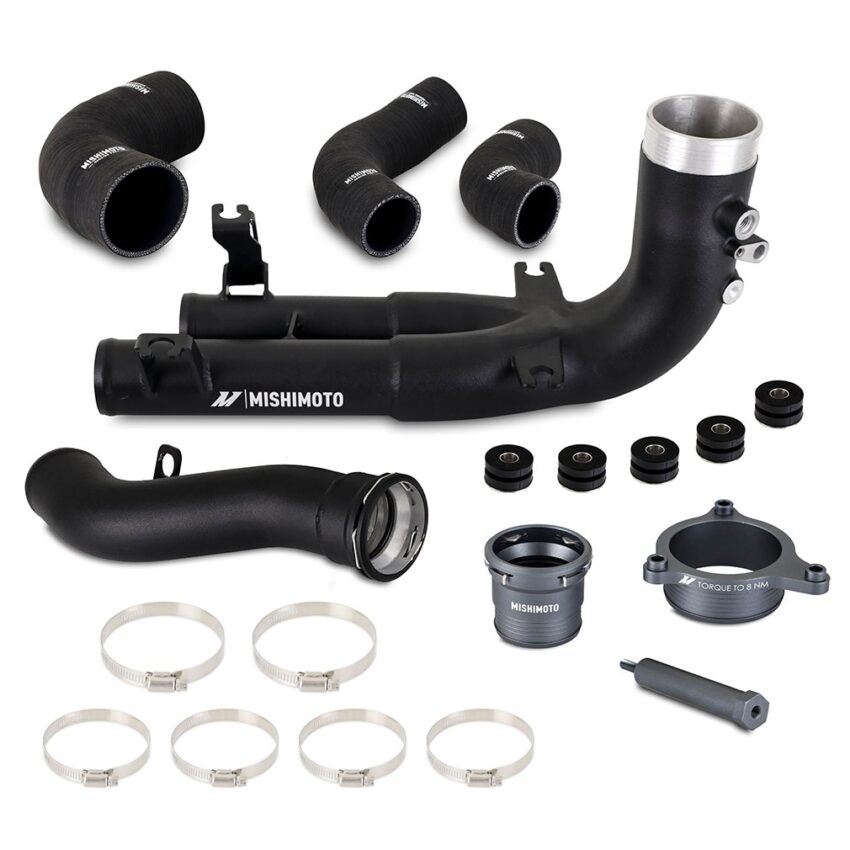
What Is a Charge Pipe and Why Your Turbocharged Engine Needs One?
A charge pipe is a specialized aluminum or stainless steel tube that connects your turbocharger to the intercooler system in turbocharged engines. A charge pipe is a special aluminum, stainless steel, or rubber tube. It’s bent in a specific way to replace the regular pipes that come with your engine. This new pipe connects to the intercooler pipe and the intake manifold. Unlike factory-installed plastic piping, aftermarket charge pipes are designed to handle higher boost pressures while maintaining optimal airflow characteristics.
The primary function of a turbo charge pipe is to transport compressed air from the turbocharger to the intercooler with minimal pressure loss. It’s designed to keep as much air pressure from the turbo as possible and lets more airflow from the turbo to the intercooler, which eventually helps your engine perform better overall. This critical component plays a vital role in your engine’s breathing system, directly impacting power output and overall performance.
Modern turbocharged vehicles rely heavily on efficient airflow management to achieve their impressive power-to-displacement ratios. The factory charge pipe systems often prioritize cost over performance, using restrictive designs with sharp bends and smaller internal diameters. These design compromises can create bottlenecks in your turbo system, limiting the potential gains from other modifications.
Key Functions of Charge Pipes:
- Transport pressurized air from turbocharger to intercooler
- Maintain boost pressure integrity throughout the system
- Resist heat and pressure from turbocharged air
- Provide mounting points for sensors and blow-off valves
- Enable smooth airflow transitions between components
Performance Benefits of Aftermarket Charge Pipe Systems
Upgrading to an aftermarket charge pipe system delivers measurable performance improvements across multiple metrics. The intercooler piping kit optimize and smooth out the air flow, increase horsepower and improve throttle response without re-tuning the ECU. These benefits stem from superior engineering and materials compared to factory components.
Horsepower and Torque Gains
Real-world testing demonstrates that quality charge pipe upgrades can provide noticeable power improvements. HPS Claims 13 WHP and 10 ft/lb gain without tune on mobile app.. Dyno for just charge pipe shows about 10 and 10 in the 2023 type-R install. While individual results vary based on vehicle platform and existing modifications, most drivers experience gains between 5-15 horsepower with improved torque delivery throughout the RPM range.
Enhanced Throttle Response
One of the most immediately noticeable benefits is improved throttle response. In terms of a noticeable difference There is a better flow to it and better throttle response. The charge pipe introduces more air into the engine it is not required to tune it but for best results its recommended to have it tuned. The smoother internal surfaces and optimized bend radii reduce turbulence, allowing the turbocharger to build boost more efficiently.
Suggested read: Charge Air Cooler System: Enhancing Engine Performance and Efficiency
Pressure Loss Reduction
Professional-grade aftermarket systems significantly reduce pressure loss compared to factory components. Reduces restriction by up to 42% over stock pipe This improvement means more of the turbocharger’s work reaches the engine, resulting in better overall efficiency and performance.
Performance Comparison Table
| Metric | Factory Charge Pipe | Aftermarket Charge Pipe | Improvement |
|---|---|---|---|
| Internal Diameter | 63.5mm (typical) | 67mm+ | 5-10% larger |
| Pressure Loss | High (restrictive bends) | Minimal | Up to 42% reduction |
| Material Strength | Plastic/Rubber | Aluminum/Steel | 3-5x stronger |
| Heat Resistance | Limited | Excellent | Superior |
| Power Gain | Baseline | +5-15 HP | Variable |
Materials and Construction: Aluminum vs Steel Charge Pipes
The material choice for your charge pipe upgrade significantly impacts performance, durability, and cost. Understanding the characteristics of different materials helps you make an informed decision based on your specific needs and budget.
Aluminum Charge Pipes
Aluminum represents the most popular choice for aftermarket charge pipe systems. AEM charge pipes consist of free-flowing, mandrel-bent aluminum tubes that replace your vehicle’s restrictive factory intercooler piping. The material offers an excellent balance of weight, strength, and thermal properties that make it ideal for turbocharged applications.
Mandrel-bent aluminum construction ensures smooth internal surfaces without the crimping or distortion common in other bending methods. Made from lightweight mandrel bent aluminum tubing, the charge pipe kit has less bend and better air flow compared to the oem restrictive design. This manufacturing process maintains consistent internal diameter throughout bends, minimizing turbulence and pressure loss.
The lightweight nature of aluminum provides several advantages beyond performance. Weight reduction in the engine bay improves overall vehicle dynamics and reduces stress on mounting points. Additionally, aluminum’s natural corrosion resistance ensures long-term durability in harsh engine environments.
Stainless Steel Options
A charge pipe is one of the most critical components of a vehicle. It is a stainless steel tube that can help you replace the factory-installed intercooler piping of an internal combustion engine. Stainless steel charge pipes offer superior strength and heat resistance compared to aluminum alternatives, making them ideal for high-boost applications.
The increased wall thickness and material strength of stainless steel provide exceptional durability under extreme conditions. High-performance builds running significant boost levels benefit from steel’s ability to resist deformation and cracking under sustained pressure. However, this strength comes with increased weight and typically higher cost.
Construction Quality Features
Premium charge pipe systems incorporate several design elements that enhance performance and reliability:
- Bead-rolled ends: The bead rolled pipe ends prevent couplers from popping off under boost
- Smooth internal transitions: Eliminate sharp edges that create turbulence
- Reinforced mounting brackets: Provide secure attachment points
- Integrated sensor bungs: Allow for proper ECU monitoring
Installation Process and Technical Requirements
Installing a charge pipe system requires careful attention to detail and proper tools to ensure optimal performance and reliability. The complexity varies depending on your vehicle’s configuration and the specific charge pipe design.
Pre-Installation Preparation
Before beginning the installation, gather all necessary tools and materials. REQUIRED HARDWARE: 5MM Allen T20 T25 T30 7MM Socket 11MM Socket Having the correct tools prevents damage to components and ensures proper torque specifications throughout the process.
Allow the engine to cool completely before starting work. Charge pipe installations typically require accessing components in tight spaces around the turbocharger and intercooler. Working with a cool engine prevents burns and makes handling components safer and more comfortable.
Step-by-Step Installation Overview
- Remove factory air intake components to access the existing charge pipe system
- Disconnect electrical connections from sensors mounted in the original piping
- Remove intercooler mounting hardware if required for access
- Carefully extract the factory charge pipe while noting routing and connection points
- Test-fit the new charge pipe before applying any couplers or clamps
- Install silicone couplers with appropriate clamps at all connection points
- Reconnect all sensors ensuring proper sealing and electrical connections
- Reassemble remaining components in reverse order of removal
Critical Installation Points
Proper coupler installation prevents boost leaks that can significantly impact performance. Included coupler is constructed with steel wire reinforcement to prevent ballooning under high boost pressures Use high-quality T-bolt clamps rather than standard worm gear clamps for secure connections under boost pressure.
Suggested read: Silver Charger Plates in Action: 5 Real-World Case Studies That Prove Their Impact on Events and Hospitality
Sensor placement requires particular attention to maintain proper ECU operation. Many charge pipe systems include pre-installed bungs for temperature and pressure sensors. Ensure all connections are clean and properly sealed to prevent false readings or check engine lights.
Professional vs DIY Installation
While many enthusiasts can successfully install charge pipe systems, several factors should influence your decision between professional installation and DIY approach:
- Technical experience with turbo system components
- Tool availability including proper torque wrenches and specialty tools
- Time constraints for thorough installation and testing
- Warranty considerations that may require professional installation
Top Charge Pipe Brands and Product Comparison
The aftermarket charge pipe market offers numerous options ranging from budget-friendly upgrades to premium racing components. Understanding the key players and their product offerings helps you select the best system for your specific needs and budget.
Premium Brand Overview
Mishimoto stands out as a leading manufacturer of cooling system components and charge pipes. Their products feature extensive engineering and testing, with vehicle-specific designs that optimize fitment and performance. 3″ mandrel-bent piping with internal transitions for reduced turbulence and improved flow demonstrates their attention to airflow optimization.
AEM brings decades of intake system expertise to their charge pipe offerings. AEM charge pipes have been engineered to reduce turbo charged air pressure loss as well as dramatically increase air flow from the turbo to the intercooler. Their engineering focus on measurable performance gains makes them popular among serious enthusiasts.
HPS Performance offers cost-effective solutions without sacrificing quality. HPS Performance intercooler piping kit is a simple yet effective performance upgrade to replace oem restrictive plastic intercooler hot and cold side charge pipes. Their products provide excellent value for enthusiasts seeking proven performance improvements.
Brand Comparison Matrix
| Brand | Price Range | Material Options | Warranty | Target Market |
|---|---|---|---|---|
| Mishimoto | $300-800 | Aluminum | Lifetime | Premium/Racing |
| AEM | $250-600 | Aluminum | 1-2 Years | Performance |
| HPS | $150-400 | Aluminum/Steel | 1 Year | Value/Street |
| ARM Motorsports | $200-500 | Aluminum | 1 Year | Enthusiast |
| Integrated Engineering | $400-700 | Aluminum | 2 Years | High-Performance |
Vehicle-Specific Considerations
Different platforms have unique requirements that influence charge pipe selection. BMW N54 and N55 engines, for example, have specific mounting points and sensor requirements. The charge pipe connects the intercooler to the intake. Unfortunately the stock intercooler is barely-adequate, particularly on N54, N55, N20, and N26 engines.
Audi’s turbocharged platforms benefit from larger diameter options. Larger 67mm inner diameter vs. small stock 63.5mm diameter provides measurable improvement in flow capacity for high-performance applications.
Troubleshooting Common Charge Pipe Issues
Charge pipe systems, while generally reliable, can develop issues that affect performance and drivability. Understanding common problems and their solutions helps maintain optimal system operation and prevents more serious complications.
Boost Leaks and Detection
Boost leaks represent the most common charge pipe-related issue. These leaks can occur at coupler connections, cracked pipes, or damaged sealing surfaces. Symptoms include reduced power output, poor throttle response, and unusual turbo sounds during acceleration.
Detection Methods:
- Visual inspection of all connections and pipe surfaces
- Smoke testing using specialized equipment to pressurize the system
- Boost gauge monitoring during driving to identify pressure drops
- Audible leak detection listening for hissing sounds under boost
Pressure Testing Protocol
Professional shops use smoke machines to pressurize the charge pipe system and identify leak locations. DIY enthusiasts can perform basic pressure tests using shop air and soapy water solution. Apply 10-15 PSI to the system and look for bubbles indicating leak points.
Connection Point Failures
Silicone couplers and clamps represent common failure points in charge pipe systems. The best quality charge pipe should be capable of resisting heat, cracking, bending, or wrapping. Regular inspection of these connection points prevents unexpected failures.
Suggested read: Silver Charger Plates: Frequently Asked Questions — Your Complete Guide to Buying, Using, and Caring for Them
Preventive Maintenance Schedule:
- Monthly: Visual inspection of all visible connections
- Quarterly: Detailed inspection including removal of engine covers
- Annually: Professional boost leak testing and complete system check
- As needed: Replacement of worn couplers and clamps
Sensor-Related Problems
Modern charge pipe systems integrate multiple sensors for proper ECU operation. Faulty connections or damaged sensors can trigger check engine lights and affect performance. Common sensor issues include:
- MAP sensor reading errors affecting fuel delivery
- Temperature sensors providing incorrect air charge temperature data
- Pressure sensors impacting boost control algorithms
Performance Tuning and ECU Optimization
While many charge pipe upgrades provide benefits without ECU modifications, proper tuning maximizes the potential gains from your investment. it is not required to tune it but for best results its recommended to have it tuned. Understanding the relationship between charge pipe upgrades and engine management helps optimize your setup.
ECU Adaptation Requirements
Modern engine management systems continuously adapt to changes in airflow characteristics. Installing a higher-flowing charge pipe system can trigger adaptive learning routines that gradually optimize fuel delivery and ignition timing. This adaptation process typically requires several hundred miles of varied driving conditions.
Some vehicles benefit from immediate ECU recalibration following charge pipe installation. High-performance applications or vehicles with existing modifications often require professional tuning to fully realize the benefits of improved airflow capacity.
Tuning Considerations by Platform
Different engine platforms respond differently to charge pipe modifications:
BMW N54/N55 Engines: These platforms typically show immediate improvement in throttle response with minimal ECU adaptation required. However, vehicles with aggressive tunes may require recalibration to optimize boost curves.
Audi 2.0T Platform: The EA888 engine family benefits significantly from proper tuning following charge pipe installation. The improved airflow capacity allows for more aggressive boost maps and timing advance.
Honda Turbo Engines: Modern Honda turbocharged engines like the L15B7 in the Civic Type R respond well to charge pipe upgrades, particularly when combined with appropriate ECU mapping.
Datalog Analysis for Optimization
Professional tuners use extensive datalogging to optimize ECU parameters following charge pipe installation. Key parameters monitored include:
- Intake air temperatures throughout the RPM range
- Boost pressure curves and peak values
- Knock sensor activity under load
- Fuel trim adjustments across operating conditions
- Throttle response metrics and acceleration curves
Cost Analysis and Return on Investment
Understanding the financial aspects of charge pipe upgrades helps make informed decisions about this modification. The investment extends beyond the initial purchase price to include installation, supporting modifications, and potential maintenance costs.
Initial Investment Breakdown
Quality charge pipe systems range from $150 for basic upgrades to $800+ for premium racing components. The price variation reflects differences in materials, manufacturing processes, and included components:
Budget Options ($150-300):
Suggested read: Silver Charger Plates in Action: 5 Real-World Case Studies That Prove Their Impact on Events and Hospitality
- Basic aluminum construction
- Standard silicone couplers
- Limited warranty coverage
- Generic fitment
Mid-Range Systems ($300-500):
- Mandrel-bent aluminum tubing
- Reinforced couplers and clamps
- Vehicle-specific design
- 1-2 year warranty
Premium Components ($500-800+):
- Aerospace-grade materials
- Extensive flow testing and optimization
- Lifetime warranty coverage
- Professional installation support
Installation Costs
Professional installation typically ranges from $200-500 depending on vehicle complexity and local labor rates. Factors affecting installation cost include:
- Accessibility of charge pipe routing
- Supporting component removal requirements
- Sensor integration complexity
- Testing and verification procedures
Long-Term Value Considerations
Quality charge pipe systems provide excellent long-term value through improved reliability and performance. Aftermarket charge pipes minimize the pressure loss of turbocharged air. They maximize the airflow, thereby improving the turbocharged performance of your car’s engine. This improved efficiency can translate to better fuel economy under normal driving conditions.
ROI Calculation Framework:
- Performance gains measured in horsepower/torque increases
- Reliability improvements reducing factory component failure risk
- Resale value enhancement for modified vehicles
- Fuel efficiency gains from optimized airflow
Integration with Other Performance Modifications
Charge pipe upgrades work synergistically with other turbo system modifications to maximize overall performance gains. Understanding these relationships helps plan comprehensive modification strategies that deliver optimal results.
Supporting Modifications Priority
The most effective modification sequences build upon each component’s strengths:
Primary Breathing Mods (Stage 1):
- High-flow air filter or intake system
- Quality charge pipe upgrade
- Intercooler improvement
- ECU tuning optimization
Secondary Performance Mods (Stage 2):
- Upgraded turbocharger or hybrid turbo
- High-flow exhaust system
- Fuel system improvements
- Advanced engine management
Intercooler Compatibility
Charge pipe upgrades often pair with intercooler modifications for maximum effectiveness. ARM Motorsports Upgraded Charge Pipe kit! In this install guide we will be walking you through how to install the charge pipes on an OEM location Intercooler as well as the ARM Motorsports upgraded FMIC! Front-mount intercooler conversions require specific charge pipe designs to accommodate the different routing requirements.
For drivers seeking convenient charging solutions for electric vehicles, consider exploring options like a clipper creek charger for reliable home charging capabilities.
Turbocharger Upgrade Synergy
Larger or more efficient turbochargers benefit significantly from unrestricted charge pipe systems. The increased airflow capacity of aftermarket charge pipes allows upgraded turbos to reach their full potential without creating bottlenecks in the system.
Power Level Scaling:
- Stock turbo + charge pipe: 5-15 HP gains typical
- Hybrid turbo + charge pipe: 15-35 HP gains possible
- Large turbo + charge pipe: 35+ HP gains with proper supporting mods
Frequently Asked Questions About Charge Pipes
What is the main purpose of upgrading to an aftermarket charge pipe? The primary purpose is to reduce airflow restrictions and pressure loss between the turbocharger and intercooler, resulting in improved performance, throttle response, and reliability compared to factory plastic piping.
Suggested read: Optimizing Marketing Strategies for Automatic Charging Solutions
Do I need to tune my car after installing a charge pipe? While not absolutely required, ECU tuning is recommended for optimal results. Many vehicles show immediate improvement without tuning, but professional calibration maximizes the benefits of increased airflow capacity.
How much horsepower can I expect from a charge pipe upgrade? Typical gains range from 5-15 horsepower on stock turbo applications, with improvements in torque delivery and throttle response being immediately noticeable. Results vary based on existing modifications and vehicle platform.
What’s the difference between aluminum and steel charge pipes? Aluminum offers lighter weight, better heat dissipation, and lower cost, making it ideal for most applications. Steel provides superior strength for extreme boost applications but weighs more and costs more.
How often should charge pipe systems be inspected? Monthly visual inspections are recommended, with detailed checks quarterly. Annual professional boost leak testing ensures system integrity and optimal performance.
Can I install a charge pipe system myself? Many enthusiasts successfully perform DIY installations with basic tools and mechanical knowledge. However, proper torque specifications and boost leak testing are critical for reliable operation.
Will a charge pipe void my vehicle warranty? Modifications may affect warranty coverage depending on manufacturer policies and specific failure circumstances. Consult with dealers and review warranty documentation before installation.
How do I know if my charge pipe system has a boost leak? Common symptoms include reduced power, poor throttle response, unusual turbo sounds, and check engine lights. Professional smoke testing provides definitive leak detection.
Ready to unlock your turbo’s potential? Browse our extensive selection of premium charge pipe systems designed for your specific vehicle platform. Our expert team provides technical support and installation guidance to ensure optimal results from your performance investment.
Sources and References:
- HPS Performance Products – Intercooler Charge Pipe Systems
- AEM Intakes – Charge Pipe Engineering Documentation
- Mishimoto – Performance Testing Data
- Integrated Engineering – Technical Specifications
- Professional Installation Guidelines and Best Practices