Finding the perfect charger for a Razor scooter can feel overwhelming with so many options available online. Whether your original charger stopped working or you need a backup, understanding what makes a quality replacement charger is crucial for keeping your electric scooter running safely and efficiently. This guide breaks down everything from voltage requirements to shopping tips, so you can make an informed decision and get back to riding.
Understanding Razor Scooter Charger Basics
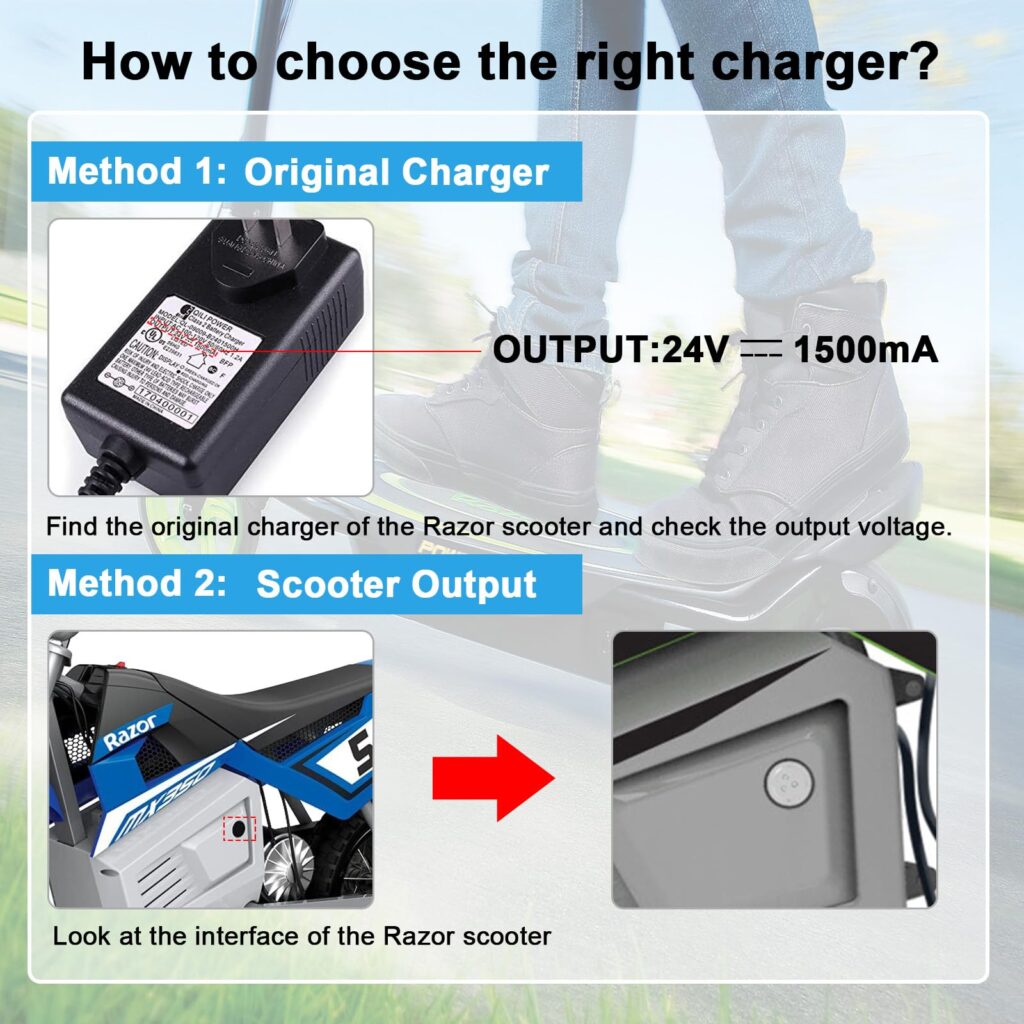
Not all electric scooter chargers are created equal, and using the wrong charger for a Razor scooter can damage your battery or create safety hazards. Razor scooters typically operate on 12V, 24V, or 36V systems depending on the model. The E100 and E200 models usually require 24V chargers, while the E300 and E Prime series often need 36V chargers. Always check your scooter’s manual or the label on your original charger before purchasing a replacement.
The amperage rating matters just as much as voltage. Most Razor scooter chargers output between 1.5A and 2A. Higher amperage charges your battery faster, but using significantly more power than recommended can shorten battery life. Standard charging times range from 8-12 hours for a completely depleted battery. Your charger should have an LED indicator light that turns from red to green when charging completes.
Types of Chargers Available for Razor Scooters
Original Equipment Manufacturer (OEM) Chargers
OEM chargers come directly from Razor and guarantee compatibility with your specific scooter model. These chargers undergo rigorous testing and include safety certifications like UL listing. While OEM chargers typically cost $20-40, they offer peace of mind through warranties and proven reliability. You can purchase authentic Razor chargers through the official Razor website, authorized retailers, or verified Amazon sellers.
Third-Party Replacement Chargers
Third-party manufacturers produce compatible chargers that match Razor specifications at lower price points, usually $15-30. Brands like Razor Power, Binzet, and Keenstone offer popular alternatives. These chargers work well when they meet the correct voltage and amperage requirements. However, quality varies significantly between manufacturers. Always read customer reviews carefully and verify that the charger includes proper safety certifications before purchasing.
Universal Chargers
Universal chargers feature adjustable voltage settings to work with multiple scooter brands and models. These versatile options appeal to families with different electric scooters or people who want one backup charger for various devices. Universal chargers typically cost $25-45 and include multiple connector tips. The main drawback is complexity – you must manually set the correct voltage, and mistakes can damage your battery.
Key Features to Look for in a Razor Scooter Charger
When shopping for a charger for a Razor scooter, prioritize these essential features:
- Correct Voltage Match: Your replacement must exactly match your scooter’s voltage requirement (12V, 24V, or 36V)
- Appropriate Amperage: Stay within 1.5A-2A for standard models unless your manual specifies differently
- Safety Certifications: Look for UL, CE, or FCC certification marks indicating the charger meets safety standards
- LED Indicator Lights: Visual feedback shows charging status without guessing
- Automatic Shutoff: Prevents overcharging by stopping power flow when battery reaches full capacity
- Heat Protection: Built-in temperature sensors prevent dangerous overheating during extended charging
- Durable Cable: Reinforced cables with strain relief last longer than cheap alternatives
- Correct Connector Type: Razor uses specific plug designs that vary by model series
Quality chargers include short circuit protection, over-voltage protection, and over-current protection. These safety mechanisms prevent electrical fires and extend your battery’s lifespan. Never compromise on safety features to save a few dollars.
How to Identify Your Razor Scooter Model
Before ordering a replacement charger for a Razor scooter, you need to know your exact model number. Check the base of your scooter’s deck for a sticker or stamped metal plate containing the model information. Common Razor electric scooter models include:
Entry-Level Models (12V or 24V):
Suggested read: Finding the Right Lawyers for Assault Charges: What You Need to Know Before Hiring
- E100 (ages 8+, 10 mph max speed)
- E125 (similar to E100 with upgraded features)
- E200 (ages 13+, 12 mph max speed)
- E150 (discount store exclusive version)
Mid-Range Models (24V or 36V):
- E300 (ages 13+, 15 mph max speed)
- E Prime III (adult-sized deck, 15 mph)
- E200S (seated version with 12 mph speed)
Premium Models (36V):
- E Prime Air (folding design, 15 mph)
- EcoSmart Metro (seated, 18 mph max speed)
- E300S (seated version of E300)
If you can’t locate your model number, measure your original charger’s output voltage with a multimeter or check the specifications printed on the charger itself. Take a photo of your current charger including all text and bring it to an electric scooter shop for expert identification.
Where to Buy a Replacement Charger for a Razor Scooter
Official Razor Website
The Razor website at razor.com offers guaranteed authentic chargers with full warranty coverage. Shipping typically takes 5-7 business days, and prices run slightly higher than third-party options. The benefit is certainty – you’ll receive exactly what your scooter needs without compatibility concerns. Razor also provides excellent customer service if issues arise.
Amazon and Online Marketplaces
Amazon stocks both OEM and third-party chargers for Razor scooters with fast Prime shipping. Read product descriptions carefully and verify seller ratings before purchasing. Look for listings with hundreds of positive reviews and recent purchase confirmations. Avoid suspiciously cheap options with limited feedback, as these often fail quickly or arrive with incorrect specifications.
Local Sporting Goods and Toy Stores
Target, Walmart, and Dick’s Sporting Goods carry Razor scooter accessories including chargers. Shopping locally lets you compare options in person and take your purchase home immediately. Store staff can help match your scooter model to the correct charger. However, selection is usually limited compared to online retailers, and prices may be higher.
Electric Scooter Specialty Shops
Dedicated electric scooter retailers employ knowledgeable staff who can answer technical questions and recommend quality replacement chargers. These shops often stock hard-to-find chargers for older Razor models. While you’ll pay premium prices, the expertise and personalized service provide value, especially for troubleshooting charging problems beyond simple charger replacement.
Common Problems with Razor Scooter Chargers
Charger Won’t Power On
If your charger for a Razor scooter shows no LED light when plugged in, first test the wall outlet with another device to confirm it’s working. Inspect the charger cable for visible damage like fraying, cuts, or exposed wires. Check that the connector firmly seats into your scooter’s charging port – loose connections prevent proper charging. Try a different outlet in another room to rule out circuit breaker issues.
LED Stays Red Without Turning Green
A permanently red LED usually indicates the battery isn’t reaching full charge. This happens when batteries age and lose capacity, typically after 300-500 charge cycles. The charger works correctly, but the degraded battery can’t hold a complete charge. You may need battery replacement rather than a new charger. However, if the scooter is relatively new, the charger itself might be defective and unable to complete the charging cycle properly.
Charger Gets Extremely Hot
All chargers generate some heat during operation, but excessive temperatures suggest problems. Unplug the charger immediately if it becomes too hot to touch comfortably. Overheating indicates internal component failure or short circuits. Using the charger in this condition risks fire hazards. Replace overheating chargers immediately, even if they still charge the battery. Never cover your charger with fabric or place it on carpet while charging.
Intermittent Charging
When charging works sometimes but not others, check the connector and charging port for debris, corrosion, or bent pins. Clean the port gently with compressed air and ensure the plug inserts completely. Wiggle the connector slightly while plugged in – if the LED flickers on and off, internal wiring is damaged. Intermittent connections eventually fail completely and should be replaced before leaving you stranded with a dead battery.
Suggested read: Best Battery Charger for RV Battery: Everything You Need to Know Before You Buy
Proper Charging Practices to Extend Battery Life
Following correct charging habits maximizes your Razor scooter battery’s lifespan and ensures safe operation. Always charge in a cool, dry location away from flammable materials. Avoid charging in direct sunlight, garages above 90°F, or near heat sources. Extreme temperatures accelerate battery degradation and increase fire risks.
Don’t wait until your battery completely dies before recharging. Lithium and lead-acid batteries last longer when recharged at 20-30% remaining capacity rather than running to zero. However, avoid keeping the scooter plugged in continuously after the green light appears. Constant trickle charging slowly damages battery chemistry over time. Unplug within an hour of the indicator showing full charge.
Store your scooter with a 50-70% charge if you won’t ride for several weeks. Batteries naturally discharge during storage, and dropping below 20% capacity during long-term storage causes permanent damage. Recharge stored scooters every 30 days even if not used. Keep both the scooter and charger for a Razor scooter indoors at room temperature during winter months in cold climates.
Razor Scooter Charger Safety Guidelines
Electrical safety should always be your top priority when charging electric scooters. Never use damaged chargers with frayed cords, cracked housings, or exposed wiring. Water and electricity don’t mix – keep chargers away from wet areas and never charge your scooter in the rain or near pools. Moisture creates electrocution and short circuit risks.
Always supervise charging sessions, especially with children’s scooters. Don’t charge overnight when everyone is asleep. The majority of electric scooter fires occur during unattended charging. Set a timer to remind yourself to check on the charging process and unplug when complete. Install a smoke detector in your charging area for additional protection.
Use surge protectors to guard against power spikes that can damage both your charger and scooter battery. Plug directly into wall outlets rather than extension cords when possible. If you must use an extension cord, choose a heavy-duty cord rated for the charger’s amperage. Thin extension cords overheat and create fire hazards.
Comparing Charger Prices and Value
| Charger Type | Price Range | Warranty | Pros | Cons |
|---|---|---|---|---|
| Razor OEM | $20-40 | 90 days | Guaranteed compatibility, safety certified | Higher cost, limited availability |
| Third-Party Branded | $15-30 | 30-90 days | Good value, widely available | Quality varies, shorter warranty |
| Budget Generic | $10-20 | None or 30 days | Lowest price | Unreliable, safety concerns, frequent failures |
| Universal | $25-45 | 60-90 days | Works with multiple models | Complex setup, user error possible |
Price alone shouldn’t determine your choice. A $35 OEM charger that lasts three years costs less per year than a $12 generic charger that fails after six months. Calculate total cost of ownership including replacement frequency. Mid-range third-party branded chargers from reputable manufacturers often provide the best balance of quality, safety, and affordability.
Troubleshooting Charging Issues Beyond the Charger
Sometimes charging problems stem from the scooter itself rather than the charger for a Razor scooter. If a new charger doesn’t resolve charging issues, inspect your scooter’s charging port. Look for bent pins, corrosion, or debris blocking proper connection. Use a cotton swab with rubbing alcohol to clean corrosion gently. Bent pins may require professional repair or port replacement.
Test your battery’s voltage with a multimeter while charging. The voltage should steadily increase during charging. If voltage remains flat or drops, the battery has failed and needs replacement. Lead-acid batteries in Razor scooters typically last 300-500 charge cycles or 1-3 years with proper care. Lithium batteries in newer premium models last longer but eventually degrade too.
Check the scooter’s internal fuse, usually located near the battery compartment. A blown fuse prevents charging even with a working charger. Replace blown fuses with identical amp ratings – never use higher-rated fuses as this removes important circuit protection. If fuses blow repeatedly, the scooter has an electrical short requiring professional diagnosis.
Upgrading Your Charging Setup
Consider investing in a smart charger with advanced features for frequent riders or multiple scooters. Smart chargers monitor battery condition and adjust charging rates automatically to optimize battery health. These devices cost $40-70 but can extend battery life by 20-30% through proper charge management. Features include battery desulfation, maintenance modes, and diagnostic displays.
Suggested read: The Bully in Charge Chapter 97: Everything You Need to Know About This Game-Changing Manhwa Arc
Portable battery banks designed for electric scooters let you recharge away from home. These power stations work well for long rides or commuters without workplace charging access. Look for units matching your scooter’s voltage with sufficient capacity for at least one full charge. Portable charging solutions cost $80-200 depending on capacity and features.
If you’re also interested in maintaining other vehicles, check out our guide on dodge charger wheels for tips on automotive care and upgrades. Regular maintenance across all your vehicles ensures reliable transportation.
Environmental Considerations and Recycling
Proper disposal of old chargers protects the environment from electronic waste. Never throw chargers in regular trash bins. Electronic components contain metals and chemicals that contaminate soil and groundwater. Most cities offer free electronic waste recycling programs at designated collection sites. Best Buy and other electronics retailers also accept old chargers for recycling regardless of where purchased.
When batteries reach end-of-life, recycle them separately from chargers. Lead-acid batteries contain toxic materials but are highly recyclable. Battery retailers like Batteries Plus accept old scooter batteries and often provide small rebates toward new purchases. Lithium batteries require special handling due to fire risks. Contact your local hazardous waste facility for safe lithium battery disposal options.
Extending charger and battery life through proper care reduces waste and saves money. Simple practices like avoiding extreme temperatures, unplugging after charging completes, and using quality replacement parts significantly increase lifespan. One well-maintained charger lasting four years beats buying four cheap chargers over the same period.
Warranty and Return Policies
Before purchasing any charger for a Razor scooter, understand the return policy and warranty coverage. Reputable sellers offer at least 30-day return windows for defective products. Amazon’s A-to-Z guarantee protects buyers from counterfeit or non-working chargers. Keep your purchase receipt and packaging until you’ve tested the charger successfully.
Manufacturer warranties typically cover defects in materials and workmanship but exclude damage from misuse. Reading warranty terms carefully prevents surprises if problems occur. Some warranties require product registration within 30 days of purchase. Extended warranties rarely make financial sense for low-cost items like chargers – the warranty cost approaches the replacement cost.
Document any problems with photos and detailed descriptions when seeking warranty service. Most companies require proof of defect before issuing replacements. Fast-track warranty claims by contacting customer service through official channels rather than third-party sellers. Manufacturer direct support generally resolves issues more efficiently.
DIY Charger Repair: When It’s Safe and When to Replace
Some simple charger repairs are safe for people comfortable with basic electronics. Replacing a damaged plug or cable requires only soldering skills and basic tools. However, opening charger housings to repair internal components poses serious risks. Chargers contain capacitors that store dangerous electrical charges even when unplugged. Without proper discharge procedures and electrical knowledge, DIY internal repairs can cause electrocution.
If you have electronics experience, replacing a broken cable saves money. Purchase replacement cable with the correct gauge (typically 18AWG) and Razor-compatible connector. Cut the old cable near the charger housing, strip wires carefully, and solder the new cable matching polarity. Heat-shrink tubing provides professional-looking insulation. Test with a multimeter before connecting to your scooter.
For most users, replacement makes more sense than repair. New chargers cost so little that repair time and parts approach replacement costs. Additionally, repaired chargers lack safety certifications and warranties. Unless you enjoy electronics projects, buy a new charger for a Razor scooter rather than attempting repairs.
Suggested read: How to Charge a 12V Battery: Everything You Need to Know About 12V Battery Charging
Future-Proofing Your Charging Setup
As electric scooters evolve, charging technology improves. Newer Razor models may use USB-C charging or quick-charge systems in coming years. When purchasing a new scooter, consider charging convenience alongside riding features. Models with removable batteries let you charge indoors without bringing the entire scooter inside.
Keep your current charger as a backup even when buying a replacement. Having a spare prevents being stranded when your primary charger fails unexpectedly. Store backup chargers in cool, dry locations away from extreme temperatures. Test backup chargers every few months to ensure they still work when needed.
Stay informed about Razor product updates and safety recalls. Register your scooter at the Razor website to receive important notifications about charging issues or product improvements. Following Razor’s social media channels and subscribing to electric scooter forums helps you learn about charging best practices from experienced riders.
Real-World Charging Experiences
Many Razor scooter owners report similar charging experiences. Sarah from Portland shared that her E200 came with a charger that lasted three years before the cable frayed near the plug. She replaced it with a third-party option from Amazon that worked perfectly and cost half the OEM price. However, she emphasized carefully verifying voltage specifications before ordering.
Mike in Austin learned an expensive lesson about universal chargers. He accidentally set the voltage too high and destroyed his son’s E100 battery. The mistake cost $60 for battery replacement versus $25 for a model-specific charger. His advice: skip universal chargers unless you’re absolutely confident about electrical specifications.
Jennifer from Chicago keeps two chargers – one at home and one at her office. This strategy ensures she can always charge her E Prime during lunch breaks for evening rides. She calculates the second charger paid for itself by extending her commuting range and reducing car trips. The convenience factor alone justified the minimal extra cost.
Making Your Final Purchase Decision
Choosing the right charger for a Razor scooter involves balancing cost, quality, and compatibility. Start by confirming your exact scooter model and required voltage. Read recent customer reviews focusing on long-term reliability rather than just initial impressions. Verify that any third-party charger includes safety certifications and reasonable warranty coverage.
Purchase from reputable sellers with clear return policies. For your first replacement charger, consider buying directly from Razor or an authorized dealer to guarantee compatibility. Once you understand your scooter’s requirements, you can confidently explore lower-cost alternatives for future replacements. Keep all documentation and test new chargers immediately upon arrival.
Remember that the cheapest option rarely provides the best value. A reliable charger protects your expensive scooter battery and ensures safety during charging. Spending an extra $10-15 for quality and peace of mind beats risking battery damage or fire hazards. Your family’s safety and your scooter’s longevity are worth the investment in proper charging equipment.
Take Action Now: Get the Right Charger for Your Razor Scooter
Don’t let a dead battery keep your Razor scooter parked in the garage. Whether you need an emergency replacement or a backup charger for convenience, understanding your options helps you make smart decisions. Visit the official Razor website to find OEM chargers guaranteed to work with your model, or explore trusted retailers like Amazon for quality third-party alternatives.
Ready to purchase your charger for a Razor scooter today? Start by locating your scooter’s model number on the deck, checking your required voltage, and reading recent customer reviews for any charger you’re considering. A few minutes of research prevents costly mistakes and gets you back to riding safely. Order now and enjoy the confidence that comes from proper charging equipment.
Suggested read: Rattan Charger: Everything You Need to Know Before You Buy or Replace Yours
Frequently Asked Questions About Chargers for Razor Scooters
What type of charger does a Razor scooter use?
Razor scooters use model-specific chargers with outputs of 12V, 24V, or 36V depending on the scooter model. The E100 and E200 typically require 24V chargers, while the E300 and premium models need 36V chargers. Always verify your specific model’s requirements before purchasing a replacement charger.
Can I use any 24V charger for my Razor scooter?
No, you cannot use just any 24V charger. The charger must match both voltage AND amperage specifications for your Razor model. Additionally, the connector plug must fit your scooter’s charging port correctly. Using incorrect chargers risks damaging your battery or creating safety hazards even if voltage matches.
How long does it take to charge a Razor scooter?
Most Razor scooters require 8-12 hours for a complete charge from empty. The exact time depends on your model and battery size. Never charge longer than 24 hours. Your charger’s LED indicator turns from red to green when charging completes, signaling you should unplug the device.
Why won’t my Razor scooter charger work?
Common reasons include using the wrong voltage charger, a blown fuse in the scooter, damaged charging port, dead battery, or a defective charger. Test your charger’s output with a multimeter, inspect cables for damage, and verify your scooter’s charging port is clean and undamaged before concluding the charger has failed.
Where can I buy a replacement charger for a Razor scooter?
Purchase replacement chargers from the official Razor website, Amazon, Walmart, Target, or local sporting goods stores. For guaranteed compatibility, buy OEM chargers directly from Razor. Third-party chargers work well when you verify voltage, amperage, and safety certifications before ordering.
How much does a Razor scooter charger cost?
Suggested read: Best Laptop Charging Station: Everything You Need to Know Before You Buy
Original Razor chargers typically cost $20-40, while quality third-party replacements range from $15-30. Budget generic chargers sell for $10-20 but often lack proper safety features and fail quickly. Universal chargers cost $25-45. Invest in quality over the cheapest option for safety and reliability.
Can I charge my Razor scooter with a car charger?
No, you should not charge Razor scooters using standard car chargers. Automotive chargers output different voltages and amperage than scooter-specific chargers. Using incorrect power sources damages batteries and creates fire risks. Only use chargers specifically designed for your Razor scooter model.
How do I know if my Razor scooter charger is working?
A working charger displays an LED light when plugged into both the wall outlet and scooter. The light should be red during charging and turn green when complete. Test output voltage with a multimeter if you suspect problems – it should match your charger’s rated voltage within 1-2 volts.
What does it mean when my Razor charger light stays red?
A constantly red light usually indicates the battery is still charging or cannot reach full capacity. If the light stays red beyond the normal 12-hour charging period, your battery may be degraded and unable to hold a full charge. Old batteries often need replacement rather than new chargers.
Is it safe to leave my Razor scooter charging overnight?
While most modern chargers include automatic shutoff features, it’s safest to unplug once the indicator light turns green. Avoid leaving scooters charging unattended for extended periods. Set a timer or charge during hours when you’re home and awake to monitor the charging process for safety.
Sources: Information compiled from Razor official documentation, electric scooter maintenance guides, and user experiences with charger for a Razor scooter products.