Running multiple batteries in your boat, RV, or vehicle setup? You’re going to need a reliable charging solution that can handle all of them simultaneously. That’s where a 3 bank battery charger comes into play—a game-changer for anyone serious about maintaining multiple battery systems efficiently.
Let me walk you through everything you need to know about these multi-battery charging powerhouses, from how they work to which models deliver the best bang for your buck.
What Is a 3 Bank Battery Charger and Why Do You Need One?
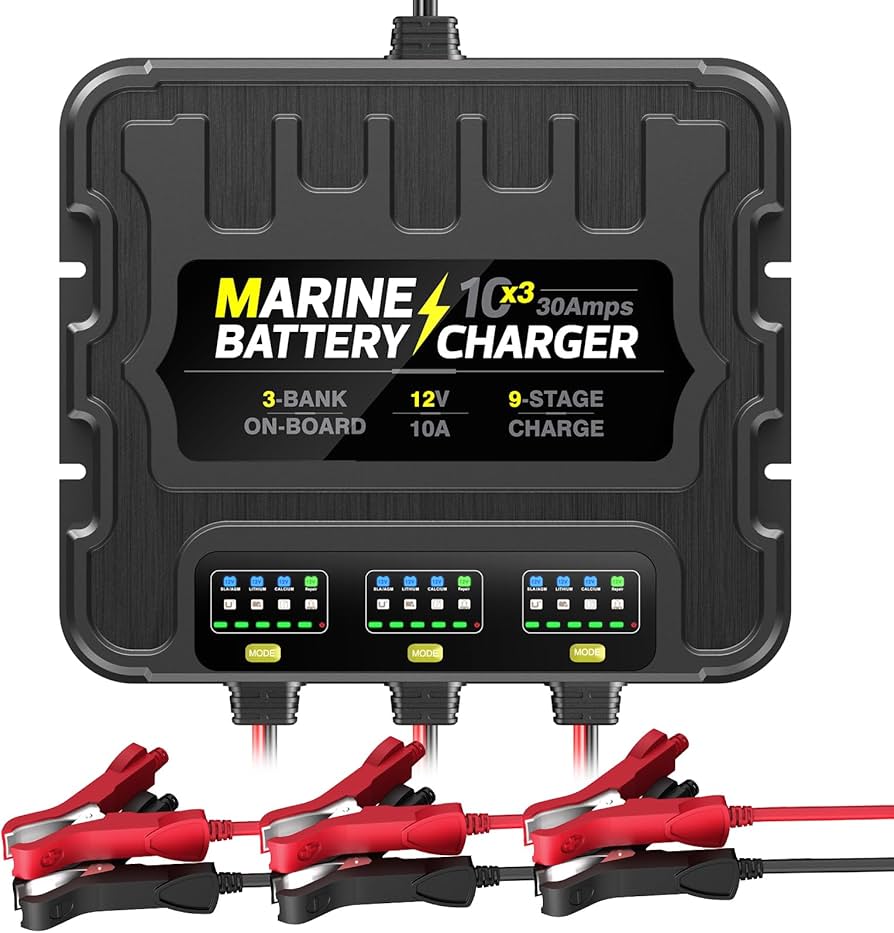
A 3 bank battery charger is a specialized charging device designed to charge three separate batteries at the same time, with each battery receiving its own dedicated charging circuit or “bank.” Think of it as having three individual chargers built into one compact unit, but smarter and more efficient.
According to marine and automotive battery experts, multi-bank chargers have become essential equipment for vessels and vehicles with complex electrical systems. These chargers monitor each battery independently, adjusting voltage and amperage based on each battery’s specific needs.
Here’s why you actually need one: If you’re running a trolling motor, house batteries, and a starting battery on your boat, trying to charge them with separate units becomes a tangled mess of cables and outlets. A 3 bank battery charger simplifies everything while ensuring each battery gets exactly what it needs for optimal performance and longevity.
How Does a 3 Bank Battery Charger Work?
The technology behind these chargers is pretty sophisticated, but I’ll break it down in plain English. Each bank operates as an independent charging station, complete with its own microprocessor that monitors battery voltage, temperature, and charge state.
Smart charging stages are built into quality units. Most premium 3 bank battery chargers use a multi-stage charging process that includes bulk charging (rapid charging to about 80%), absorption (slower charging to 100%), and float maintenance (keeping batteries topped off without overcharging). Some advanced models add a desulfation stage that can actually restore older batteries.
The charger continuously analyzes each battery’s condition. If one battery is deeply discharged while another is nearly full, the charger allocates more power to the depleted battery while switching the charged one to maintenance mode. This intelligent power distribution is what makes multi-bank chargers so effective compared to using multiple single-bank chargers.
Key Features to Look For in a 3 Bank Battery Charger
Shopping for a 3 bank battery charger can feel overwhelming with all the options out there. Let me highlight the features that actually matter, based on real-world performance and user feedback.
Amperage per bank determines how quickly each battery charges. Most quality units offer 5-15 amps per bank. Higher amperage means faster charging, but you need to match it to your battery capacity. A good rule of thumb: the charger amperage should be about 10% of your battery’s amp-hour rating.
Suggested read: Battery Charging Scooter Explained: Best Charging Practices for Electric Scooters
Battery type compatibility is crucial. The best 3 bank battery chargers can handle multiple battery chemistries including:
- Flooded lead-acid batteries
- AGM (Absorbed Glass Mat) batteries
- Gel cell batteries
- Lithium-ion batteries (in select models)
Waterproof ratings matter if you’re mounting this on a boat or in exposed areas. Look for IP67 or IP68 ratings for complete weather protection. These chargers can handle rain, spray, and humidity without missing a beat.
Temperature compensation adjusts charging parameters based on ambient temperature, preventing overcharging in hot weather and undercharging in cold conditions. This feature significantly extends battery life.
Top 3 Bank Battery Charger Models Worth Your Money
Let me cut through the marketing hype and give you the straight story on which 3 bank battery chargers actually deliver results.
Minn Kota MK-3-DC dominates the marine market for good reason. This 3-bank, 15-amp charger (5 amps per bank) features digitally controlled microprocessors, LED indicators for each bank, and automatic temperature compensation. It’s fully waterproof with an IP68 rating and includes a limited lifetime warranty. Users consistently report reliable performance across various battery types, and the compact mounting design saves precious space.
NOCO Genius GEN3 brings advanced charging technology at a mid-range price point. This 3-bank, 30-amp unit (10 amps per bank) works with 12-volt batteries and includes repair mode for sulfated batteries. The integrated thermal sensor prevents over-charging in extreme temperatures. What sets this apart is the ability to charge dead batteries down to 1 volt, something many competitors can’t handle.
Guest 2731A ChargePro Series offers professional-grade performance for serious boaters. With 15 total amps distributed across three banks, this charger features 100% rated output regardless of how many banks are in use. The epoxy-encapsulated circuit boards resist vibration and moisture, making it incredibly durable. The built-in ignition protection meets ISO 8846 and USCG standards for marine applications.
ProMariner ProSport 20 Plus delivers 20 total amps with distributed on-demand charging that automatically allocates power where needed most. This smart distribution means if only one battery needs charging, it can receive the full 20 amps for faster charging. The unit includes a battery status LED indicator system and digital performance control for precision charging.
Installation Guide for Your 3 Bank Battery Charger
Installing a 3 bank battery charger isn’t rocket science, but doing it right ensures safety and optimal performance. Let me walk you through the process step-by-step.
Choose the mounting location carefully. You want a spot that’s well-ventilated, protected from direct water spray, and as close to your batteries as practical. Marine installations typically go in the engine compartment or a dedicated electronics space. RV installations often work best in a battery compartment or storage area. Ensure there’s at least 2-3 inches of clearance around the charger for air circulation.
Connect to AC power first before hooking up batteries. Most 3 bank battery chargers need a dedicated 15-amp circuit. Run marine-grade or outdoor-rated AC cable if the charger will be exposed to weather. Use a GFCI-protected outlet for safety—this is non-negotiable for marine applications.
Suggested read: Best Battery Charger for RV Battery: Everything You Need to Know Before You Buy
Wire each bank to its corresponding battery using the correct gauge wire. For 5-10 amp chargers, 10 AWG wire works well for runs under 10 feet. For higher amperage or longer runs, upgrade to 8 AWG. Always use marine-grade tinned copper wire in boat applications to resist corrosion.
Connect positive first, negative last on each battery. This basic electrical safety rule prevents accidental shorts. Many chargers include ring terminals—crimp these properly with a quality crimping tool and apply heat shrink for professional results. Label each connection so you know which bank goes to which battery.
Test the system by plugging in the charger and verifying that each bank’s LED indicator shows proper charging status. Let it run through a complete charge cycle while monitoring for unusual heat or smells. Modern chargers run cool, so excessive heat indicates a problem.
Maintenance Tips to Maximize Your 3 Bank Battery Charger Lifespan
Your 3 bank battery charger is a significant investment, and proper maintenance keeps it running for years. Here’s how to protect your investment and ensure reliable performance.
Clean connections regularly—corrosion is the enemy of efficient charging. Every few months, disconnect the charger and inspect all battery terminals and charger connections. Use a wire brush to remove corrosion, apply dielectric grease to terminals, and ensure connections are tight. Loose connections create resistance, which generates heat and reduces charging efficiency.
Check for firmware updates if your charger has that capability. Some modern 3 bank battery chargers connect via Bluetooth or WiFi, allowing manufacturers to improve charging algorithms through updates. This free upgrade can enhance performance and add features.
Monitor charging patterns to catch problems early. If a battery that normally charges in 4 hours suddenly takes 8 hours, that’s a red flag. Either the battery is failing or the charger bank isn’t functioning properly. Addressing issues early prevents complete failures.
Protect from extreme temperatures when possible. While quality chargers handle temperature extremes, prolonged exposure to heat above 140°F or cold below -20°F can degrade electronic components. If you’re storing a boat or RV in extreme conditions, consider removing the charger or providing additional protection.
Inspect cables annually for damage, especially in marine environments. Salt water is incredibly corrosive, and even small breaks in wire insulation can lead to failures. Replace any damaged cables immediately with proper marine-grade replacements.
Comparing 3 Bank vs Single Bank Battery Chargers
Should you invest in a 3 bank battery charger or stick with multiple single-bank units? Let me break down the pros and cons based on real-world usage.
Space efficiency heavily favors multi-bank chargers. A single 3 bank battery charger takes up about the same space as one single-bank unit but handles three times the batteries. In tight engine compartments or RV battery bays, this space savings becomes crucial. You’ll also deal with fewer mounting holes and less cable management.
Suggested read: Best 48V Battery Charger: Smart Buying Guide 2025
Cost comparison shows interesting results. A quality 3 bank battery charger typically costs $200-$400, while three equivalent single-bank chargers run $80-$150 each ($240-$450 total). The multi-bank unit saves money while providing better features. However, if one bank fails on a multi-bank charger, you might need to replace the entire unit, whereas single-bank failures only affect one charger.
Power requirements differ significantly. Three single-bank chargers need three separate outlets, which many boats and RVs simply don’t have. A single 3 bank battery charger needs just one outlet, simplifying installation and reducing the electrical load on your AC system.
Charging intelligence is typically superior in multi-bank chargers. These units can coordinate charging across batteries, optimizing power delivery for the entire battery bank. Single-bank chargers work independently with no communication, potentially creating imbalanced charging if batteries have different capacities or charge states.
Troubleshooting Common 3 Bank Battery Charger Issues
Even the best 3 bank battery charger can develop problems. Here’s how to diagnose and fix the most common issues you’ll encounter.
One bank not charging ranks as the most frequent complaint. First, check the obvious—is that battery actually connected? Verify voltage at the battery terminals while the charger is running. If you see voltage from the charger but the battery isn’t charging, the battery itself may have failed. If there’s no voltage from the charger, that specific bank may need professional repair or warranty service.
Charger shuts off repeatedly usually indicates overheating, a short circuit, or a defective battery. Check that the charger has adequate ventilation—blocked cooling vents cause thermal shutdowns. Inspect all wiring for damaged insulation that could cause shorts. Try disconnecting all batteries and reconnecting them one at a time to identify if a specific battery is causing the problem.
Flashing error lights mean different things depending on your charger model, so consult your manual. Generally, rapid flashing indicates a reverse polarity connection (you swapped positive and negative), while slow flashing suggests an incompatible battery type or a battery that’s too discharged to accept a charge safely.
Slow charging on all banks points to insufficient input voltage. Use a multimeter to verify you’re getting proper AC voltage at the charger’s input. Extension cords, especially long or thin ones, can create significant voltage drops that reduce charging performance. Always plug 3 bank battery chargers directly into an outlet when possible.
Battery Types and Compatibility Considerations
Not all batteries play nicely with every 3 bank battery charger, and using the wrong settings can destroy expensive batteries. Here’s what you need to know about compatibility.
Flooded lead-acid batteries are the most forgiving and work with virtually any 3 bank battery charger. These traditional batteries require higher charging voltages (14.4-14.8V for bulk charging) and can handle more aggressive charging profiles. They’re also the least expensive, making them popular for starting batteries and budget-conscious applications.
AGM batteries demand more careful charging. These sealed batteries can’t vent gases like flooded batteries, so overcharging causes permanent damage. Your 3 bank battery charger needs an AGM-specific profile that typically charges to 14.7V in bulk, 14.4V in absorption, and 13.3V for float. Many marine deep-cycle batteries use AGM technology because they handle vibration and can be mounted in any position.
Suggested read: Instant Power Battery Charger: Everything You Need to Know About Portable Jump Starters and Emergency Charging Solutions
Gel cell batteries are the pickiest about charging. They require lower voltages (14.0-14.2V bulk, 13.8V absorption, 13.3V float) and can’t handle high charging currents. If your 3 bank battery charger doesn’t specifically list gel compatibility, don’t use it with gel batteries—you’ll ruin them quickly.
Lithium batteries represent the newest technology but require specialized charging profiles. Only use a 3 bank battery charger explicitly rated for lithium if you’re running LiFePO4 batteries. These batteries need precise voltage control (14.4-14.6V typically) and can accept much higher charging currents than lead-acid batteries, making them incredibly fast to charge with the right equipment.
Cost Analysis: Is a 3 Bank Battery Charger Worth the Investment?
Let’s talk money—specifically, whether a 3 bank battery charger justifies the upfront cost compared to cheaper alternatives.
Initial purchase price for quality 3 bank battery chargers ranges from $200-$500 depending on features and amperage. That seems steep until you consider alternatives. Three separate single-bank chargers of equivalent quality cost roughly the same or more, with added complexity. Charging batteries one at a time with a single charger works but takes forever and risks battery damage from prolonged discharge.
Battery replacement costs drop dramatically with proper charging. Batteries that receive consistent, appropriate charging can last 5-7 years or more. Batteries charged improperly often fail within 2-3 years. With marine batteries costing $100-$300 each, a 3 bank battery charger that extends battery life by even 1-2 years pays for itself entirely.
Time savings add up quickly. If you’re manually moving a single charger between batteries, you’re spending 15-20 minutes several times per week managing charging. Over a boating season, that’s hours of your time wasted. A 3 bank battery charger handles everything automatically while you’re off the boat.
Reduced maintenance creates additional savings. Properly maintained batteries with optimal charging require less water addition (for flooded types), fewer cleaning sessions, and less frequent testing. The convenience and peace of mind knowing your batteries are always charged and maintained properly has real value.
Resale value matters too. A boat or RV equipped with a quality 3 bank battery charger commands a higher resale price. Buyers recognize the value of professional electrical systems, and including the charger in the sale makes your vessel more attractive.
Environmental Impact and Energy Efficiency
Modern 3 bank battery chargers aren’t just about convenience—they’re significantly more environmentally responsible than older charging methods.
Energy consumption in quality multi-bank chargers has dropped dramatically thanks to switching power supplies and efficient design. A modern 3 bank battery charger operating in float mode typically draws less than 1 amp total, costing just $2-$5 per month in electricity even when left connected continuously. Older transformer-based chargers could draw 5-10 times more power.
Reduced battery waste represents the biggest environmental benefit. Every battery that lasts an extra year thanks to proper charging from a 3 bank battery charger is one less battery in a landfill. Lead-acid batteries are recyclable, but manufacturing replacement batteries still consumes significant resources and energy. Extended battery life through proper charging reduces this environmental burden.
Suggested read: Optimizing Marketing Strategies for Automatic Charging Solutions
Smart charging algorithms prevent overcharging, which wastes electricity and generates unnecessary heat. The microprocessor-controlled charging in modern 3 bank battery chargers delivers exactly the power needed, nothing more. This precision eliminates the energy waste common in basic chargers that use fixed charging profiles.
Power factor correction in premium models improves overall electrical efficiency. This feature reduces the apparent power draw from your AC system, potentially lowering electricity costs and reducing strain on generators in off-grid applications. While the savings per month might be small, they add up over years of use.
3 Bank Battery Charger Safety Features You Need
Safety isn’t optional when you’re dealing with batteries and AC power in potentially wet environments. Here are the critical safety features your 3 bank battery charger must include.
Reverse polarity protection prevents disaster if you accidentally connect positive to negative or vice versa. This feature instantly detects incorrect connections and shuts down the charger before damage occurs. Without this protection, reversed connections can create dangerous sparks, ruin the charger, or even explode the battery.
Spark-free connection technology makes hooking up your 3 bank battery charger safer. These chargers use soft-start circuits that ramp up voltage gradually rather than hitting batteries with full power instantly. This eliminates the dangerous sparks that can ignite hydrogen gas around batteries.
Overtemperature shutdown monitors internal charger temperature and ambient temperature around batteries. If the charger gets too hot due to poor ventilation or a malfunction, it automatically shuts down before components fail or fire hazards develop. Similarly, if battery temperature rises dangerously during charging, the charger reduces current or stops entirely.
Short circuit protection detects excessive current flow indicating a short and immediately disconnects power. This prevents charger damage, protects wiring, and eliminates fire risk. Quality 3 bank battery chargers can detect shorts on individual banks without affecting properly connected batteries on other banks.
Ignition protection matters critically in marine applications where fuel vapors may be present. Chargers meeting ISO 8846 marine standards feature sealed electronics and spark-suppression to prevent ignition of explosive atmospheres. Never use a non-marine-rated charger on a gasoline-powered boat.
Understanding Charging Stages and Battery Health
The charging process your 3 bank battery charger uses directly impacts battery performance and longevity. Understanding these stages helps you optimize your setup.
Bulk charging stage delivers maximum current to rapidly bring batteries from discharged to about 80% capacity. During this phase, your 3 bank battery charger operates at full rated output for each bank, pushing as many amps as safely possible into the batteries. Voltage rises steadily during bulk charging as the battery’s state of charge increases.
Absorption stage takes over when batteries reach approximately 80% charge. The charger holds voltage constant (typically 14.4-14.8V for lead-acid batteries) while current gradually decreases as the battery approaches full charge. This stage takes longer than bulk charging but is crucial for fully charging the battery without causing damage.
Suggested read: Effective Strategies for Utilizing Tyler Tech Modules in Resource Management
Float stage maintains batteries at full charge without overcharging. The 3 bank battery charger drops to a lower voltage (typically 13.3-13.6V) that exactly balances the battery’s self-discharge rate. Batteries can remain in float mode indefinitely without harm—this is how you can leave your charger connected during storage without destroying batteries.
Equalization stage is available on some advanced 3 bank battery chargers and intentionally overcharges flooded lead-acid batteries to balance cell voltages and reduce sulfation. This controlled overcharge causes vigorous gassing that mixes the electrolyte and can restore capacity to batteries with stratified acid. Never equalize AGM, gel, or lithium batteries.
Desulfation mode uses high-frequency pulses to break up lead sulfate crystals that form on battery plates over time. This feature can actually recover capacity in batteries that have been stored discharged or chronically undercharged. While not magic, desulfation in quality 3 bank battery chargers measurably improves battery performance in many cases.
Real User Experiences with 3 Bank Battery Chargers
Nothing beats real-world feedback from people actually using these chargers in demanding conditions. Here’s what users consistently report about their 3 bank battery charger experiences.
Marine users praise the reliability and convenience of multi-bank charging. One charter captain reported that after switching to a 3 bank battery charger, his house, starting, and trolling motor batteries maintained better voltage throughout long days on the water. He noted that batteries lasted an average of 6 years instead of 3-4 years with his previous single-charger setup.
RV enthusiasts appreciate the set-it-and-forget-it operation. An experienced RVer mentioned that his 3 bank battery charger kept his chassis, house, and generator batteries maintained perfectly during month-long camping trips. He highlighted that the automatic switching to float mode prevented overcharging while the RV was plugged into shore power.
Professional installers consistently recommend multi-bank chargers for complex electrical systems. A marine electrician with 20 years of experience noted that 3 bank battery chargers dramatically reduce callback service requests compared to DIY charging solutions. He emphasized that the temperature compensation and battery-type selection features prevent the charging mistakes that destroy batteries.
Cost-conscious buyers initially hesitate at the price but become converts after experiencing the benefits. Multiple users reported that their 3 bank battery charger paid for itself within two years through extended battery life alone, not counting the time savings and convenience factors.
Future-Proofing Your Battery System
Investing in a 3 bank battery charger today should serve your needs for years to come. Here’s how to choose a charger that won’t become obsolete quickly.
Multi-chemistry support ensures your charger can handle whatever battery technology you might adopt in the future. While you might use flooded lead-acid batteries today, you could upgrade to AGM or even lithium batteries later. A 3 bank battery charger with profiles for multiple battery types protects this investment.
Sufficient amperage per bank prevents bottlenecks as battery capacities increase. If you’re running 100Ah batteries now but might upgrade to 200Ah batteries later, ensure your charger can deliver appropriate current. Generally, 10 amps per bank handles batteries up to 100Ah well, while 15-20 amps per bank supports 150-200Ah batteries.
Suggested read: Best Chromebook Charging Station for Schools, Offices & Homes (2026)
Modular design allows for repairs and upgrades. Some premium 3 bank battery chargers feature replaceable components or updatable firmware, extending useful life. While more expensive upfront, these chargers can adapt to changing needs and technologies.
Industry standards compliance ensures compatibility with evolving safety requirements. Look for chargers meeting UL, CE, and marine-specific certifications like ABYC and ISO standards. These certifications indicate the 3 bank battery charger meets rigorous safety and performance requirements likely to remain relevant.
How to Select the Right Amperage for Your Needs
Choosing the correct amperage rating for your 3 bank battery charger dramatically affects charging speed and battery health. Here’s how to calculate what you need.
Battery capacity determines charging current. The standard guideline suggests charging current should be 10-20% of the battery’s amp-hour rating. For a 100Ah battery, this means 10-20 amps. A 3 bank battery charger with 10 amps per bank works perfectly for three 100Ah batteries. If your batteries are larger—say 200Ah each—you’d want 20+ amps per bank for reasonable charging times.
Usage patterns matter significantly. If you’re depleting batteries daily and need them recharged overnight, higher amperage gets you back in action faster. Weekend warriors who leave batteries on charge all week can use lower amperage chargers since speed isn’t critical. Consider your specific routine when selecting a 3 bank battery charger.
Available AC power limits your options in some situations. A 30-amp charger (10 amps per bank × 3 banks) drawing 120V AC needs about 3-4 amps of AC current accounting for efficiency losses. That’s fine for shore power but might strain small inverters or generators. Ensure your AC power source can handle the 3 bank battery charger’s requirements.
Battery type influences amperage needs. AGM batteries can safely accept higher charging currents than flooded batteries, while lithium batteries can handle extremely high charge rates. Gel batteries require lower currents. Match your 3 bank battery charger’s amperage to both your battery capacity and chemistry for optimal results.
Seasonal Storage and Your 3 Bank Battery Charger
Proper storage procedures when your boat or RV sits unused protect both your batteries and your 3 bank battery charger investment.
Winter storage strategies vary by climate. In freezing temperatures, fully charged batteries are less likely to freeze than discharged ones. Your 3 bank battery charger’s float mode maintains optimal charge levels throughout winter, preventing freezing and sulfation. If storing in unheated spaces, verify your charger is rated for the expected temperature range—most work down to -4°F but check specifications.
Continuous connection during storage is actually beneficial with modern 3 bank battery chargers. Unlike old-school chargers that could overcharge batteries, smart chargers monitor and maintain batteries in float mode indefinitely. This keeps batteries in peak condition and ready for immediate use when you return. The minimal electricity cost is insignificant compared to battery replacement expenses.
Pre-storage preparation maximizes effectiveness. Before connecting your 3 bank battery charger for winter, fully charge batteries using the normal cycle. Clean all battery terminals and connections. Check electrolyte levels in flooded batteries and top up if needed. Ensure the charger is mounted securely and protected from any water intrusion during storage.
Suggested read: Best Charging Handles for EVs in 2024: Top Picks, Features & What to Look For
Alternative storage methods work if you can’t leave chargers connected. Some users prefer disconnecting batteries and storing them indoors where temperature control is better. If taking this approach, charge batteries fully with your 3 bank battery charger before disconnecting, then recharge monthly during storage to prevent sulfation.
Mounting Options and Installation Best Practices
Where and how you mount your 3 bank battery charger affects performance, longevity, and safety. Here are professional installation tips.
Vertical mounting works best for most 3 bank battery chargers. This orientation promotes convection cooling, allowing hot air to rise away from the unit naturally. Wall mounting near the batteries but away from battery vents is ideal—keep at least 18 inches from battery tops to avoid hydrogen gas exposure.
Vibration isolation matters in mobile applications. Boats and RVs experience significant vibration that can crack solder joints and loosen components over time. Mount your 3 bank battery charger using rubber vibration isolators or add rubber washers between the charger and mounting surface. This simple step dramatically extends life in harsh environments.
Cable routing requires careful planning. Keep battery cables as short as practical—every foot of wire adds resistance that reduces charging efficiency. Route cables away from heat sources like engines and exhaust systems. Use cable ties or clamps every 12-18 inches to prevent cable movement and chafing.
Ventilation requirements can’t be ignored. Even efficient 3 bank battery chargers generate heat that must dissipate. Ensure at least 2 inches clearance on all sides, and never install chargers in completely sealed compartments. If mounting in confined spaces, consider adding a small ventilation fan to promote air circulation.
Warranty and Customer Support Considerations
The warranty backing your 3 bank battery charger reveals manufacturer confidence and provides protection for your investment.
Warranty length varies dramatically across brands. Basic chargers often come with 1-year warranties, while premium models offer 2-5 years, and some industry leaders provide limited lifetime warranties. Longer warranties don’t just protect against defects—they indicate the manufacturer builds products to last and stands behind quality.
Warranty coverage details matter as much as length. Some warranties cover only manufacturing defects, while others include wear and tear or even accidental damage. Read the fine print on your 3 bank battery charger warranty to understand what’s actually covered. Warranties often exclude damage from improper installation, so follow installation instructions carefully.
Customer service reputation becomes critical if problems develop. Research online reviews specifically mentioning customer service experiences. A 3 bank battery charger from a company with responsive, helpful support is worth paying extra for compared to products from companies that ghost customers.
Replacement part availability extends the useful life of your charger. Some manufacturers sell replacement cables, connectors, and even circuit boards for their 3 bank battery chargers. This modular approach means minor failures don’t require replacing the entire unit, saving money and reducing waste.
Suggested read: RV Solar Battery Charger: Power Your Adventures Without Shore Power
Ready to Upgrade Your Battery Charging System?
If you’re serious about maintaining multiple batteries properly, a 3 bank battery charger isn’t just convenient—it’s essential equipment that pays for itself through extended battery life and reliable performance.
Don’t let another season pass with inadequate charging infrastructure. Whether you’re outfitting a boat, RV, or multi-battery vehicle, investing in a quality 3 bank battery charger transforms battery management from a chore into an automated, worry-free process.
The technology has matured to the point where these chargers are incredibly reliable and packed with features that were professional-grade equipment just a few years ago. Temperature compensation, multi-chemistry profiles, and intelligent charge management come standard in most models.
Take action now: Assess your battery system needs, calculate the total amp-hours you’re supporting, and select a 3 bank battery charger with appropriate amperage per bank. Look for multi-chemistry support if you might upgrade batteries in the future. Prioritize marine-grade waterproofing if you’re installing on a boat. Don’t skimp on safety features—reverse polarity protection and thermal monitoring are non-negotiable.
Consider upgrading your entire battery infrastructure while you’re at it. If you’re also running 36-volt systems like some trolling motors, check out options for a 36 volt battery charger to complement your 12-volt setup. Having the right charging solution for every battery in your system ensures maximum performance and longevity across the board.
Your batteries are a significant investment. Protect them with the charging solution they deserve. A 3 bank battery charger delivers the intelligent, automated charging that keeps batteries healthy, saves money over time, and eliminates the hassle of managing multiple batteries manually.
Frequently Asked Questions About 3 Bank Battery Chargers
What is a 3 bank battery charger used for?
A 3 bank battery charger is used to simultaneously charge three separate 12-volt batteries, each through its own independent charging circuit. It’s commonly used in boats (for house, starting, and trolling motor batteries), RVs (for chassis, house, and auxiliary batteries), and vehicles with multiple battery systems. Each bank monitors and charges its connected battery independently with optimal voltage and current.
Can I use a 3 bank battery charger on only one or two batteries?
Yes, absolutely. A 3 bank battery charger works perfectly fine with one, two, or three batteries connected. The unused banks simply remain inactive. Modern chargers intelligently detect which banks have batteries connected and adjust accordingly. You’re not wasting electricity or harming the charger by not using all three banks.
How long does it take to charge batteries with a 3 bank battery charger?
Suggested read: Best Rechargeable D Batteries with Charger: Power Up Smarter in 2026
Charging time depends on battery capacity, discharge level, and charger amperage. As a general rule, divide your battery’s amp-hour rating by the charger’s per-bank amperage to get approximate hours to full charge. A 100Ah battery at 50% discharge with a 10-amp 3 bank battery charger takes roughly 5-6 hours to fully charge. Smart chargers optimize this process automatically.
Do I need to disconnect batteries from my boat or RV to use a 3 bank battery charger?
No, you can leave batteries connected to your boat or RV electrical system while charging with a 3 bank battery charger. The charger is designed for in-system use. However, for fastest charging, it’s beneficial to turn off all loads (lights, electronics, etc.) so the charger’s full output goes into the batteries rather than powering accessories.
Can a 3 bank battery charger charge different types of batteries at once?
Yes, quality 3 bank battery chargers can charge different battery types simultaneously, provided the charger has selectable profiles for each bank. For example, you could charge an AGM battery on bank 1, a flooded lead-acid battery on bank 2, and a gel cell on bank 3. Each bank operates independently with appropriate charging parameters for its connected battery.
Will a 3 bank battery charger overcharge my batteries if left connected?
No, modern 3 bank battery chargers with automatic float mode maintenance charging will not overcharge batteries even if left connected indefinitely. Once batteries reach full charge, the charger automatically switches to a maintenance voltage that exactly balances self-discharge without overcharging. This is actually the recommended way to keep batteries in optimal condition during storage.
What size circuit breaker do I need for a 3 bank battery charger?
Most 3 bank battery chargers operate safely on a standard 15-amp circuit. Check your specific charger’s specifications for exact current draw—it’s typically listed in amps AC. A 30-amp charger (10 amps per bank at 12V DC) draws approximately 3-4 amps from a 120V AC circuit, well within a 15-amp breaker’s capacity. Always use a GFCI-protected circuit for safety.
Can I install a 3 bank battery charger myself, or do I need a professional?
DIY installation of a 3 bank battery charger is definitely feasible if you’re comfortable with basic electrical work. The process involves mounting the charger, running AC power, and connecting DC cables to each battery. Follow the manufacturer’s instructions carefully, use proper wire gauges, and ensure all connections are secure. However, if you’re unsure about electrical work or working on a boat where marine standards apply, hiring a professional installer ensures code compliance and safety.
Suggested read: Compleo Charging Station: Everything You Need to Know About Smart EV Charging Solutions
Ready to experience hassle-free multi-battery charging? Explore the latest 3 bank battery charger models and find the perfect solution for your power needs today.