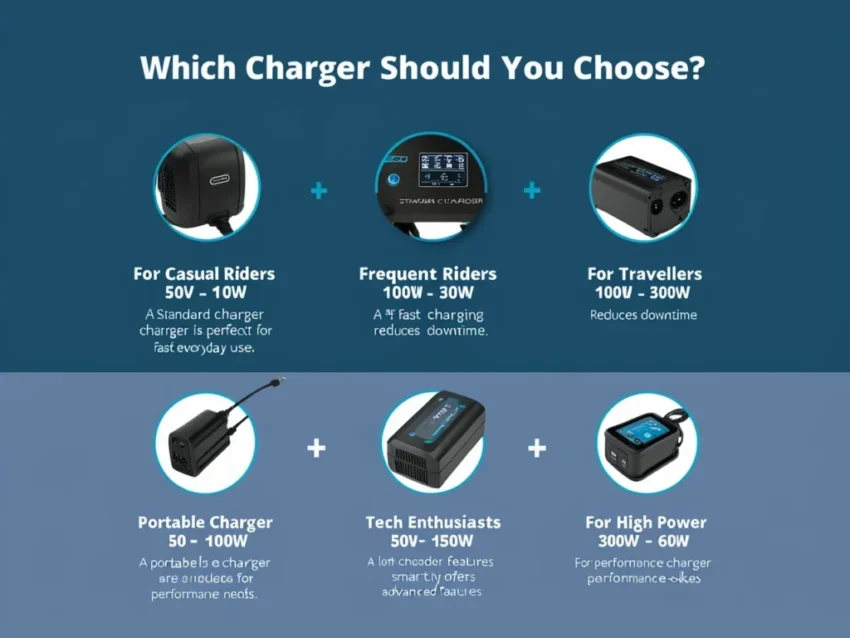
Selecting the right ebike charger is one of the most critical decisions you’ll make as an electric bike owner. Your charger directly impacts battery longevity, charging speed, safety, and overall riding experience. With the electric bike market expected to reach USD 3.71 billion by 2034, understanding the nuances of ebike charging technology has never been more important. This comprehensive guide will help you navigate the complex world of electric bike chargers, ensuring you make an informed decision that protects your investment and enhances your riding experience.
The wrong ebike charger can lead to catastrophic battery failure, safety hazards, or significantly reduced battery life. Conversely, the right charger optimizes your battery’s performance, extends its lifespan, and ensures safe, efficient charging every time. Whether you’re a daily commuter, weekend warrior, or serious trail rider, this guide provides the deep technical knowledge and practical insights you need to select the perfect charging solution for your specific needs.
Understanding Ebike Charger Fundamentals
What Makes an Ebike Charger Essential?
An ebike charger is far more than a simple power adapter – it’s a sophisticated electronic device designed to safely convert AC household current into the precise DC voltage and current your battery requires. A charger for e bike is a specialized device designed to safely recharge the battery of your electric bicycle, ensuring optimal battery health, maximizing range, and prolonging the lifespan of your e bike. The charging process involves complex algorithms that monitor battery temperature, voltage levels, and charging stages to prevent overcharging, overheating, and other potential hazards.
Modern ebike battery chargers incorporate advanced microprocessor technology that communicates with your battery’s Battery Management System (BMS). This sophisticated interaction ensures that charging occurs within safe parameters while optimizing the charging curve for maximum battery longevity. The charger continuously monitors multiple parameters including individual cell voltages, overall pack voltage, charging current, and temperature to deliver precise, safe charging every time.
Key Functions of Professional Ebike Chargers:
- Voltage Regulation: Maintains precise output voltage matching your battery specifications
- Current Control: Adjusts charging current based on battery state and temperature
- Temperature Monitoring: Prevents charging when temperatures exceed safe limits
- Cell Balancing Support: Works with BMS to ensure balanced cell charging
- Safety Protection: Multiple fail-safes prevent overcharging, short circuits, and other hazards
The Science Behind Efficient Ebike Charging
Understanding the charging process helps you appreciate why charger selection is so critical. Lithium-ion batteries, used in virtually all modern electric bikes, require a specific charging profile called “Constant Current, Constant Voltage” (CC-CV). During the initial charging phase, your ebike charger delivers constant current while voltage gradually rises. Once the battery reaches its maximum voltage (typically 42V for 36V systems or 54.6V for 48V systems), the charger switches to constant voltage mode while current gradually decreases.
This charging curve is precisely controlled by your charger’s internal circuitry. Standard ebike chargers are the most common type found with e-bikes. They deliver a steady current with a voltage of around 36V to 55V and an amperage between 2A to 4A. The quality of this voltage and current regulation directly impacts charging efficiency, battery health, and safety. Cheaper chargers may have poor voltage regulation, leading to overcharging, undercharging, or dangerous voltage spikes that can damage your battery or create safety hazards.
Suggested read: The Leading Figures Driving the Evolution of Automated Charging Systems
Types of Ebike Chargers: A Detailed Analysis
Standard Ebike Chargers
Standard ebike chargers represent the most common charging solution included with most electric bikes. These chargers are designed to charge your battery at a moderate pace, usually taking 4 to 6 hours for a full charge. The efficiency of standard chargers is reliable, making them ideal for overnight charging or when time isn’t a critical factor. Standard chargers typically output 2-4 amperes of charging current, making them suitable for most recreational and commuting applications.
The primary advantages of standard chargers include their affordability, reliability, and gentleness on battery cells. The lower charging current generates less heat, which is beneficial for battery longevity. However, the trade-off is longer charging times, which may not be suitable for users who need quick turnaround times or those with high daily mileage requirements.
Standard Charger Specifications:
- Output Voltage: 42V (36V systems) or 54.6V (48V systems)
- Output Current: 2-4 amperes
- Charging Time: 4-8 hours for full charge
- Power Consumption: 150-250 watts
- Best For: Overnight charging, casual riders, budget-conscious users
Fast Ebike Chargers
Fast ebike chargers have revolutionized electric bike usage by dramatically reducing charging times. Charging Time: 2-3 hours is the typical charging time for most e-bikes, depending on the charger output and size. Best For: Riders who need quick charging. These high-current chargers typically output 5-8 amperes or more, allowing batteries to reach 80% capacity in 1-2 hours and full charge in 2-4 hours.
However, fast charging comes with important considerations. Fast-charging options, for instance, have shown no significant short-term impact on battery health, based on a study of over 160,000 data points. While research indicates that occasional fast charging doesn’t significantly impact battery life in the short term, frequent use of fast chargers can generate more heat and potentially reduce long-term battery capacity. The key is understanding when and how to use fast charging appropriately.
Fast Charger Advantages:
- Rapid Turnaround: Get back on the road quickly
- High Convenience: Perfect for lunch breaks or short stops
- Professional Use: Essential for delivery services or intensive use
- Emergency Charging: Ideal when you’re caught with low battery
Fast Charger Considerations:
- Higher Cost: Typically 2-3x more expensive than standard chargers
- Heat Generation: May require active cooling or temperature monitoring
- Battery Impact: Should be used judiciously to maintain optimal battery health
- Power Requirements: May require dedicated circuits for highest-power models
Smart Ebike Chargers
Smart ebike chargers represent the cutting edge of charging technology, incorporating advanced features that optimize battery health and charging efficiency. Smart chargers automatically adjust charging speed, monitor battery health, and provide sophisticated charging algorithms that adapt to your battery’s specific needs and condition.
These intelligent chargers feature microprocessor control, smartphone connectivity, customizable charging profiles, and comprehensive battery diagnostics. Many smart chargers can analyze your battery’s health, track charging cycles, and even predict when your battery may need replacement. The investment in a smart charger often pays for itself through extended battery life and improved performance.
Smart Charger Features:
- Adaptive Charging: Automatically adjusts current based on battery condition
- Temperature Compensation: Modifies charging parameters based on ambient temperature
- Cell Balancing: Active balancing for improved battery performance
- Diagnostic Capabilities: Comprehensive battery health analysis
- Remote Monitoring: Smartphone apps for charge status and history
- Customizable Profiles: Different charging modes for various scenarios
Ebike Charger Compatibility: Critical Technical Considerations
Voltage Matching: The Foundation of Safe Charging
Voltage compatibility is the most critical factor in ebike charger selection. Always consult your TST EBike manual for exact specifications-incorrect voltage or connector risks battery failure or safety hazards. Your charger’s output voltage must precisely match your battery’s charging voltage requirements. Common ebike battery voltages include:
36V Battery Systems:
- Nominal Voltage: 36V
- Charging Voltage: 42V
- Typical Capacity Range: 8-20Ah
- Common Applications: City bikes, casual riding, lighter weight systems
48V Battery Systems:
- Nominal Voltage: 48V
- Charging Voltage: 54.6V
- Typical Capacity Range: 10-25Ah
- Common Applications: Performance bikes, long-range touring, cargo bikes
52V Battery Systems:
Suggested read: Exploring the Latest Market Trends in Automatic Charging Technologies for 2026
- Nominal Voltage: 52V
- Charging Voltage: 58.8V
- Typical Capacity Range: 12-30Ah
- Common Applications: High-performance bikes, custom builds, speed-focused applications
Current (Amperage) Considerations
While voltage must match exactly, charging current (amperage) offers more flexibility but requires careful consideration. An ebike charger typically uses between 150 and 500 watts depending on the battery size, voltage, and charger specifications. Most chargers for common 36V or 48V batteries draw about 2 to 5 amps, translating to roughly 240 to 500 watts during charging. Higher current chargers charge faster but generate more heat and may impact battery longevity if used exclusively.
Charging Current Guidelines:
- Conservative Charging: 0.5-1C (capacity in Ah ÷ 2)
- Standard Charging: 1-2C (capacity in Ah)
- Fast Charging: 2-4C (2-4x capacity in Ah)
- Maximum Safe Charging: Varies by battery chemistry and BMS capabilities
For example, a 10Ah battery would use:
- 2A charger for conservative charging (5-hour charge time)
- 5A charger for standard charging (2-hour charge time)
- 10A charger for fast charging (1-hour charge time)
Connector Types and Physical Compatibility
Ebike charger connector compatibility extends beyond electrical specifications to physical connector types. Different manufacturers use various connector standards, and using adapters or modifying connectors can introduce safety risks. every brand has its own design quirks and patents, so there’s no universal charger out there. That’s why the charger that comes with your e-bike is made specifically for that model, to make sure it charges right and keeps things running smoothly.
Common Ebike Charging Connectors:
- XLR Connectors: 3-pin, 4-pin, and 5-pin variations
- DC Barrel Connectors: Various diameters and pin configurations
- Anderson Powerpole: High-current applications
- XT60/XT90: Performance and custom applications
- Proprietary Connectors: Brand-specific designs for security and optimization
Safety Considerations for Ebike Chargers
Understanding Charging Hazards
Ebike charger safety cannot be overstated – improper charging has led to battery fires, property damage, and even injuries. Using a charger electric bicycle with incorrect voltage, amperage, or connector can lead to overheating, reduced battery capacity, permanent battery damage, or even fire hazards. Understanding and mitigating these risks is essential for safe electric bike ownership.
Primary Charging Hazards:
- Overcharging: Can cause battery swelling, electrolyte leakage, or thermal runaway
- Thermal Runaway: Chain reaction leading to fire or explosion
- Electrical Fires: From poor-quality chargers or damaged components
- Toxic Gas Release: Lithium-ion batteries can release dangerous gases when damaged
- Electrocution: From damaged chargers or improper electrical connections
Best Practices for Safe Charging
Implementing proper charging practices dramatically reduces risks while extending battery life. Professional-grade ebike chargers incorporate multiple safety features, but user practices remain equally important for optimal safety outcomes.
Essential Safety Practices:
- Charge in Well-Ventilated Areas: Prevents gas accumulation and aids heat dissipation
- Use Fire-Resistant Surfaces: Charge on concrete, metal, or fire-resistant materials
- Install Smoke Detectors: Early warning systems in charging areas
- Regular Inspections: Check chargers, cables, and connectors for damage
- Temperature Monitoring: Avoid charging in extreme temperatures
- Supervised Charging: Don’t leave batteries charging unattended for extended periods
Certification and Quality Standards
Purchasing ebike chargers from reputable manufacturers with proper certifications ensures adherence to safety standards. Verify charger quality and safety certifications to avoid electrical hazards. Look for certifications from recognized testing laboratories that validate electrical safety, electromagnetic compatibility, and environmental standards.
Key Safety Certifications:
- UL Listed: Underwriters Laboratories safety testing
- CE Marking: European Conformity standards
- FCC Certification: Federal Communications Commission approval
- RoHS Compliance: Restriction of Hazardous Substances
- Energy Star: Energy efficiency standards
Top Ebike Charger Brands and Models in 2025
Luna Cycle Advanced Chargers
Luna Cycle has established itself as a leader in high-performance ebike charger technology. Luna Charger 48V Advanced smart charger has different settings to prolong ebike battery life and charge batteries as fast as possible. Their Advanced series chargers feature programmable charging profiles, advanced diagnostics, and robust build quality that appeals to serious enthusiasts and professionals.
Luna Cycle Charger Features:
- Variable Charging Current: Adjustable from 1A to 15A
- Multiple Voltage Options: 36V, 48V, 52V, and 72V models
- Smart Charging Algorithms: Optimized for different battery chemistries
- Temperature Compensation: Adjusts charging based on ambient temperature
- Robust Construction: Industrial-grade components for longevity
Bosch eBike Systems
Bosch represents the gold standard for integrated ebike charger systems. Quick charging of Bosch eBike batteries: 50% charge and more after only an hour. The handy charging devices are lightweight, robust and easy to take with you on any tour. Their chargers are specifically designed to work seamlessly with Bosch drive systems and batteries, providing optimized charging performance and comprehensive integration.
Bosch Charger Advantages:
Suggested read: A Step-by-Step Guide to Creating Your Own Automated Charging Point
- Perfect Integration: Designed specifically for Bosch battery systems
- Fast Charging Options: Multiple power levels available
- Compact Design: Lightweight and portable for travel
- Proven Reliability: Backed by extensive testing and real-world use
- Comprehensive Warranty: Professional support and service network
Universal High-Quality Options
For riders with non-proprietary systems or those seeking upgrade options, several manufacturers produce high-quality universal ebike chargers that offer professional performance across multiple battery types and voltages.
Top Universal Charger Recommendations:
- Grin Technologies Satiator: Ultimate in programmable charging technology
- BMS Battery Luna Advanced: High-power, multi-voltage capabilities
- EbikeBC Chargers: Reliable, cost-effective options
- Pedego Chargers: Quality construction with good warranty support
Maintenance and Care for Your Ebike Charger
Extending Charger Lifespan
Proper maintenance of your ebike charger ensures reliable performance and prevents premature failure. Quality chargers can last many years with proper care, while poor maintenance can lead to early replacement and potential safety hazards. Understanding how to properly maintain your charger protects your investment and ensures consistent charging performance.
Essential Maintenance Practices:
- Keep Connections Clean: Regular cleaning prevents corrosion and resistance
- Avoid Physical Damage: Protect from drops, impacts, and crushing
- Temperature Management: Store in moderate temperature environments
- Cable Care: Prevent sharp bends and stress on charging cables
- Regular Testing: Monitor charging times and performance indicators
Storage and Transportation
Proper storage and transportation practices prevent damage and ensure your ebike charger remains functional when needed. Many charger failures result from improper handling during storage or transport, making these practices critical for charger longevity.
Storage Best Practices:
- Climate Control: Avoid extreme temperatures and humidity
- Protective Cases: Use padded cases for transport
- Cable Management: Prevent tangling and stress on connections
- Regular Exercise: Periodic use prevents component degradation
- Inventory Management: Track multiple chargers to prevent loss
Troubleshooting Common Ebike Charger Issues
Diagnostic Procedures
When your ebike charger doesn’t perform as expected, systematic troubleshooting helps identify the root cause and determine whether repair or replacement is necessary. Many charging issues stem from simple problems that can be resolved without professional service, while others indicate serious problems requiring immediate attention.
Common Charging Problems:
- No Charging Indication: Check connections, fuses, and power sources
- Slow Charging: Verify charger specifications and battery condition
- Overheating: Inspect for blocked ventilation or component failure
- Error Messages: Consult manual for specific error code meanings
- Intermittent Operation: Check for loose connections or damaged cables
When to Replace Your Charger
Knowing when to replace your ebike charger prevents unsafe conditions and ensures optimal charging performance. While quality chargers can last many years, certain indicators suggest replacement is necessary for safety and performance reasons.
Replacement Indicators:
- Physical Damage: Cracked housings, damaged cables, or burnt components
- Performance Degradation: Significantly longer charging times or poor regulation
- Safety Concerns: Unusual heat, odors, or electrical behavior
- Compatibility Issues: When upgrading batteries or electrical systems
- Age Considerations: Chargers over 5-7 years old may benefit from replacement
Cost Analysis: Investing in Quality Ebike Chargers
Price Ranges and Value Proposition
Ebike charger pricing varies dramatically based on features, build quality, and brand reputation. Understanding the relationship between price and value helps you make informed purchasing decisions that balance budget constraints with performance and safety requirements.
Charger Price Categories:
- Budget Chargers ($30-80): Basic functionality, limited features
- Mid-Range Chargers ($80-200): Good balance of features and quality
- Premium Chargers ($200-500): Advanced features, superior build quality
- Professional Chargers ($500+): Ultimate performance and capabilities
Long-Term Value Considerations
While premium ebike chargers require higher initial investment, they often provide superior long-term value through extended battery life, improved performance, and enhanced safety features. Quality chargers can extend battery life by 20-50%, easily justifying their higher cost over the battery’s lifetime.
Value Calculation Factors:
Suggested read: Key Hurdles in Implementing Automated Charging Solutions
- Battery Life Extension: Premium chargers can double battery lifespan
- Safety Features: Prevent catastrophic failures and associated costs
- Performance Optimization: Better efficiency and faster charging
- Warranty Support: Professional service and replacement programs
- Resale Value: Quality chargers retain value for resale or transfer
Environmental Impact of Ebike Charging
Energy Efficiency Considerations
Modern ebike chargers vary significantly in energy efficiency, with efficiency ratings ranging from 80% to over 95%. Higher efficiency chargers not only reduce electricity costs but also minimize environmental impact through reduced energy consumption and heat generation.
Efficiency Optimization Strategies:
- Choose High-Efficiency Chargers: Look for 90%+ efficiency ratings
- Optimal Charging Practices: Charge at moderate temperatures when possible
- Smart Charging Schedules: Use off-peak electricity when available
- Maintenance for Efficiency: Keep chargers clean and well-maintained
- End-of-Life Recycling: Properly dispose of old chargers
Sustainability Considerations
The environmental benefits of electric bikes are maximized when combined with sustainable charging practices. Choosing quality ebike chargers that last longer, charge more efficiently, and can be properly recycled contributes to the overall environmental benefits of electric transportation.
Future Trends in Ebike Charging Technology
Emerging Technologies
The ebike charger industry continues to evolve with advancing battery technology, smart grid integration, and improved safety features. Understanding emerging trends helps you make forward-looking purchasing decisions that will remain relevant as technology advances.
Technology Trends:
- Wireless Charging: Contactless charging systems under development
- Vehicle-to-Grid Integration: Bi-directional charging capabilities
- AI-Powered Optimization: Machine learning for optimal charging profiles
- Ultra-Fast Charging: Sub-30-minute charging becoming practical
- Solar Integration: Direct solar charging capabilities
Market Evolution
As the electric bike market continues expanding, ebike charger standardization and improved interoperability are becoming increasingly important. Industry efforts toward common standards will eventually provide better compatibility and reduced complexity for consumers.
Professional Installation and Setup
DIY vs Professional Installation
While most ebike chargers are designed for plug-and-play operation, certain installations benefit from professional setup, particularly for high-power chargers, permanent installations, or complex electrical environments.
Professional Installation Benefits:
- Electrical Safety: Proper circuit sizing and safety measures
- Optimal Performance: Professional setup ensures optimal operation
- Code Compliance: Adherence to local electrical codes and regulations
- Warranty Protection: Professional installation may be required for warranty coverage
- Troubleshooting Support: Access to professional diagnostic capabilities
Setup Optimization
Proper ebike charger setup maximizes performance, safety, and convenience. Even simple installations benefit from careful planning and attention to detail that ensures optimal long-term operation.
Setup Considerations:
- Location Selection: Ventilation, accessibility, and safety factors
- Electrical Requirements: Adequate circuit capacity and protection
- Environmental Factors: Temperature, humidity, and contamination protection
- User Convenience: Easy access and operation
- Future Expansion: Planning for additional chargers or upgrades
Call to Action
Selecting the right ebike charger is crucial for maximizing your electric bike investment, ensuring safe operation, and optimizing your riding experience. Whether you need a basic replacement charger or an advanced smart charging system, the information in this comprehensive guide provides the foundation for making an informed decision.
Don’t compromise on charger quality – your battery life, safety, and riding enjoyment depend on choosing the right charging solution. Research the options, consider your specific needs, and invest in a quality ebike charger that will serve you well for years to come. Visit reputable dealers, read reviews, and consult with professionals to ensure you select the perfect charger for your electric bike system.
Frequently Asked Questions About Ebike Chargers
What should I look for when buying an ebike charger?
When purchasing an ebike charger, prioritize voltage compatibility, appropriate amperage ratings, safety certifications, build quality, and connector compatibility. Always verify that the charger’s output voltage exactly matches your battery’s charging requirements, and choose chargers with proper safety certifications from recognized testing laboratories.
Can I use any ebike charger with my electric bike?
No, ebike chargers are not universal. every brand has its own design quirks and patents, so there’s no universal charger out there Each electric bike requires a charger with specific voltage, amperage, and connector specifications that match the battery system. Using an incompatible charger can damage your battery or create safety hazards.
Suggested read: Discover the Key Advantages of Automated Charging Solutions
How long should an ebike charger last?
A quality ebike charger should last 3-7 years with proper care and maintenance. Factors affecting lifespan include build quality, usage frequency, environmental conditions, and maintenance practices. Premium chargers with better components and construction typically last longer than budget alternatives.
Is it safe to leave my ebike charger plugged in overnight?
Most modern ebike chargers are designed with automatic shut-off features that make overnight charging relatively safe. However, it’s best practice to monitor charging and unplug the charger when the battery is fully charged. Always charge in well-ventilated areas and avoid leaving chargers unattended for extended periods.
What’s the difference between fast charging and regular charging?
Fast ebike chargers deliver higher amperage to reduce charging time, typically completing a charge in 2-3 hours compared to 4-6 hours for standard chargers. Fast-charging options, for instance, have shown no significant short-term impact on battery health, based on a study of over 160,000 data points However, frequent fast charging may generate more heat and potentially reduce long-term battery capacity.
How much power does an ebike charger use?
An ebike charger typically uses between 150 and 500 watts depending on the battery size, voltage, and charger specifications Most standard chargers consume 200-300 watts during active charging, while fast chargers may use 400-800 watts or more. The total energy cost is relatively low, typically costing $0.10-0.30 per full charge depending on local electricity rates.
What are the signs that my ebike charger needs replacement?
Replace your ebike charger if you notice physical damage (cracked housing, frayed cables), unusual heat generation, burning odors, significantly longer charging times, or any electrical abnormalities. These symptoms may indicate component failure that could pose safety risks or damage your battery.
Can I repair my ebike charger if it stops working?
While some ebike charger issues can be repaired, most problems require professional service or complete replacement. Simple issues like blown fuses or loose connections might be repairable, but complex internal failures typically require replacement. Always prioritize safety and consider the cost of repair versus replacement when making decisions.
- Learn more about silver charger plates for enhanced connectivity
- Discover our comprehensive ebike maintenance guide
- Explore premium battery management systems
Sources: