Breaking a lease can be an expensive proposition for tenants, and one of the most significant costs you might face is a reletting charge. This administrative fee has become increasingly common in rental agreements across the United States, yet many tenants remain unclear about what these charges entail, when they’re legally enforceable, and how they differ from other lease-breaking penalties. Understanding the intricacies of reletting charges can save you hundreds or even thousands of dollars when you need to terminate your lease early.
A reletting charge represents the costs landlords incur when they need to find a replacement tenant after you vacate your rental unit before the lease term expires. Unlike rent payments that cover your occupancy, this fee compensates landlords for the administrative burden, marketing expenses, and time investment required to secure a new tenant. The complexity of these charges varies significantly by state, lease terms, and local regulations, making it essential for tenants to understand their rights and obligations.
What Is a Reletting Charge and How Does It Work?
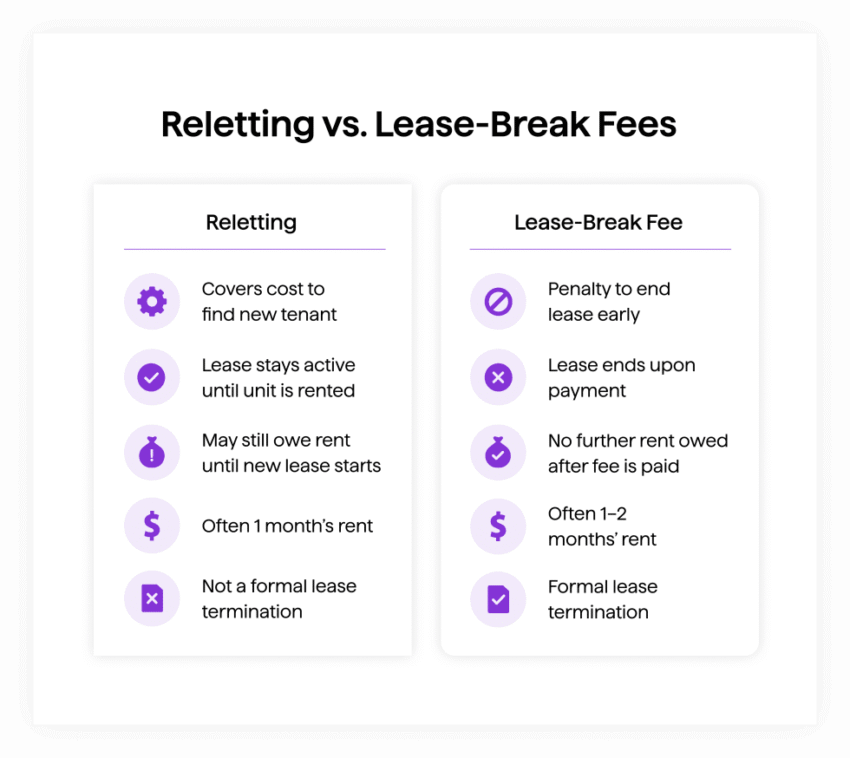
A reletting charge is “an administrative charge that covers the cost of finding a new tenant” when you break your lease early. This fee is distinct from ongoing rent obligations and serves as compensation for the landlord’s efforts to minimize their financial losses from your early departure. The charge typically covers several specific expenses that landlords incur during the tenant replacement process.
Key components of reletting charges include:
- Marketing and advertising costs for listing the vacant unit
- Administrative time spent screening potential tenants
- Background check and credit report fees for applicant processing
- Property showing expenses including utilities and staff time
- Lease preparation and legal documentation costs
- Professional cleaning and minor repairs to prepare the unit for showing
The practical application of reletting charges can be complex. According to Texas tenant law, “reletting fees are authorized in the standard Texas Apartment Association (TAA) form lease” and “the reletting fee must be a fair amount to cover actual expenses for getting a new tenant”. This requirement for reasonableness is crucial because it prevents landlords from using reletting charges as profit centers rather than legitimate cost recovery mechanisms.
Most reletting charges range from $200 to $2,000, depending on your local rental market, the landlord’s actual expenses, and the terms specified in your lease agreement. In high-cost metropolitan areas, these fees tend to be higher due to increased marketing costs and administrative expenses. However, regardless of the amount, landlords must typically justify that the charge reflects their actual costs rather than an arbitrary penalty.
Legal Framework and State-Specific Regulations for Reletting Charges
The legal landscape surrounding reletting charges varies dramatically across different states, creating a complex web of regulations that both landlords and tenants must navigate carefully. Understanding your state’s specific laws is crucial because what’s permissible in one jurisdiction may be prohibited in another, potentially affecting hundreds or thousands of dollars in potential charges.
State-by-state variations in reletting charge regulations:
Suggested read: Insightful Comparison: Tyler Tech vs. Industry Competitors
| State | Maximum Allowed | Requirements | Special Provisions |
|---|---|---|---|
| Texas | Must be “reasonable” | Must reflect actual costs | Cannot exceed legitimate expenses |
| California | Generally prohibited | Must justify as actual damages | Strong tenant protections |
| Florida | Varies by county | Written lease requirement | Local ordinances may apply |
| New York | Limited in rent-stabilized units | Strict documentation required | Varies by housing type |
| Colorado | Permitted if in lease | Must follow mitigation rules | “landlords may charge reletting fees if specified in the lease” |
In Texas, one of the most tenant-friendly aspects of reletting charge law is the requirement for reasonableness. The law specifies that reletting fees must be “a fair amount to cover actual expenses for getting a new tenant”, which means landlords cannot simply impose arbitrary charges. This protection requires landlords to maintain detailed records of their expenses and provide justification for the charges they impose.
California takes a different approach entirely, with many local jurisdictions prohibiting reletting charges altogether or requiring them to be treated as security deposits subject to strict return requirements. The state’s strong tenant protection laws mean that landlords must often absorb the costs of finding new tenants as part of their business expenses rather than passing them on to departing tenants.
Important legal considerations include:
- Written lease requirements – Most states require reletting charges to be explicitly stated in the written lease agreement
- Reasonableness standards – Charges must typically reflect actual costs rather than punitive amounts
- Mitigation duties – Landlords must make reasonable efforts to find replacement tenants quickly
- Documentation requirements – Many states require landlords to provide itemized statements of reletting expenses
- Time limitations – Some jurisdictions limit how long landlords can charge rent while seeking new tenants
Reletting Charges vs. Early Termination Fees: Key Differences
Many tenants confuse reletting charges with early termination fees, but these are distinctly different types of penalties with different legal frameworks and practical implications. Understanding these differences is crucial for tenants evaluating their options when considering breaking a lease early.
Early termination fees are typically fixed penalties specified in the lease agreement that allow tenants to exit their lease by paying a predetermined amount. According to industry sources, “a reletting fee typically covers the cost of finding a new tenant, whereas breaking a lease often involves additional penalties or payment of the remaining rent”. These fees are usually calculated as a multiple of monthly rent payments (commonly one to three months’ rent) and represent a buyout option for tenants.
Reletting charges, in contrast, are variable costs based on the landlord’s actual expenses in securing a replacement tenant. As one property management company explains, “the reletting fee simply covers the time and effort required in procuring a new tenant and getting through the leasing process”. This means the amount can vary significantly depending on how long it takes to find a new tenant and what expenses the landlord incurs during that process.
Key distinctions between reletting charges and early termination fees:
- Calculation method: Early termination fees are fixed amounts, while reletting charges vary based on actual costs
- Payment timing: Early termination fees are usually paid upfront, while reletting charges may be assessed after the fact
- Rent obligations: Early termination fees often eliminate ongoing rent obligations, while reletting charges may not
- Legal basis: Early termination fees are contractual penalties, while reletting charges are meant to compensate for actual damages
- Negotiability: Early termination fees are typically non-negotiable, while reletting charges may be disputed if they seem unreasonable
Some landlords may attempt to charge both a reletting charge and early termination fees, which raises important legal questions. According to recent guidance, “some landlords will charge both a reletting fee and” lease-break fees, but this practice may not be legal in all jurisdictions and could constitute double-charging for the same damages.
The practical implications of these differences are significant for tenants. If your lease includes an early termination clause with a fixed fee, you might be able to exit cleanly by paying that amount and avoid the uncertainty of variable reletting charges. However, if your lease only mentions reletting charges, you could face ongoing rent obligations until a new tenant is found, plus the administrative fees associated with the reletting process.
When Can Landlords Legally Charge Reletting Fees?
The circumstances under which landlords can legally impose reletting charges are governed by a complex interplay of state law, local regulations, and lease agreement terms. Understanding these conditions is essential for tenants who want to avoid unexpected charges or successfully challenge inappropriate fees.
Primary conditions for legal reletting charges:
- Written lease provision: The charge must be explicitly mentioned in your signed lease agreement
- Early lease termination: You must be breaking the lease before the natural expiration date
- Reasonable amount: The charge must reflect actual costs, not punitive damages
- Proper notice: Many jurisdictions require specific notice periods and procedures
- Mitigation efforts: Landlords must make reasonable attempts to find replacement tenants
Legal experts note that “if you leave early the landlord can charge a reletting fee (if its in the lease) to account for the cost to them for having to mitigate their loss by seeking a replacement tenant”. This highlights the critical importance of the lease agreement as the foundation for any reletting charge authority.
Situations where reletting charges may NOT be legal:
- Natural lease expiration: If you’re moving out at the end of your lease term, reletting charges typically don’t apply
- Landlord breach: When the landlord violates the lease terms first, you may be released from reletting charge obligations
- Uninhabitable conditions: If the property becomes uninhabitable due to landlord negligence, reletting charges may be waived
- Military deployment: Federal and state laws often protect military personnel from reletting charges
- Domestic violence situations: Many states provide protections for victims of domestic violence
The timing of your departure can also affect the legality of reletting charges. As one legal expert explains, “the re-letting fee covers them having to find another tenant all of a sudden -with the 30 days notice, they have time to do that”, suggesting that proper notice may sometimes eliminate or reduce reletting charge obligations.
Documentation requirements for legal reletting charges:
Landlords who wish to impose reletting charges must typically maintain detailed records documenting their actual expenses. This documentation serves two purposes: it justifies the amount of the charge and provides evidence in case of disputes. Required documentation often includes:
Suggested read: Top 7 Advantages Municipalities Find in Tyler Tech Solutions
- Advertising receipts showing costs for listing the property
- Time logs documenting hours spent showing the property and screening tenants
- Professional service receipts for cleaning, repairs, or other preparation work
- Administrative costs including background checks and application processing
- Communication records showing efforts to mitigate damages by finding new tenants quickly
The burden of proof typically falls on landlords to demonstrate that their reletting charges are reasonable and reflect actual costs. Legal precedent suggests that “a reletting fee is not considered a penalty but rather liquidated damages to compensate the landlord for having to find a new tenant because you broke the lease”, but this compensation must be proportionate to actual damages incurred.
How Reletting Charges Are Calculated
The calculation of reletting charges involves multiple factors and varies significantly based on your specific circumstances, local market conditions, and the landlord’s actual expenses. Unlike fixed fees, reletting charges are meant to reflect the real costs landlords incur when securing replacement tenants, making the calculation process more complex but potentially more fair than arbitrary penalties.
Primary factors affecting reletting charge calculations:
- Local rental market conditions – Tight markets with high demand typically result in lower charges
- Property type and location – Luxury properties and prime locations often have higher marketing costs
- Time to re-let – Longer vacancy periods increase administrative and carrying costs
- Seasonal factors – Properties that become vacant during slow rental seasons may incur higher charges
- Property condition – Units requiring repairs or deep cleaning increase preparation costs
According to residential tenancy authorities, “reletting costs are calculated based on how much of the tenancy remains”, suggesting that the remaining lease term plays a significant role in determining appropriate charges. Properties with longer remaining lease terms may justify higher reletting charges because landlords face greater potential losses from vacancy.
Common calculation methods used by landlords:
- Actual cost method: Adding up all documented expenses incurred during the reletting process
- Percentage of rent method: Charging a percentage (typically 50-100%) of monthly rent
- Flat fee method: Using predetermined amounts specified in lease agreements
- Time-based method: Calculating charges based on days vacant multiplied by daily operational costs
Typical reletting charge components and costs:
| Expense Category | Typical Range | Description |
|---|---|---|
| Advertising/Marketing | $100-$500 | Online listings, signage, photography |
| Administrative Time | $200-$800 | Showing property, screening applicants |
| Cleaning Services | $150-$400 | Professional cleaning between tenants |
| Minor Repairs | $100-$600 | Touch-up paint, fixture repairs |
| Background Checks | $50-$150 | Credit reports, employment verification |
| Legal/Documentation | $75-$200 | Lease preparation, filing fees |
The reasonableness of reletting charges often becomes a point of contention between landlords and tenants. Courts generally apply a “reasonableness test” that considers whether the charges are proportionate to the landlord’s actual losses and efforts to mitigate damages. Charges that seem excessive compared to local standards or the landlord’s documented expenses may be successfully challenged.
Factors that can reduce reletting charges:
- Quick tenant replacement – If a new tenant is found rapidly, charges should reflect the shorter marketing period
- Tenant assistance – Helping show the property or referring qualified applicants may reduce administrative costs
- Property condition – Leaving the unit in excellent condition reduces preparation expenses
- Market timing – Moving out during peak rental seasons typically results in lower charges
- Advance notice – Providing maximum advance notice allows landlords more time to find replacements
Challenging Excessive Reletting Charges
When faced with what appears to be an unreasonable reletting charge, tenants have several legal avenues available to challenge these fees. Successfully disputing excessive charges requires understanding your rights, gathering appropriate documentation, and following proper procedures for challenging landlord fees.
Grounds for challenging reletting charges:
- Excessive amounts that don’t reflect actual landlord costs
- Lack of proper documentation from the landlord
- Charges not specified in the original lease agreement
- Double-charging for the same expenses or damages
- Failure to mitigate damages by the landlord
The first step in challenging a reletting charge involves requesting detailed documentation from your landlord showing how the charge was calculated. Tenant advocates recommend that you “request an itemized statement” and “keeping records of all communications helps resolve disputes” when dealing with questionable charges. This documentation request serves both to understand the basis for the charge and to determine whether it reflects reasonable, actual costs.
Documentation you should request from landlords:
- Itemized breakdown of all expenses comprising the reletting charge
- Receipts and invoices for advertising, cleaning, and repair costs
- Time logs showing hours spent on tenant replacement activities
- Marketing evidence including listings, photos, and promotional materials
- Tenant screening records showing efforts to find qualified replacements
- Communication logs demonstrating good faith efforts to mitigate damages
Steps for formal challenge procedures:
- Written request for documentation and explanation of charges
- Review local regulations governing reletting charges in your area
- Calculate reasonable costs based on local market standards
- Document your position with evidence supporting your challenge
- Negotiate directly with the landlord or property management company
- File complaints with local housing authorities if necessary
- Consider legal action through small claims court for significant overcharges
Many states have specific procedures for disputing landlord charges that provide alternatives to expensive litigation. Housing authorities, tenant rights organizations, and local mediation services often offer free or low-cost assistance in resolving disputes over reletting charges. These resources can be particularly valuable because they understand local regulations and have experience with common landlord overcharge tactics.
Red flags indicating potentially excessive reletting charges:
- Charges significantly higher than local market averages
- Round numbers that don’t reflect itemized actual costs
- Charges that exceed the total remaining rent on your lease
- Fees imposed despite quick tenant replacement
- Charges that duplicate other fees or penalties in your lease
- Landlords who refuse to provide documentation or itemized statements
The burden of proof in reletting charge disputes typically favors tenants who can demonstrate that charges are unreasonable or excessive. Courts often require landlords to show that charges represent “liquidated damages to compensate the landlord for having to find a new tenant” rather than punitive penalties, making documentation crucial for both parties.
Tenant Rights and Protection Strategies
Understanding your rights regarding reletting charges is essential for protecting yourself from excessive fees and ensuring fair treatment when you need to break your lease early. Tenant rights vary significantly by jurisdiction, but several core principles apply across most states to provide basic protections against unreasonable landlord charges.
Suggested read: Exploring the Impact: Tyler Tech Software's Transformative Features for Public Services
Fundamental tenant rights regarding reletting charges:
- Right to reasonable charges that reflect actual landlord costs
- Right to documentation showing how charges were calculated
- Right to dispute excessive or inappropriate charges
- Right to timely notice of potential charges before lease termination
- Right to mitigation where landlords must make reasonable efforts to find new tenants
Many states have implemented specific protections for tenants facing lease termination situations. These protections recognize that life circumstances sometimes require early lease termination and that landlords should not be able to profit excessively from tenant departures. Instead, reletting charges should serve as reasonable compensation for actual damages incurred.
Proactive strategies for minimizing reletting charge exposure:
Before signing a lease:
- Negotiate reletting charge terms or request caps on potential fees
- Review local regulations to understand your rights and limitations
- Compare lease terms between different properties and landlords
- Consider early termination clauses as alternatives to reletting charges
- Document existing property conditions to avoid later damage charges
When planning to break your lease:
- Provide maximum advance notice to give landlords time to find replacements
- Assist with showing the property to qualified prospective tenants
- Maintain excellent property condition to minimize preparation costs
- Research comparable units to understand reasonable marketing timeframes
- Document all communications with landlords regarding your departure
During the reletting process:
- Stay informed about landlord marketing efforts and tenant showings
- Monitor comparable rentals to ensure reasonable rent pricing
- Track vacancy duration to ensure landlords are making good faith efforts
- Request regular updates on tenant applications and screening progress
- Challenge unreasonable delays that unnecessarily extend vacancy periods
Some tenant advocates argue that in certain circumstances, “you do not have to pay the reletting fee” if landlords fail to follow proper procedures, though this varies significantly by state and specific lease terms. Understanding these nuances can help you avoid paying inappropriate charges.
Special protections for vulnerable populations:
Many jurisdictions provide enhanced protections for certain groups of tenants who may face particular hardships when breaking leases early:
- Military personnel often have federal and state protections against excessive charges
- Domestic violence victims may be entitled to early lease termination without penalty
- Elderly tenants moving to assisted living facilities sometimes receive special consideration
- Students facing financial hardship may have access to mediation or payment plan options
- Medical situations requiring care facility moves may qualify for charge waivers
Negotiating Reletting Charges with Landlords
Successfully negotiating reletting charges requires preparation, understanding of your rights, and strategic communication with your landlord or property management company. Many tenants accept these charges without question, but landlords are often willing to negotiate, especially when presented with reasonable arguments and documentation supporting your position.
Preparation strategies for successful negotiations:
- Research local market conditions to understand typical vacancy periods and marketing costs
- Gather comparable rental data showing similar properties and their rental timelines
- Document your tenancy history including on-time payments and property maintenance
- Calculate reasonable costs based on actual landlord expenses rather than arbitrary fees
- Prepare alternative proposals such as assistance with showing or finding qualified tenants
Effective negotiation tactics:
Timing your approach can significantly impact negotiation success. The best time to discuss reletting charges is typically when you first notify your landlord of your intent to terminate early, rather than after charges have been assessed. This proactive approach demonstrates good faith and gives both parties time to explore mutually beneficial solutions.
Value-based arguments tend to be more persuasive than purely financial ones. Emphasizing your positive tenancy record, property care, and willingness to cooperate in the reletting process creates goodwill that can translate into reduced charges. The key is highlighting how proper notice and cooperation can reduce landlord burdens, since “with the 30 days notice, they have time to do that” find replacement tenants more efficiently.
Common negotiation outcomes:
- Reduced flat fees instead of variable reletting charges
- Payment plans spreading charges over several months
- Charge caps limiting maximum possible fees regardless of actual costs
- Credit for assistance reducing charges when tenants help with showings or referrals
- Waiver agreements eliminating charges in exchange for extended notice or property improvements
Documentation requirements for negotiated agreements:
Any negotiated modifications to reletting charges should be documented in writing and signed by both parties. Verbal agreements regarding fee modifications are difficult to enforce and may lead to disputes later. Written amendments to your lease should specify:
Suggested read: The Complete Guide to Tyler Tech Software for Public Sector Success
- Exact charge amounts or calculation methods agreed upon
- Payment schedules if charges will be paid over time
- Conditions for charge reduction such as assistance with reletting efforts
- Mutual release language protecting both parties from additional claims
- Effective dates and termination procedures for the modified agreement
When negotiations fail:
If direct negotiations with your landlord are unsuccessful, several alternative approaches may help resolve reletting charge disputes:
- Mediation services offered by local housing authorities or tenant organizations
- Professional property management companies may have more standardized and reasonable policies
- Legal consultation to understand your rights and potential court remedies
- Small claims court for disputes involving significant overcharges
- Regulatory complaints with state or local housing agencies when landlords violate regulations
Impact of Reletting Charges on Your Rental History
Reletting charges can have lasting implications beyond the immediate financial impact, potentially affecting your rental history, credit score, and ability to secure future housing. Understanding these broader consequences is crucial for tenants making decisions about early lease termination and payment of associated fees.
Rental history implications:
When landlords report information to tenant screening services, unpaid reletting charges may appear as outstanding debts or lease violations. This reporting can make it significantly more difficult to secure future rental properties, as many landlords automatically reject applicants with negative rental histories. The impact can persist for years, making the long-term cost of unpaid reletting charges far exceed the initial amount.
Credit score considerations:
While reletting charges themselves typically don’t directly impact credit scores, unpaid charges that are sent to collections agencies will appear on credit reports and can significantly damage your credit rating. According to tenant advisory services, when “a tenant moves out early, and the tenant’s deposit is too small to cover these” charges, landlords may pursue collection actions that can harm your credit for years.
Future landlord references:
Many lease applications require references from previous landlords, and disputes over reletting charges can result in negative references that effectively prevent approval for future rentals. Even if you ultimately prevail in a dispute over excessive charges, the existence of a disagreement may be enough to concern prospective landlords who prefer tenants with clean rental histories.
Strategies for protecting your rental reputation:
- Pay reasonable charges promptly even if you plan to dispute them later
- Document all interactions with landlords regarding reletting charges
- Obtain written confirmation when charges are paid or waived
- Request positive reference letters from landlords when you’ve resolved all issues amicably
- Monitor your rental history reports through tenant screening services to ensure accuracy
Long-term financial planning considerations:
The true cost of reletting charges extends beyond the immediate fee to include potential impacts on future housing costs, security deposit requirements, and rental opportunities. Tenants with negative rental histories often face higher security deposits, limited property options, and requirements for co-signers, all of which increase the total cost of housing over time.
FAQs About Reletting Charges
What is the difference between a reletting charge and a lease break fee?
A reletting charge specifically covers the costs associated with finding a new tenant and preparing the property for re-rental. A lease break fee, in contrast, may be a flat penalty for early termination that doesn’t necessarily reflect actual costs incurred by the landlord.
Can landlords charge both a reletting fee and continued rent?
A landlord may charge EITHER the rent or the reletting fee, but not both. A reletting fee is supposed to compensate the landlord for the lost rent and the expense of finding a new tenant. Charging both would constitute double recovery, which is generally not permitted under law.
How long do landlords have to relet my apartment after charging a reletting fee?
The timeframe for reletting varies by lease terms and state laws. The reletting charge is due whether or not Landlord’s reletting attempts succeed, but landlords typically have a duty to make reasonable efforts to find new tenants promptly.
Are reletting charges refundable if the property is rented quickly?
Refund policies for reletting charges depend on lease terms and local regulations. Some leases include provisions for partial refunds if properties are rented within specific timeframes, while others treat reletting charges as non-refundable liquidated damages.
Can I negotiate the amount of a reletting charge?
Yes, reletting charges are often negotiable, especially if you can demonstrate that the proposed amount exceeds reasonable costs or if you’re willing to assist with finding replacement tenants. Successful negotiation often depends on your relationship with the landlord and local market conditions.
What should I do if I believe my reletting charge is excessive?
If you believe your reletting charge is unreasonable, start by reviewing your lease terms and researching local laws. Document your concerns and attempt to negotiate with your landlord. If negotiation fails, consider seeking assistance from tenant rights organizations or pursuing legal remedies through small claims court.
Do reletting charges apply to month-to-month leases?
Reletting charges can apply to month-to-month leases, but the circumstances and amounts may differ from fixed-term leases. The reasonableness of charges for month-to-month tenancies often depends on the notice provided and local rental market conditions.
For comprehensive information about reletting charges and tenant rights, visit the National Association of Residential Property Managers for additional resources and guidance.
Don’t let unexpected reletting charges catch you off guard. Understanding your rights and lease terms regarding reletting charges can save you hundreds of dollars and protect your rental history. Review your lease agreement today and know your options before you need them.
Do Hybrid Cars Need to Be Charged? Understanding Hybrid Vehicle Charging Requirements