The 345 charger represents one of the most significant achievements in modern American muscle car engineering. This 5.7-liter HEMI V8 engine has redefined what drivers expect from performance vehicles, delivering exceptional power while maintaining reasonable fuel efficiency. Understanding the intricacies of this powerplant is crucial for anyone considering a Dodge Charger R/T or similar vehicles equipped with this remarkable engine.
What Makes the 345 Charger Engine Revolutionary?
The 345 charger engine designation refers to the cubic inch displacement of Chrysler’s modern 5.7-liter HEMI V8. The engine achieves its 345 cubic inch displacement through a 3.92-inch bore and 3.58-inch stroke configuration, which translates to 5,654 cubic centimeters or approximately 5.7 liters. This engineering marvel represents a complete departure from traditional engine designs, incorporating advanced technologies that were unimaginable in earlier muscle car eras.
The revolutionary aspect of the 345 charger lies in its hemispherical combustion chamber design, which creates optimal flame propagation and compression efficiency. Unlike conventional wedge-shaped combustion chambers, the hemispherical design allows for larger valves and more efficient airflow, resulting in superior power output per cubic inch. This design philosophy enables the engine to produce more horsepower and torque while consuming less fuel compared to older V8 engines of similar displacement.
Key Technical Specifications
| Specification | Value |
|---|---|
| Displacement | 345 cubic inches (5.7L) |
| Configuration | 90-degree V8, 2-valve pushrod |
| Bore x Stroke | 3.92″ x 3.58″ |
| Compression Ratio | 10.5:1 |
| Fuel System | Sequential Multi-Port Electronic Fuel Injection |
| Recommended Oil | 5W-20 synthetic blend |
The 345 charger engine incorporates several cutting-edge technologies that distinguish it from conventional V8 engines. The Multi-Displacement System (MDS) represents one of the most innovative features, automatically deactivating four cylinders during light-load conditions to improve fuel economy. This cylinder deactivation technology seamlessly transitions between V8 and V4 operation without any noticeable impact on driving experience, making the 345 charger both powerful and efficient.
Performance Capabilities of the 345 Charger
The 345 HEMI V8 delivers 370 horsepower and 395 pound-feet of torque, making it one of the most potent naturally aspirated engines in its class. These impressive numbers translate to real-world performance that satisfies even the most demanding driving enthusiasts. The 345 charger engine produces its peak torque at relatively low RPM, providing exceptional acceleration from standstill and strong passing power at highway speeds.
The torque delivery characteristics of the 345 charger create an driving experience that combines traditional muscle car appeal with modern refinement. The engine develops substantial torque across a broad RPM range, ensuring that power is available whenever needed. This broad torque curve makes the 345 charger equally suitable for daily commuting and weekend track sessions, providing versatility that appeals to a wide range of driving preferences.
Real-World Performance Metrics
- 0-60 mph acceleration: Approximately 5.1 seconds
- Quarter-mile time: 13.3 seconds at 105 mph
- Top speed: 155 mph (electronically limited)
- Fuel economy: 16 city / 25 highway mpg (estimated)
- Towing capacity: Up to 2,000 pounds when properly equipped
The 345 charger demonstrates its capabilities through consistent performance across various driving conditions. Whether navigating city traffic, cruising on highways, or tackling mountain passes, this engine maintains its composure and delivers predictable power output. The sophisticated engine management system continuously monitors dozens of parameters to optimize performance, ensuring that the 345 charger operates at peak efficiency regardless of environmental conditions.
Applications and Vehicle Integration
Since its debut in 2002 in the Dodge Ram 2500 and 3500 models, the 345 HEMI has been used in several rear-wheel-drive Chryslers, Dodges, and Jeeps such as the 300C, Charger, Challenger, Magnum, Grand Cherokee, and Commander. This widespread adoption demonstrates the versatility and reliability of the 345 charger engine across multiple vehicle platforms and applications.
In Dodge Charger applications, the 345 charger serves as the standard engine for R/T trim levels, providing the perfect balance between performance and everyday usability. The engine integrates seamlessly with the Charger’s sophisticated chassis dynamics, creating a harmonious relationship between power delivery and handling characteristics. This integration ensures that the 345 charger enhances the overall driving experience rather than simply providing raw acceleration.
Vehicle Compatibility Matrix
| Vehicle Model | Model Years | Trim Levels | Special Features |
|---|---|---|---|
| Dodge Charger | 2006-2023 | R/T, Daytona 392 | Performance suspension, limited-slip differential |
| Dodge Challenger | 2008-2023 | R/T, R/T Plus | Launch control, performance exhaust |
| Chrysler 300 | 2005-2023 | 300C, 300S | Luxury appointments, advanced traction control |
| Jeep Grand Cherokee | 2005-2010 | Limited, Overland | All-weather capability, towing package |
The 345 charger adapts to different vehicle requirements through sophisticated calibration adjustments. In luxury-oriented applications like the Chrysler 300C, the engine prioritizes smooth operation and refined power delivery. Conversely, in performance applications like the Dodge Charger R/T, the same 345 charger emphasizes aggressive throttle response and maximum power output. This adaptability showcases the engine’s advanced design and comprehensive development.
Suggested read: Charge Air Cooler System: Enhancing Engine Performance and Efficiency
Advanced Engineering Features
The 345 charger incorporates numerous advanced engineering features that contribute to its exceptional performance and reliability. The Variable Cam Timing (VCT) system optimizes valve timing across the entire RPM range, ensuring optimal power output and fuel efficiency at all operating speeds. This technology allows the 345 charger to deliver strong low-end torque for acceleration while maintaining high-RPM power for sustained performance.
The sophisticated fuel injection system represents another technological highlight of the 345 charger. Sequential multi-port fuel injection delivers precisely metered fuel charges to each cylinder, optimizing combustion efficiency and reducing emissions. The system continuously adjusts fuel delivery based on dozens of sensor inputs, ensuring that the 345 charger operates at peak efficiency under all driving conditions.
Advanced Technology Integration
- Variable Cam Timing (VCT): Optimizes valve timing for performance and efficiency
- Multi-Displacement System (MDS): Deactivates cylinders during light-load operation
- Electronic Throttle Control: Provides precise throttle response and integration with stability systems
- Coil-on-Plug Ignition: Ensures reliable spark delivery and eliminates spark plug wires
- Active Noise Cancellation: Reduces unwanted engine harmonics in the cabin
The thermal management system of the 345 charger deserves special attention for its sophistication and effectiveness. The engine employs multiple cooling circuits that independently manage cylinder head and engine block temperatures, ensuring optimal operating conditions for all engine components. This advanced cooling system enables the 345 charger to maintain consistent performance during extended high-load operation, making it suitable for track use and towing applications.
Maintenance and Reliability Considerations
Proper maintenance is essential for maximizing the longevity and performance of the 345 charger engine. The new HEMI appears to use 5W-20 motor oil – a specification that is expected to be widely adopted, which provides optimal lubrication characteristics for the engine’s advanced internal components. Regular oil changes using the specified viscosity are crucial for maintaining the Multi-Displacement System and other sophisticated engine technologies.
The 345 charger demonstrates exceptional reliability when maintained according to manufacturer specifications. The engine’s robust internal construction, including forged steel crankshaft and powder-forged connecting rods, provides the strength necessary to handle high power output while maintaining long-term durability. Regular maintenance intervals should be strictly observed to ensure that the 345 charger continues delivering optimal performance throughout its service life.
Recommended Maintenance Schedule
| Service Item | Interval | Notes |
|---|---|---|
| Engine Oil Change | 6,000 miles / 6 months | Use 5W-20 synthetic blend |
| Air Filter Replacement | 12,000 miles | More frequent in dusty conditions |
| Spark Plug Replacement | 30,000 miles | Use OEM-specified plugs |
| Coolant System Service | 60,000 miles | Complete system flush and fill |
| Transmission Service | 60,000 miles | Essential for automatic transmissions |
The 345 charger engine management system provides comprehensive diagnostic capabilities that simplify troubleshooting and maintenance procedures. Advanced sensors throughout the engine continuously monitor operating parameters and alert technicians to potential issues before they become serious problems. This proactive approach to engine health monitoring helps ensure that the 345 charger maintains its performance characteristics throughout its service life.
Performance Modifications and Upgrades
The 345 charger responds exceptionally well to performance modifications, making it a favorite among automotive enthusiasts seeking increased power output. Cold air intake systems represent one of the most popular and effective modifications, increasing airflow to the engine and resulting in noticeable power gains. These modifications work particularly well with the 345 charger due to its efficient breathing characteristics and advanced engine management system.
Exhaust system upgrades provide another avenue for enhancing 345 charger performance while improving the engine’s distinctive sound character. Cat-back exhaust systems reduce back pressure and allow the engine to breathe more freely, resulting in both power gains and improved fuel efficiency. The 345 charger responds particularly well to these modifications due to its high-flowing cylinder heads and efficient combustion chamber design.
Popular Performance Modifications
- Cold Air Intake Systems: 10-15 horsepower gain, improved throttle response
- Cat-Back Exhaust Systems: 8-12 horsepower gain, enhanced sound quality
- Performance Tuning: 20-30 horsepower gain, optimized fuel mapping
- Throttle Body Spacers: 5-8 horsepower gain, improved airflow distribution
- Performance Camshafts: 25-40 horsepower gain, requires professional installation
Forced induction represents the ultimate performance upgrade for the 345 charger, with supercharger and turbocharger kits capable of dramatically increasing power output. These modifications require careful consideration of supporting systems, including fuel delivery, engine internals, and transmission capabilities. Properly executed forced induction installations can increase 345 charger output to over 500 horsepower while maintaining reasonable reliability.
Comparison with Other Engine Options
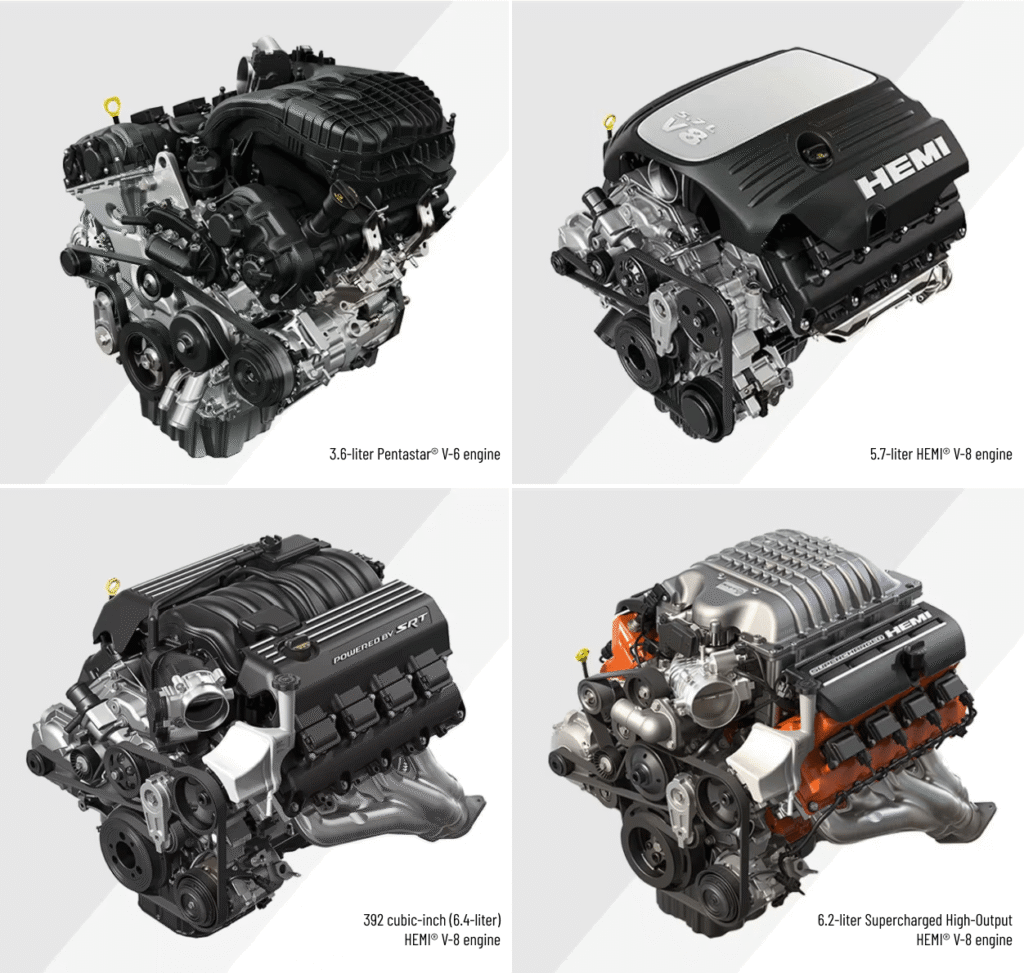
The Charger R/T, with its 370-hp 5.7-liter V-8, has the perfect mix of power and features, positioning the 345 charger as an ideal compromise between performance and practicality. When compared to the base V6 engine, the 345 charger provides significantly more power and torque while maintaining reasonable fuel economy. This comparison highlights the 345 charger as the optimal choice for drivers seeking authentic muscle car performance without excessive fuel consumption.
The 345 charger also compares favorably to competing engines from other manufacturers. Its combination of displacement, power output, and advanced technology features places it among the top performers in the naturally aspirated V8 category. The unique HEMI combustion chamber design gives the 345 charger a distinct advantage in terms of power density and efficiency compared to conventional wedge-head designs.
Suggested read: Silver Charger Plates in Action: 5 Real-World Case Studies That Prove Their Impact on Events and Hospitality
Engine Comparison Chart
| Engine | Displacement | Horsepower | Torque | Fuel Economy |
|---|---|---|---|---|
| 345 HEMI V8 | 5.7L | 370 hp | 395 lb-ft | 16/25 mpg |
| 392 HEMI V8 | 6.4L | 485 hp | 475 lb-ft | 14/23 mpg |
| Pentastar V6 | 3.6L | 292 hp | 264 lb-ft | 19/30 mpg |
| Ford Coyote V8 | 5.0L | 460 hp | 420 lb-ft | 16/24 mpg |
The 345 charger strikes an optimal balance between performance capabilities and everyday usability that few competing engines can match. Its sophisticated technology integration ensures that drivers enjoy both impressive acceleration and reasonable fuel economy, making it suitable for a wide range of applications from daily commuting to weekend performance driving.
Market Impact and Legacy
The Charger is one of the most popular nameplates in America, and that reputation is due in part to its strong performance, with the 345 charger playing a crucial role in this success. The engine’s introduction marked a turning point in American automotive manufacturing, demonstrating that domestic automakers could produce engines that combined impressive performance with modern efficiency and reliability standards.
The 345 charger has influenced automotive design trends throughout the industry, inspiring other manufacturers to develop their own high-performance V8 engines with advanced technology features. The success of this engine has validated the market demand for powerful, efficient engines that provide authentic muscle car performance while meeting modern emission and fuel economy requirements.
Looking for a reliable scooter charger for your electric vehicle? Our selection includes various charging solutions for different applications.
Ready to experience the power of a 345 charger engine? Visit our dealership today to test drive vehicles equipped with this remarkable powerplant and discover why it continues to be a favorite among performance enthusiasts.
Frequently Asked Questions About 345 Charger
What vehicles come with the 345 charger engine? The 345 charger engine is available in Dodge Charger R/T models, Dodge Challenger R/T, Chrysler 300C, and various Jeep models including the Grand Cherokee.
How much horsepower does a 345 charger engine produce? The 345 HEMI V8 engine delivers 370 horsepower and 395 pound-feet of torque in most applications.
What does 345 mean in 345 charger? The 345 designation refers to the engine’s displacement of 345 cubic inches, achieved through a 3.92-inch bore and 3.58-inch stroke.
Is the 345 charger engine reliable? Yes, the 345 charger engine demonstrates exceptional reliability when properly maintained, featuring robust internal construction and advanced diagnostic capabilities.
What type of oil does the 345 charger engine use? The 345 HEMI engine uses 5W-20 motor oil for optimal performance and protection.
Can the 345 charger engine be modified for more power? Yes, the 345 charger responds well to performance modifications including cold air intakes, exhaust systems, and forced induction upgrades.
Suggested read: Silver Charger Plates: Frequently Asked Questions — Your Complete Guide to Buying, Using, and Caring for Them
What is the fuel economy of the 345 charger engine? The 345 charger typically achieves approximately 16 mpg city and 25 mpg highway, depending on vehicle configuration and driving conditions.
How does the 345 charger compare to the 392 engine? The 345 charger produces 370 horsepower compared to the 392’s 485 horsepower, but offers better fuel economy and lower purchase price.
Sources and Citations:
- Autopedia – 345 HEMI Engine
- Dover CDJR – 2023 Dodge Charger Specifications
- LX Forums – 345 Engine Displacement Explanation
- SlashGear – 345 HEMI Charger Analysis
- Car and Driver – 2023 Dodge Charger Review