The electric scooter revolution has transformed urban mobility, with over 130 million e-scooters projected to be in use globally by 2025. At the heart of this transportation shift lies a critical component that often gets overlooked: the battery charger for electric scooter systems. Whether you’re a daily commuter or weekend rider, understanding how to select, maintain, and optimize your scooter’s charging system can mean the difference between years of reliable service and costly battery replacements.## Understanding Battery Charger Types for Your Electric Scooter
Modern electric scooters rely on sophisticated charging systems that vary significantly between models and manufacturers. Selecting an incompatible charger can dramatically reduce battery lifespan, create safety hazards, or damage your investment permanently. Different manufacturers design chargers with specific voltage, amperage, and connector types to match their scooter’s unique battery requirements, and using the wrong charger can lead to slow charging times, reduced battery life, or even permanent damage.
Standard Chargers: The Reliable Default Option
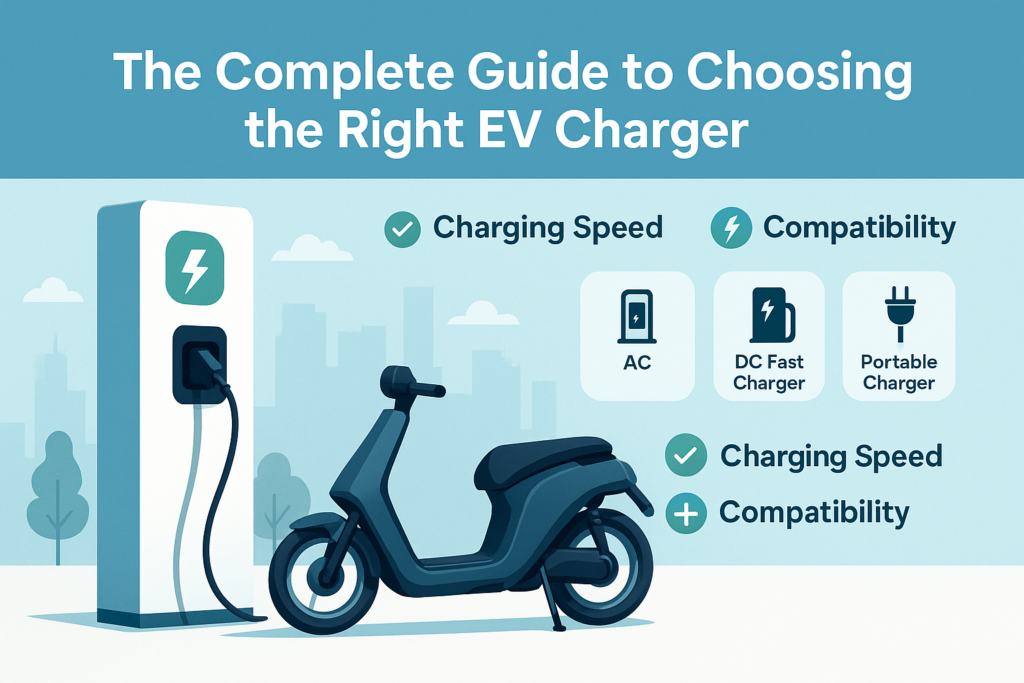
Standard chargers are the most common type and typically come included with the scooter, delivering a steady charge at a moderate speed. These chargers balance charging efficiency with battery health, usually taking 4-8 hours to fully charge a depleted battery. Most standard chargers for electric scooters operate between 1.6 to 3 amps depending on battery capacity. They’re designed with built-in safety features including overcharge protection, thermal management, and short-circuit prevention. For most riders who charge overnight, standard chargers provide the optimal balance between convenience and battery longevity without generating excessive heat that can degrade battery cells over time.
Fast Chargers: Speed at a Potential Cost
Fast chargers are designed to reduce charging time by supplying higher amperage, but may generate more heat which can affect battery longevity. These chargers can reduce charging time by 40-60% compared to standard options. New 2025 models support 30-50% charge in just 30 minutes with advanced fast charging technology. However, frequent use of fast chargers should be reserved for emergencies rather than daily charging. The increased amperage creates more thermal stress on battery cells, potentially reducing the overall number of charge cycles your battery can complete before capacity degradation becomes noticeable.
Universal Chargers: Convenience With Caveats
Some third-party chargers claim to work with multiple scooter models, but compatibility isn’t always guaranteed. While universal chargers offer flexibility for households with multiple scooters or riders who frequently switch devices, they require careful selection. Quality universal chargers include adjustable voltage settings and multiple connector types to accommodate different scooter specifications. However, cheaper universal options may lack precise voltage regulation or proper safety certifications, making manufacturer-approved chargers the safer choice for valuable scooters.
Critical Specifications for Battery Charger Selection.
Understanding the technical specifications of your battery charger for electric scooter is non-negotiable for safe operation and optimal performance. Three primary factors determine charger compatibility: voltage, amperage, and connector type. Mismatching any of these specifications can result in dangerous charging situations or irreversible battery damage.
Voltage Requirements: The Foundation of Compatibility
It is essential to check the voltage specifications of your electric scooter’s battery, as most e-scooters have a 36V, 48V, or even 60V battery, and the charger you choose must have the same output voltage to prevent potential battery problems. Electric scooter battery voltage typically ranges from 24V to 60V, with most electric scooters using 36V or 48V batteries. Using a charger with incorrect voltage creates several problems. A higher-voltage charger can overwhelm the battery management system, leading to thermal runaway, cell swelling, or catastrophic failure. Conversely, an undervoltage charger will never fully charge the battery, leaving you with reduced range and incomplete charge cycles that can cause premature capacity fade.
Amperage Output: Balancing Speed and Safety
Battery capacity determines the appropriate amperage, with 5Ah batteries using a 0.6 to 1 amp charger, 7Ah through 15Ah batteries using a 1.6 amp charger, and 18Ah through 22Ah batteries using a 2.5 or 3 amp charger. The amperage rating directly influences charging speed while affecting battery health. Higher amperage chargers deliver more current, reducing charging time but generating additional heat. Most standard electric scooter chargers operate between 1.6 to 3 amps, providing a safe balance between charging speed and thermal management. Selecting an amperage rating that exceeds your battery’s specifications can stress the cells and reduce the total number of charge cycles before noticeable degradation occurs.
Connector Types: Physical Compatibility Matters
Electric scooters use various connector types, with three-port connectors being common among many models. Connector types vary widely between manufacturers and models, including barrel connectors, XLR connectors, three-pin ports, and proprietary designs. Even if voltage and amperage specifications match perfectly, an incompatible connector prevents charging. Some riders attempt to modify connectors or use adapters, but these modifications introduce resistance, create potential short circuit points, and void manufacturer warranties. Always verify the exact connector type before purchasing a replacement charger.
How to Identify Your Scooter’s Charger Requirements.
Determining the correct specifications for your battery charger for electric scooter requires methodical investigation. Multiple information sources exist, each providing critical details about your scooter’s charging requirements.
Suggested read: EV Charging Adapters: Your Essential Buying Guide for Compatible Electric Vehicle Charging in 2025
Check the Manufacturer’s Manual and Documentation
The manufacturer’s specifications will list the correct voltage, amperage, and connector type. The owner’s manual typically contains a dedicated section on charging specifications, battery maintenance, and approved accessories. This documentation provides authoritative information directly from the engineering team that designed your scooter. Manufacturers often place labels near the charging port as a convenient reference point, and identification labels can be found on the underside of the deck, on the stem, or in the battery compartment. These labels display model numbers, voltage ratings, and sometimes QR codes linking to digital specifications.
Inspect Physical Labels on the Scooter and Battery
The battery compartment, generally located under the deck of the scooter, contains the battery with type information mentioned on the label. Opening the battery compartment reveals labels affixed directly to the battery pack showing voltage, capacity in amp-hours, chemistry type, and manufacturing date. The original charger itself also displays output specifications on its housing or label, showing voltage output, amperage rating, and connector type. Photographing these labels creates a permanent reference for future charger purchases or when ordering replacements.
Consult Online Resources and Manufacturer Support
For scooters missing documentation or with worn labels, manufacturer websites maintain specification databases searchable by model number or serial number. Online forums and communities dedicated to specific scooter brands compile user-generated databases of charger specifications. When specifications remain unclear, contacting manufacturer support directly ensures accuracy. Support representatives can verify charger specifications using your scooter’s serial number, preventing costly mistakes from incorrect charger selection.
Use Diagnostic Tools for Verification
A multimeter set to DC voltage mode can measure battery voltage by connecting the red probe to the positive terminal and black probe to the negative terminal. For safety, always power off the scooter completely before taking any voltage measurements. Testing the original charger’s output voltage confirms its specifications match what the scooter requires. This verification method proves especially valuable when considering used scooters or second-hand chargers where original documentation no longer exists.
Safety Risks of Using Incorrect Battery Chargers.
The dangers of using an incorrect battery charger for electric scooter systems extend far beyond simple inconvenience or poor performance. Incompatible chargers create life-threatening hazards that can result in property damage, serious injuries, or fatalities.
Thermal Runaway and Fire Risk
Overvoltage conditions occur when the charger voltage exceeds battery specifications, forcing excessive current into battery cells and causing them to overheat and potentially catch fire. Thermal runaway can reach temperatures in excess of 700°C and causes the release of toxic chemicals and gases which can lead to severe damage and loss of life. Overcharging or improper charging, especially when using non-original chargers with incorrect voltage, significantly increases hazard risk. This catastrophic chain reaction occurs when battery cells exceed critical temperature thresholds, creating a self-perpetuating cycle where rising temperatures trigger chemical reactions that generate even more heat. Once initiated, thermal runaway spreads rapidly to adjacent cells, potentially causing the entire battery pack to ignite within seconds.
Battery Degradation and Capacity Loss
Undervoltage charging creates problematic issues for battery health and performance that differ from overvoltage but prove equally damaging. Using a charger with insufficient voltage never fully charges the battery, leading to incomplete charge cycles that accelerate capacity degradation. This incomplete charging causes lithium plating on the anode, a phenomenon where metallic lithium deposits form on the electrode surface instead of intercalating properly within the carbon structure. Over time, these deposits reduce available capacity, increase internal resistance, and create potential short circuit points. Riders experience progressively shorter ranges and diminished performance, ultimately requiring premature battery replacement at significant expense.
Warranty Voidance and Manufacturer Liability
Using unauthorized or incompatible chargers immediately voids manufacturer warranties on both the battery and often the entire scooter. Manufacturers explicitly specify approved charging equipment in their terms and conditions, and evidence of non-compliant charger use releases them from all warranty obligations. If a fire or failure occurs due to an incompatible charger, insurance claims may be denied, leaving you personally liable for property damage, medical expenses, or injury claims.
This financial exposure can reach tens or hundreds of thousands of dollars in serious incidents. Electric scooter manufacturers can design chargers and charging ports that look remarkably similar and may even be interchangeable, but this does not mean they should ever be interchanged, as use of incorrect chargers is a major cause of e-scooter fires.
Physical Damage to Charging Components
Mismatched chargers can physically damage charging ports, battery management systems, and internal wiring. Excessive current flow melts connector pins, warps plastic housing, and burns printed circuit boards within the battery management system. These damages often aren’t immediately apparent but accumulate over multiple charging sessions. Eventually, the damaged components fail completely, requiring expensive repairs that exceed the cost of simply purchasing the correct charger initially. In some cases, the damage becomes so severe that the entire scooter requires replacement as individual component repairs prove uneconomical.
Proper Charging Procedures and Best Practices.
Implementing proper charging protocols extends battery lifespan and maintains optimal performance for your electric scooter battery charger system. Following manufacturer guidelines and industry best practices prevents premature battery degradation while maximizing your investment.
Suggested read: Battery Charging Scooter Explained: Best Charging Practices for Electric Scooters
Use Only Manufacturer-Approved Chargers
Always use the charger provided by the manufacturer, a manufacturer approved charger, or a compatible aftermarket charging cable specifically designed for your electric scooter model. A third-party charger can damage the battery and void the warranty, while overcharging or undercharging the battery can cause it to degrade faster. Original equipment manufacturer chargers undergo rigorous testing to ensure they deliver precise voltage and amperage levels matched to your specific battery chemistry and capacity. These chargers incorporate safety features like automatic shutoff, temperature monitoring, and surge protection that generic alternatives often lack. While third-party chargers may seem financially attractive, the risk of battery damage far exceeds any initial cost savings.
Optimal Charge Level Management
The recommended practice for battery maintenance involves keeping the charge level between 20% and 80% instead of fully draining it before recharging, as partial charging reduces battery stress and enables it to operate efficiently for longer periods. Deeply discharging your battery on a regular basis can reduce its overall lifespan, so aim for shallow discharges by recharging your battery before it drains completely to prevent the battery from experiencing unnecessary strain. Lithium-ion batteries experience increased stress when charged to maximum capacity or depleted to empty. The chemistry within the cells undergoes less structural change during partial charge cycles compared to full cycles, reducing wear on the electrode materials and extending total cycle life significantly.
Temperature Considerations During Charging
Charge your electric scooter indoors at room temperature or in a moderate temperature environment, as charging in extreme hot or cold conditions can negatively affect battery performance and lifespan. Charging the battery in extreme temperatures can cause it to degrade faster and potentially catch fire, and when the battery is hot after riding, it’s not a good time to plug in. Allow batteries to cool for 15-30 minutes after riding before initiating charging. The ideal charging temperature range falls between 50°F and 86°F. Charging below freezing causes lithium plating on the anode, permanently reducing capacity. Charging above 95°F accelerates chemical degradation and increases fire risk through thermal stress.
Avoid Overcharging and Continuous Connection
Overcharging should be avoided as it can lead to battery degradation, and it’s important to unplug the charger once the battery is fully charged, just in case, even though most electric scooters have built-in mechanisms to prevent overcharging. Most scooters have built-in protection that stops charging when the battery is full, however leaving it plugged in overnight can put extra strain on the battery over time and shorten its life, especially if the charger or battery isn’t top quality. While battery management systems provide overcharge protection, they’re not infallible. Leaving chargers connected indefinitely maintains batteries at maximum voltage, which accelerates degradation of the electrode-electrolyte interface. This continuous voltage stress gradually reduces capacity even without active charging current flowing.
Selecting Quality Replacement Battery Chargers
When your original charger fails or gets lost, selecting an appropriate replacement requires careful evaluation of multiple factors beyond simple voltage matching.
Certification and Safety Standards
Quality chargers carry certifications from recognized testing laboratories including UL, CE, FCC, and RoHS. These certifications verify that the charger meets stringent safety standards for electrical safety, electromagnetic compatibility, and hazardous substance restrictions. UL certification specifically tests for fire prevention, shock hazards, and fault conditions. Chargers lacking these certifications haven’t undergone independent safety verification and pose significantly elevated risks. Always verify certification marks are genuine rather than counterfeit reproductions commonly found on low-quality products.
Smart Charging Features
Advanced chargers incorporate microprocessor-controlled charging algorithms that optimize the charging process. These smart chargers communicate with the battery management system to monitor cell voltages, temperatures, and state of charge. They automatically adjust charging current and voltage throughout the charging cycle, implementing multi-stage charging protocols. Initial bulk charging delivers maximum safe current, transitioning to absorption charging as the battery approaches full capacity, then maintaining float charging to prevent overcharge. These sophisticated charging profiles significantly extend battery lifespan compared to simple constant-current chargers.
Build Quality and Component Selection
Internal component quality dramatically affects charger reliability and safety. Premium chargers use high-grade capacitors, transformers, and circuit boards that withstand thermal stress and electrical transients. They incorporate robust cooling systems with heat sinks or active fans to dissipate heat efficiently. Connection ports feature reinforced strain relief to prevent wire breakage. Housing materials should be fire-resistant ABS plastic or similar non-flammable materials. Cheap chargers use inferior components that fail prematurely, creating fire hazards through short circuits or thermal runaway.
Brand Reputation and Warranty Support
Established manufacturers with strong reputations stake their brand value on product safety and performance. They provide comprehensive warranties, typically 12-24 months, demonstrating confidence in their products. These companies maintain responsive customer support for troubleshooting and warranty claims. They also issue product recalls when safety issues emerge, unlike fly-by-night operations selling through anonymous marketplaces. Research customer reviews specifically mentioning long-term reliability and manufacturer responsiveness to problems. A charger from a reputable brand costs more initially but delivers superior safety, performance, and longevity.
Understanding Battery Management Systems (BMS)
The Battery Management System represents sophisticated electronics protecting your battery from numerous failure modes while optimizing performance and longevity.
Core BMS Functions and Protection Features
The Battery Management System is a sophisticated electronic system that monitors and manages the charging and discharging process of the battery, ensuring that the battery operates within safe limits and preventing overcharging and overheating. Modern BMS monitors individual cell voltages within the battery pack, automatically balancing them to prevent any single cell from overcharging or over-discharging. It tracks battery temperature using multiple thermal sensors, reducing charging current or shutting down completely if temperatures exceed safe thresholds. The BMS calculates remaining capacity and provides accurate state-of-charge indicators to riders. It protects against short circuits by monitoring current flow and immediately disconnecting the battery if fault conditions occur.
Suggested read: Best 48V Battery Charger: Smart Buying Guide 2025
Communication Between Charger and BMS
The charger communicates with the scooter battery during charging through electrical signals and protocols, with the charger detecting the battery’s voltage and state of charge, then sending a specific current based on this information while the battery management system assesses the incoming current. This bidirectional communication enables adaptive charging where the charger adjusts its output based on real-time feedback from the BMS. The BMS continuously monitors battery temperature, cell voltages, and charging current, transmitting this data to the charger. If any parameter approaches dangerous levels, the BMS signals the charger to reduce current or terminate charging. This intelligent coordination between charger and BMS prevents damage from charging malfunctions while optimizing charging speed and battery health.
BMS Limitations and Failure Modes
Despite their sophistication, BMS units have limitations and can fail. Cheap electric scooters often use minimal BMS implementations with basic protections only. These rudimentary systems may lack cell balancing, accurate state-of-charge calculation, or thermal monitoring. Even quality BMS units can fail due to electrical transients, physical damage, or component degradation over time. A failed BMS loses its protective functions, exposing the battery to overcharge, over-discharge, or thermal damage. Warning signs of BMS failure include inaccurate battery indicators, unexpected shutdowns, or failure to charge. When BMS failure is suspected, immediately stop using the scooter and consult a qualified technician, as continuing operation without BMS protection creates serious fire and safety hazards.
Portable and Emergency Charging Solutions
Portable battery chargers have become essential for electric scooter riders, with emergency power capabilities, fast charging supporting 30-50% charge in 30 minutes in new 2025 models, eco-friendly solar-compatible options, and travel-friendly compact designs that fit in backpacks. Portable chargers serve as backup power sources for riders who exceed their scooter’s range or encounter unexpected battery depletion. When selecting a portable charger, verify output power meets or exceeds 60W for effective charging. Battery capacity should exceed 100Wh to provide meaningful range extension.
Most importantly, confirm voltage compatibility matches your scooter’s battery system. Weight becomes a critical consideration for portability, with quality units typically weighing under 5 pounds. While portable chargers provide convenience, they should complement rather than replace proper home charging with manufacturer-approved equipment.
Common Charging Problems and Troubleshooting
Common charging issues include chargers making unusual noises which could indicate the charger is failing, batteries not charging which may be caused by a dead or over-discharged battery, loose connections at ports and charge cables, and scooters that won’t turn on despite fully charged batteries which may indicate battery connection or power button issues.
When troubleshooting charging problems, always begin with the simplest possibilities. Verify the wall outlet functions by testing with another device. Inspect the charging port on the scooter for debris, damage, or bent pins that prevent proper connection. Examine the charging cable for cuts, fraying, or damage to the connector. Check that all connections are secure and properly seated. If the charger produces no LED indicators, it may have failed completely. Using a voltmeter, measure the charger’s output voltage to confirm it produces the correct voltage. If voltage is absent or incorrect, the charger requires replacement.
For batteries that won’t accept a charge, the issue often involves over-discharge protection. Lithium batteries have a minimum voltage threshold below which the BMS refuses charging to prevent damage from deep discharge. Sometimes this protection can be reset by attempting to charge with the original charger for several hours. If the battery remains unresponsive, professional service may recover it using specialized equipment, though severely over-discharged batteries typically require replacement. Never attempt to force-charge a protected battery by bypassing the BMS, as this creates extreme fire hazards.
Storage and Maintenance for Extended Battery Life
For riders who store scooters seasonally or leave them unused for extended periods, proper storage procedures prevent battery degradation and extend overall lifespan. During storage, periodically check the battery’s charge level and provide a brief charge to bring it back to around 50% capacity, which helps prevent the battery from falling into a deeply discharged state that can be detrimental to its overall health. Store scooters in temperature-controlled environments between 50-77°F with low humidity.
Avoid garages, sheds, or storage units that experience temperature extremes. Before storage, charge the battery to approximately 50-60% capacity, which represents the optimal storage charge level for lithium-ion chemistry. This partial charge minimizes stress on the cells while preventing self-discharge from dropping below critical minimum voltages.
Check stored batteries monthly, recharging them to 50-60% if they’ve dropped below 40%. Extended storage below 20% charge can cause irreversible capacity loss through internal chemical changes. For scooters with removable batteries, remove the battery pack and store it separately from the scooter in a cool, dry location. This prevents any parasitic drain from scooter electronics and provides better environmental control. Clean battery contacts with electrical contact cleaner before storage to prevent corrosion. When returning a stored scooter to service, allow the battery to reach room temperature before charging if it was stored in cold conditions.
Alternative Power Solutions: Solar and Green Charging
Environmental concerns drive increasing interest in sustainable charging solutions for electric scooters. Solar-powered charging systems harness renewable energy to reduce grid dependency and carbon footprint. Portable solar panels rated at 100-200 watts can charge electric scooter batteries when paired with appropriate charge controllers. The charge controller regulates voltage and current from the variable solar output, protecting the battery from improper charging. Complete solar charging kits designed for electric vehicles include panels, charge controllers, and sometimes battery banks for charging during non-sun hours.
Suggested read: Silver Charger Plates: Frequently Asked Questions — Your Complete Guide to Buying, Using, and Caring for Them
However, solar charging presents practical limitations. Charging times extend significantly compared to wall outlet charging, often requiring 8-12 hours of direct sunlight for a complete charge. Weather dependence makes solar charging unreliable as a primary charging method. The initial investment in quality solar equipment often exceeds $300-500. Solar charging works best as a supplemental option for riders with access to unobstructed sunlight and extended charging times, such as those working in outdoor locations or camping. For most urban commuters, solar charging remains impractical as a primary solution but offers an eco-friendly alternative when circumstances permit.
International Voltage Compatibility and Travel Considerations
Riders traveling internationally or purchasing scooters from foreign markets must address voltage and plug compatibility issues. Electric scooter chargers typically accept input voltages of either 110-120V (North America, Japan) or 220-240V (Europe, Asia, most other regions). Some chargers feature universal input (100-240V) and adapt automatically to the local voltage. Check your charger’s input voltage rating on its label before traveling. Using a 120V charger on 240V power destroys the charger immediately and creates fire hazards. Conversely, 240V chargers won’t function properly on 120V power.
For chargers lacking universal input, voltage converters or transformers enable use across voltage standards. These devices must be rated for the charger’s full wattage, typically 100-300W for standard electric scooter chargers. Inexpensive low-wattage converters designed for small electronics prove inadequate and dangerous for battery chargers. Beyond voltage, plug configurations vary globally. Physical plug adapters allow connection to foreign outlets but don’t address voltage differences. When purchasing scooters internationally, verify charger compatibility with your local electrical standards or budget for purchasing an appropriate local charger. Some manufacturers offer regional charger variants, allowing you to order the correct version for your location.
Related Power Systems: Camper Battery Chargers
For riders who also maintain recreational vehicles or camping equipment, understanding the differences between electric scooter chargers and camper battery charger systems provides valuable perspective. Camper battery chargers typically service deep-cycle lead-acid or AGM batteries rated at 12V or combinations thereof. These chargers use different charging algorithms optimized for lead-acid chemistry, featuring bulk, absorption, and float charging stages. The higher amp ratings common in camper chargers (10-40 amps) reflect the larger capacity of RV battery banks measured in hundreds of amp-hours.
While both systems charge DC batteries, they’re not interchangeable. Lead-acid charging voltages and current profiles differ significantly from lithium-ion requirements. Using a camper battery charger on an electric scooter lithium battery causes overcharging and fire hazards. Conversely, electric scooter chargers can’t deliver sufficient current for large RV battery banks. Riders who maintain both systems need dedicated chargers for each application. However, the knowledge gained from maintaining one battery system transfers partially to the other, providing better understanding of battery chemistry, charging principles, and safety practices applicable to both recreational scooters and camper van power systems.
Frequently Asked Questions About Battery Chargers for Electric Scooters
What are the most important specifications to check when buying a battery charger for electric scooter models?
The three critical specifications are voltage (must exactly match your battery pack – typically 24V, 36V, 48V, or 60V), amperage (should match manufacturer recommendations based on battery capacity, usually 1.6-3 amps for standard scooters), and connector type (must physically fit your scooter’s charging port). Additionally, verify the charger carries safety certifications like UL, CE, or equivalent standards. Using incorrect specifications can permanently damage your battery or create dangerous fire hazards.
How can I tell if my battery charger for electric scooter is failing or damaged?
Warning signs of charger failure include: no LED indicator lights when plugged in, unusual buzzing or clicking noises during operation, excessive heat that makes the charger too hot to touch comfortably, visible damage to the cord or casing, and batteries that won’t charge despite proper connections. You can test charger output using a voltmeter – it should produce the rated voltage when plugged in but not connected to the scooter. If output voltage is absent, significantly low, or fluctuating, the charger requires replacement immediately.
Can I use a universal battery charger for electric scooter charging needs?
Universal chargers can work if they’re high-quality units with adjustable voltage settings and include the correct connector for your scooter. However, many universal chargers lack the smart charging features and precise voltage regulation of original equipment manufacturers. They may not communicate properly with your battery management system, potentially reducing charging efficiency and battery lifespan. If purchasing a universal charger, ensure it’s from a reputable brand, carries appropriate safety certifications, matches all specifications exactly, and has positive reviews specifically for your scooter model.
Suggested read: The Complete Guide to Tyler Tech Software for Public Sector Success
How often should I replace my battery charger for electric scooter use?
Quality chargers typically last 3-5 years with normal use. Replace your charger if it shows any signs of failure, damage, or malfunction. Also consider replacement if your charger becomes excessively hot during operation, takes much longer to charge than originally, or if you notice your battery capacity declining despite the battery itself being relatively new. Preventive replacement of aging chargers before complete failure prevents situations where you’re stranded without charging capability. Keep a backup charger if you depend on your scooter for daily transportation.
Is it safe to leave my battery charger for electric scooter plugged in after the battery is fully charged?
While modern chargers and battery management systems include overcharge protection, regularly leaving chargers connected after full charge accelerates battery degradation. The constant voltage stress at maximum charge levels stresses battery chemistry. Most manufacturers recommend unplugging within an hour of reaching full charge. For optimal battery longevity, charge to only 80% for daily use and reserve 100% charges for times when you need maximum range. If you must leave the charger connected, ensure you’re using the original manufacturer charger with proper safety certifications.
What should I do if my battery charger for electric scooter gets wet?
If your charger gets wet, immediately unplug it from both the wall outlet and the scooter. Do not attempt to use it until it has completely dried. Water inside electronic components creates short circuit risks and corrosion. Allow the charger to air dry in a warm, dry location for at least 48-72 hours. Do not use external heat sources like hair dryers or heaters, as rapid heating can damage internal components. After drying, inspect the charger carefully for signs of corrosion, especially around circuit boards and connections. If any corrosion is visible or if you’re uncertain about the charger’s safety, replace it rather than risking damage to your expensive battery.
Can I use a faster battery charger for electric scooter to reduce charging time?
Fast chargers delivering higher amperage can reduce charging time by 40-60%, but frequent fast charging accelerates battery degradation. The increased current generates more heat, stressing battery cells and reducing total cycle life. Reserve fast charging for emergencies or occasions when you genuinely need quick turnaround. For daily charging, use the standard charger provided by the manufacturer. Some scooter models explicitly support fast charging with upgraded chargers; in these cases, the battery and BMS are designed to handle higher currents safely. Never use a fast charger unless your manufacturer specifically approves it for your model.
Where can I find a reliable replacement battery charger for electric scooter if I lost my original?
First, contact your scooter manufacturer directly or visit their official website – they typically sell replacement chargers matched exactly to your model. Authorized dealers and service centers also stock original equipment chargers. For third-party options, reputable online retailers like ElectricScooterParts.com specialize in scooter components and carry certified chargers organized by voltage and connector type. Avoid purchasing from unknown sellers on marketplace platforms, as counterfeit chargers pose serious safety risks. Always verify specifications match exactly, check for safety certifications, and read reviews from users with your specific scooter model before purchasing.
Ready to Find the Perfect Battery Charger for Electric Scooter?
Suggested read: Cyclops Fence Charger: The Most Powerful American-Made Electric Fence Energizer for Your Farm
Selecting the right battery charger for electric scooter systems requires understanding voltage requirements, amperage ratings, connector compatibility, and safety certifications. Whether you need a replacement for a lost charger, an upgrade for faster charging, or a portable solution for extended trips, always prioritize safety and manufacturer compatibility over cost savings. Visit ElectricScooterParts.com’s battery charger section to browse certified chargers organized by voltage specifications, or consult your scooter’s manual to identify exact requirements. Investing in quality charging equipment protects your expensive battery investment while ensuring safe, reliable operation for years of riding enjoyment.