When it comes to maintaining your Club Car golf cart, having the right club car charger is absolutely essential. Whether you’re dealing with a dead battery, slow charging times, or looking to upgrade your current charging system, understanding the ins and outs of Club Car charging technology can save you time, money, and frustration on the golf course.
Your club car charger is more than just a simple power adapter – it’s a sophisticated piece of equipment designed to safely and efficiently recharge your golf cart’s battery system. With proper knowledge about charger types, maintenance, and troubleshooting, you can ensure your Club Car remains reliable for years to come.
Understanding Club Car Charger Systems
What Makes Club Car Chargers Unique?
Club Car has been at the forefront of golf cart technology for decades, and their charging systems reflect this expertise. Unlike generic chargers, club car charger units are specifically engineered to work with Club Car’s battery management systems and onboard computers.
Modern Club Car golf carts feature sophisticated Onboard Computer (OBC) systems that communicate directly with the charger. 48-volt Club Car models have an Onboard Computer (OBC) that controls charging, which means your charger isn’t just pumping electricity into batteries – it’s actively monitoring voltage levels, temperature, and charging cycles to optimize battery life and performance.
The integration between the club car charger and the cart’s electrical system provides several advantages:
- Automatic shut-off when batteries reach full charge
- Temperature monitoring to prevent overheating
- Voltage regulation to protect battery cells
- Smart charging algorithms that adapt to battery condition
Evolution of Club Car Charging Technology
Since the Club Car Precedent golf cart was introduced by Club Car (Ingersol Rand) in 2004, the electrical systems in the golf cart has changed. This evolution has brought significant improvements in charging efficiency and battery longevity.
Early Club Car models used simple transformer-based chargers that provided basic DC power conversion. Modern club car charger systems incorporate:
| Feature | Old Chargers | Modern Chargers |
|---|---|---|
| Charging Algorithm | Basic constant voltage | Multi-stage smart charging |
| Communication | None | OBC integration |
| Safety Features | Basic overcurrent protection | Temperature monitoring, voltage regulation |
| Efficiency | 70-80% | 85-95% |
| Battery Life Impact | Standard | Extended through optimized charging |
Types of Club Car Chargers by Voltage
24-Volt Club Car Charger Systems
The 24-volt club car charger systems are typically found in older Club Car models and some specialized applications. These chargers are designed to work with two 12-volt batteries connected in series, providing the 24-volt system voltage required by these carts.
Key specifications for 24V systems:
- Input voltage: 110-120V AC
- Output voltage: 24V DC
- Charging current: Typically 12-17 amps
- Charging time: 6-8 hours from 50% discharge
24-volt systems are less common in modern Club Cars but are still supported with replacement chargers available from authorized dealers and aftermarket suppliers.
Suggested read: Charge Air Cooler System: Enhancing Engine Performance and Efficiency
36-Volt Club Car Charger Systems
36-volt club car charger units represent a middle ground in Club Car’s voltage offerings. These systems use six 6-volt batteries or three 12-volt batteries to create the 36-volt system voltage.
Advantages of 36V charging:
- Faster charging compared to 24V systems
- Better performance on hills and rough terrain
- Longer range per charge cycle
- More efficient power delivery
The 36-volt club car charger typically features automatic voltage regulation and can handle various battery types, including flooded lead-acid, AGM, and gel batteries. Charging times range from 4-6 hours depending on the depth of discharge and charger amperage rating.
48-Volt Club Car Charger Systems
The 48-volt club car charger represents the most advanced and popular charging system in Club Car’s lineup. Most modern Club Car Precedent and Onward models use 48-volt systems due to their superior performance and efficiency.
48V system benefits:
- Maximum power output for acceleration and hill climbing
- Extended range up to 30+ miles per charge
- Fast charging capabilities with high-amperage chargers
- Advanced battery management through OBC integration
You’ll need a Club Car 48V battery charger that will not have you worrying whether your golf cart will still be running 5 years from now. The 48-volt system’s reliability and performance make it the preferred choice for both personal and commercial applications.
Club Car Charger Troubleshooting Guide
Common Club Car Charger Problems
When your club car charger isn’t working properly, it can leave you stranded with a dead golf cart. Understanding common issues and their solutions can help you get back on the course quickly.
Charger Not Starting
If your Club Car golf cart charger doesn’t work: Ensure batteries are above 35 volts. Listen for a “click” from the charger relay when you plug it in. No click could mean low voltage, a faulty OBC, or a blown fuse.
Step-by-step diagnosis:
- Check battery voltage – Use a multimeter to measure pack voltage
- Listen for relay click – This indicates the OBC is communicating with the charger
- Inspect connections – Look for corrosion, loose wires, or damage
- Test charger output – Verify the charger is producing proper voltage
Slow Charging Issues
Slow charging can be caused by several factors affecting your club car charger performance:
- Battery sulfation – Crystals build up on battery plates
- Poor connections – Corrosion or loose terminals
- Aging batteries – Reduced capacity over time
- Charger degradation – Internal components wearing out
Charger LED Indicators and Error Codes
Modern club car charger units feature LED indicators that provide diagnostic information:
Suggested read: Silver Charger Plates in Action: 5 Real-World Case Studies That Prove Their Impact on Events and Hospitality
| LED Pattern | Meaning | Action Required |
|---|---|---|
| Solid green | Fully charged | Normal operation |
| Solid red | Charging in progress | Wait for completion |
| Flashing red | Error condition | Check connections/batteries |
| Flashing yellow | Low battery voltage | Manual voltage boost may be needed |
Advanced Troubleshooting Techniques
Testing Club Car Charger Output
To properly test your club car charger, you’ll need a digital multimeter and basic electrical knowledge:
- Measure AC input voltage – Should be 110-120V at the wall outlet
- Check DC output voltage – Should match your system voltage (24V, 36V, or 48V)
- Monitor charging current – Should gradually decrease as batteries charge
- Verify automatic shut-off – Charger should stop when batteries are full
OBC Communication Problems
When your Club Car golf cart charger isn’t working, it often comes down to low battery voltage, loose connections, or a faulty OBC. The Onboard Computer plays a crucial role in modern Club Car charging systems.
OBC troubleshooting steps:
- Check OBC fuse – Located in the fuse panel
- Verify OBC power – Should have 12V supply
- Test communication lines – Data lines between OBC and charger
- Reset OBC – Disconnect power for 10 minutes, then reconnect
Club Car Charger Maintenance Best Practices
Daily Maintenance Routines
Proper maintenance of your club car charger starts with daily habits that protect both the charger and your golf cart’s batteries:
Daily charging checklist:
- Plug in immediately after use, even for short trips
- Check connection security – Ensure charger plugs are fully seated
- Monitor LED indicators – Watch for error patterns
- Keep charger dry – Protect from rain and moisture
Charge the batteries after each day’s use. The charger will automatically shut off when batteries are completely charged. This practice prevents deep discharge damage and maximizes battery life.
Weekly Maintenance Tasks
Weekly maintenance helps identify potential issues before they become major problems:
- Clean charger exterior – Remove dust and debris
- Inspect charging cables – Look for wear, cuts, or damage
- Check battery water levels – For flooded batteries only
- Test charger output voltage – Verify proper operation
Monthly Deep Maintenance
Monthly maintenance procedures help extend the life of your club car charger and ensure optimal performance:
Electrical Connection Maintenance
Dirt, corrosion, and grime can build upon battery connections over time. Regular cleaning prevents these issues:
- Disconnect charger from cart and wall power
- Clean battery terminals with baking soda solution
- Apply protective coating to prevent future corrosion
- Tighten all connections to manufacturer specifications
Charger Component Inspection
Internal component checks:
- Fan operation – Ensure cooling fan runs during charging
- Heat sink condition – Check for dust accumulation
- Cord flexibility – Replace if cracking or stiffening occurs
- Plug condition – Look for burn marks or melting
Buying Guide: Choosing the Right Club Car Charger
OEM vs. Aftermarket Club Car Chargers
When shopping for a replacement club car charger, you’ll encounter both original equipment manufacturer (OEM) and aftermarket options:
Suggested read: Silver Charger Plates: Frequently Asked Questions — Your Complete Guide to Buying, Using, and Caring for Them
OEM Club Car Chargers
Advantages:
- Perfect compatibility with Club Car systems
- Warranty support from Club Car
- Tested integration with OBC systems
- Quality assurance from original manufacturer
Disadvantages:
- Higher cost compared to aftermarket
- Limited availability through authorized dealers only
- Fewer feature options compared to aftermarket innovations
Aftermarket Club Car Charger Options
High-quality aftermarket chargers can offer significant advantages:
- Cost savings of 20-40% compared to OEM
- Advanced features like faster charging and better diagnostics
- Universal compatibility with multiple cart brands
- Readily available from multiple suppliers
Key Features to Consider
When selecting a club car charger, consider these essential features:
Smart Charging Technology
Modern smart chargers offer several advantages over basic models:
- Multi-stage charging – Bulk, absorption, and float stages
- Temperature compensation – Adjusts charging based on ambient temperature
- Battery type selection – Optimizes charging for different battery chemistries
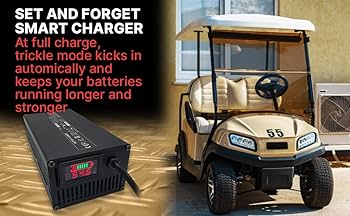
- Maintenance mode – Keeps batteries at optimal charge during storage
Safety Features
Safety should be a top priority when choosing any club car charger:
Essential safety features:
- Reverse polarity protection – Prevents damage from incorrect connections
- Overcurrent protection – Shuts down if excessive current is detected
- Overtemperature protection – Monitors internal temperature
- Ground fault protection – Detects electrical leaks to ground
Recommended Club Car Charger Specifications
Based on performance testing and user feedback, here are recommended specifications for different applications:
Residential Use
For home golfers who use their cart 2-3 times per week:
| Specification | Recommended Value |
|---|---|
| Charging current | 12-15 amps |
| Charging algorithm | 3-stage smart charging |
| Cord length | 10-12 feet |
| Warranty | 2+ years |
Commercial Use
For golf courses and rental operations:
| Specification | Recommended Value |
|---|---|
| Charging current | 18-25 amps |
| Charging algorithm | 4-stage with equalization |
| Cord length | 8-10 feet (shorter for durability) |
| Warranty | 3+ years |
| Construction | Industrial-grade components |
Club Car Charger Installation and Setup
Pre-Installation Preparation
Before installing your new club car charger, proper preparation ensures a smooth installation process:
Suggested read: Silver Charger Plates in Action: 5 Real-World Case Studies That Prove Their Impact on Events and Hospitality
Required tools:
- Multimeter – For voltage testing
- Wire strippers – For connection preparation
- Screwdrivers – Phillips and flathead
- Socket set – For battery terminal connections
- Safety equipment – Gloves and eye protection
Safety Precautions
Working with electrical systems requires careful attention to safety:
- Disconnect all power – Remove charger from wall outlet
- Turn off cart – Ensure key switch is in OFF position
- Wear protection – Safety glasses and insulated gloves
- Work in dry conditions – Avoid wet or damp environments
Step-by-Step Installation Process
Removing Old Club Car Charger
Removal procedure:
- Document connections – Take photos of wire positions
- Disconnect AC power – Unplug from wall outlet
- Remove DC connections – Disconnect from battery system
- Unbolt charger – Remove mounting hardware
- Clean mounting area – Prepare for new installation
Installing New Charger
Installation steps:
- Mount new charger – Use original mounting points
- Connect DC wires – Follow polarity markings carefully
- Secure all connections – Tighten to specification
- Connect AC power – Plug into appropriate outlet
- Test operation – Verify proper charging function
Initial Setup and Configuration
Modern club car charger units may require initial configuration:
Battery Type Selection
Many smart chargers allow battery type selection:
- Flooded lead-acid – Standard wet batteries
- AGM (Absorbed Glass Mat) – Sealed maintenance-free
- Gel – Sealed gel electrolyte
- Lithium – Advanced lithium-ion systems
Charging Profile Customization
Advanced chargers offer customizable charging profiles:
- Charging current – Adjust for battery capacity
- Voltage settings – Fine-tune for battery type
- Temperature compensation – Enable for extreme climates
- Maintenance scheduling – Set equalization intervals
Performance Optimization Tips
Maximizing Club Car Charger Efficiency
Getting the most from your club car charger involves more than just plugging it in. Strategic charging practices can significantly improve both charging efficiency and battery life:
Optimal Charging Timing
Best practices for charging schedule:
- Charge immediately after use, regardless of discharge level
- Avoid partial charges when possible – let charger complete full cycle
- Use timer outlets for consistent charging schedules
- Charge during cooler hours to reduce heat stress
Environmental Considerations
The charging environment significantly impacts club car charger performance:
Temperature effects:
Suggested read: Optimizing Marketing Strategies for Automatic Charging Solutions
- Cold weather – Charging efficiency drops below 32°F
- Hot weather – Excessive heat reduces battery life and charger efficiency
- Humidity – High moisture can cause electrical issues
- Ventilation – Ensure adequate airflow around charger
Battery and Charger Compatibility
Matching Charger to Battery Type
Different battery chemistries require specific charging characteristics from your club car charger:
Flooded Lead-Acid Batteries:
- Charging voltage: 2.4-2.45V per cell
- Equalization: Monthly 2.6V per cell cycles
- Temperature compensation: -3mV per °C per cell
AGM Batteries:
- Charging voltage: 2.35-2.4V per cell
- Lower float voltage: 2.25V per cell
- No equalization required
Gel Batteries:
- Lower charging voltage: 2.3-2.35V per cell
- Strict voltage regulation required
- Temperature-sensitive charging
Battery Bank Configuration
Proper battery bank setup ensures your club car charger can effectively charge all batteries:
Series connection guidelines:
- Equal capacity – All batteries should have same amp-hour rating
- Same age – Mixing old and new batteries reduces performance
- Same type – Never mix different battery chemistries
- Proper cable sizing – Use appropriate gauge wire for current
Monitoring and Data Logging
Using Built-in Diagnostics
Modern club car charger units often include diagnostic capabilities:
Diagnostic features:
- Charge cycle logging – Tracks charging history
- Voltage monitoring – Records battery voltages
- Current tracking – Monitors charging current
- Error logging – Stores fault codes and timestamps
External Monitoring Systems
For advanced users, external monitoring can provide detailed insights:
Monitoring benefits:
- Remote monitoring – Check status from anywhere
- Trend analysis – Identify battery degradation patterns
- Preventive maintenance – Predict component failures
- Energy usage tracking – Monitor electricity consumption
Troubleshooting Advanced Issues
Intermittent Charging Problems
Intermittent issues with your club car charger can be particularly frustrating as they’re difficult to diagnose:
Suggested read: The Leading Figures Driving the Evolution of Automated Charging Systems
Thermal Cycling Issues
Symptoms:
- Charger works when cool, fails when hot
- Charging stops and starts during cycle
- Reduced charging current over time
Solutions:
- Improve ventilation around charger
- Clean heat sinks and cooling fins
- Check fan operation in forced-air chargers
- Replace thermal components if necessary
Connection-Related Problems
Check the cables of your golf cart battery charger for any signs of damage, such as fraying or cuts. If you find any issues with the cables, replace them immediately as they can affect the charging process.
Common connection issues:
- Intermittent contact at plugs or terminals
- Corrosion buildup reducing conductivity
- Wire flexing fatigue causing internal breaks
- Thermal expansion loosening connections
Communication Errors with OBC
Modern Club Car systems rely heavily on communication between the club car charger and the onboard computer:
Diagnostic Codes
Common OBC error codes:
- Error Code 1 – Low battery voltage detected
- Error Code 2 – Charger communication failure
- Error Code 3 – Temperature sensor malfunction
- Error Code 4 – Current sensor fault
Resolving Communication Issues
Troubleshooting steps:
- Check data wire integrity – Test continuity of communication lines
- Verify OBC power supply – Ensure 12V supply to computer
- Reset OBC memory – Clear stored error codes
- Update firmware – If available from Club Car
Battery-Related Charging Problems
Sometimes what appears to be a club car charger problem is actually a battery issue:
Sulfated Batteries
Symptoms of sulfation:
- Long charging times with minimal progress
- Batteries won’t hold charge
- High voltage readings under no load
- Low specific gravity readings
Desulfation techniques:
- Pulse charging – Use specialized desulfation chargers
- Equalization charging – Extended high-voltage charging cycles
- Chemical additives – Battery rejuvenation compounds
- Professional restoration – Service center treatment
Club Car Charger Cost Analysis
Initial Purchase Costs
Understanding the true cost of ownership for your club car charger involves more than just the initial purchase price:
Suggested read: Exploring the Latest Market Trends in Automatic Charging Technologies for 2026
Price Ranges by Type
| Charger Type | Basic Model | Mid-Range | Premium |
|---|---|---|---|
| 24V Charger | $150-250 | $250-400 | $400-600 |
| 36V Charger | $200-350 | $350-550 | $550-800 |
| 48V Charger | $250-450 | $450-700 | $700-1200 |
Factors Affecting Price
Cost considerations:
- Brand reputation – OEM vs aftermarket pricing
- Charging speed – Higher amperage costs more
- Smart features – Advanced diagnostics increase cost
- Build quality – Industrial vs residential grade
- Warranty length – Extended warranties add value
Long-Term Operating Costs
Energy Consumption
Electricity usage factors:
- Charger efficiency – Higher efficiency reduces power consumption
- Charging frequency – Daily vs occasional use
- Battery condition – Degraded batteries require more energy
- Ambient temperature – Extreme temperatures increase consumption
Typical energy costs:
- Daily charging – $0.50-1.00 per day for residential rates
- Annual cost – $180-365 for regular use
- Commercial rates – May be 20-30% higher
Maintenance and Replacement Costs
Ongoing expenses:
- Preventive maintenance – $50-100 annually
- Component replacement – Fans, fuses, relays ($25-75 each)
- Professional service – $100-200 per visit
- Charger replacement – Every 5-8 years on average
Return on Investment
Premium Charger Benefits
Investing in a high-quality club car charger can provide significant returns:
Financial benefits:
- Extended battery life – 20-30% longer battery lifespan
- Reduced maintenance – Fewer service calls and repairs
- Energy savings – Higher efficiency reduces electricity costs
- Downtime reduction – More reliable operation
Calculating ROI:
- Premium charger cost – $200-400 additional investment
- Battery replacement savings – $600-1200 per set
- Maintenance reduction – $100-200 annually
- Energy savings – $50-100 annually
Safety Considerations and Best Practices
Electrical Safety with Club Car Chargers
Working with club car charger systems involves potentially dangerous electrical currents and chemical hazards:
Personal Protective Equipment
Required safety equipment:
- Insulated gloves – Rated for electrical work
- Safety glasses – Protect from acid splashes
- Non-conductive footwear – Rubber-soled shoes
- Fire extinguisher – Class C rated for electrical fires
Safe Charging Practices
Critical safety rules:
- Never charge indoors – Batteries produce explosive gases
- Ensure proper ventilation – Allow gas dissipation
- Keep charger dry – Water and electricity don’t mix
- Inspect before each use – Check for damage or wear
- Follow manufacturer instructions – Don’t deviate from procedures
Environmental Safety
Proper Disposal of Old Chargers
When replacing your club car charger, proper disposal is essential:
Suggested read: A Step-by-Step Guide to Creating Your Own Automated Charging Point
Disposal guidelines:
- Electronics recycling – Take to certified e-waste facility
- Metal components – Separate copper and aluminum for scrap
- Hazardous materials – Some components require special handling
- Manufacturer programs – Check for take-back programs
Chemical Safety
Battery charging involves chemical reactions that can be hazardous:
Chemical hazards:
- Sulfuric acid – Corrosive electrolyte in flooded batteries
- Hydrogen gas – Explosive gas produced during charging
- Lead compounds – Toxic heavy metals in battery construction
- Plastic fumes – Harmful vapors from overheated components
Future of Club Car Charging Technology
Emerging Technologies
The club car charger industry continues to evolve with new technologies that promise better performance and convenience:
Wireless Charging Systems
Inductive charging benefits:
- No physical connections – Eliminates wear and corrosion
- Automatic operation – Simply park over charging pad
- Weather resistant – No exposed electrical contacts
- Reduced maintenance – Fewer mechanical components
Smart Grid Integration
Future club car charger systems will integrate with smart electrical grids:
Smart grid features:
- Load balancing – Charges during off-peak hours
- Dynamic pricing – Takes advantage of lower electricity rates
- Grid stabilization – Provides power back to grid when needed
- Remote monitoring – Utility companies can optimize charging
Advanced Battery Management
Next-generation BMS features:
- Individual cell monitoring – Tracks each battery cell separately
- Predictive maintenance – Warns of impending failures
- Thermal management – Active cooling and heating systems
- Cloud connectivity – Remote diagnostics and updates
Lithium Battery Integration
As lithium batteries become more common in golf carts, club car charger technology must adapt:
Lithium-Specific Charging Requirements
Lithium charging characteristics:
- Precise voltage control – Tight tolerance requirements
- Cell balancing – Individual cell charge management
- Temperature monitoring – Critical for safety and performance
- Communication protocols – Digital communication with BMS
Benefits of Lithium Systems
Lithium advantages:
Suggested read: Key Hurdles in Implementing Automated Charging Solutions
- Faster charging – 2-4 hour charge times
- Longer lifespan – 2000+ charge cycles
- Lighter weight – 50% weight reduction
- No maintenance – No watering or equalization needed
Frequently Asked Questions About Club Car Chargers
How long does a club car charger last?
A quality club car charger typically lasts 5-8 years with proper maintenance and normal use. Factors affecting lifespan include usage frequency, environmental conditions, and build quality. Regular maintenance and proper storage can extend charger life significantly.
Can I use any charger on my Club Car golf cart?
While generic chargers may physically connect to your cart, using a proper club car charger ensures compatibility with your cart’s electrical system. Modern Club Cars with OBC systems require chargers that can communicate with the onboard computer for safe and efficient charging.
Why won’t my Club Car charger start charging?
Ensure batteries are above 35 volts. Listen for a “click” from the charger relay when you plug it in. No click could mean low voltage, a faulty OBC, or a blown fuse. Check battery voltage first, then inspect connections and fuses.
How do I know when my club car charger needs replacement?
Signs that your club car charger needs replacement include: extended charging times, failure to reach full charge, frequent error codes, physical damage to the unit, or age exceeding 8-10 years. Regular testing can help identify declining performance.
What’s the difference between 36V and 48V Club Car chargers?
48V club car charger systems provide more power and efficiency than 36V systems. They typically charge faster, provide better performance, and are found in most modern Club Car models. The voltage must match your cart’s battery system configuration.
Can I upgrade my Club Car charger to a faster model?
Yes, you can often upgrade to a higher-amperage club car charger for faster charging, provided your batteries can handle the increased current. Consult your battery specifications and Club Car dealer before upgrading to ensure compatibility.
How much electricity does a club car charger use?
A typical club car charger uses 2-4 kWh per charging cycle, costing approximately $0.25-0.50 per charge at average residential electricity rates. Annual costs range from $90-180 for regular users, depending on usage patterns and local electricity rates.
Should I unplug my club car charger when not in use?
Modern smart club car charger units are designed to remain connected and automatically maintain battery charge. However, unplugging during extended storage periods (30+ days) can prevent phantom power draw and protect against electrical storms.
Expert Resources and Professional Support
Finding Qualified Service Technicians
When your club car charger requires professional service, finding qualified technicians is crucial:
Service provider qualifications:
- Club Car certification – Official training and credentials
- Electrical experience – Background in DC electrical systems
- Diagnostic equipment – Proper testing tools and meters
- Parts availability – Access to genuine and quality aftermarket parts
Authorized Club Car Dealers
Authorized dealers provide several advantages for club car charger service:
Suggested read: Discover the Key Advantages of Automated Charging Solutions
- Factory training – Technicians trained by Club Car
- Warranty support – Authorized warranty repairs
- OEM parts – Genuine Club Car replacement parts
- Technical support – Direct access to Club Car engineering
DIY Maintenance Resources
For hands-on owners, numerous resources support DIY club car charger maintenance:
Technical Manuals
Available documentation:
- Owner’s manuals – Basic operation and maintenance
- Service manuals – Detailed repair procedures
- Wiring diagrams – Electrical system schematics
- Parts catalogs – Component identification and ordering
Online Communities
Valuable online resources:
- Golf cart forums – Community-driven troubleshooting
- Video tutorials – Step-by-step repair demonstrations
- Technical blogs – Expert insights and tips
- Social media groups – Real-time problem solving
Looking for more charging solutions? Check out our comprehensive guide on dc dc charge systems for advanced power management options.
Ready to upgrade your Club Car charging system? Don’t let charging problems keep you off the course. Invest in a quality club car charger today and enjoy years of reliable performance. Whether you need a basic replacement or a premium smart charger, the right choice will keep your golf cart running smoothly and your batteries healthy for maximum lifespan.
Source: Club Car Official Documentation and Technical Specifications