What to Know About Tyler Tech Software Pricing Models
As a technology consultant with over a decade of experience in public sector software procurement, I have guided numerous municipalities and government agencies through the complexities of selecting and purchasing enterprise solutions. Tyler Technologies stands as a dominant provider in this space, offering a wide array of software for courts, public safety, and local government administration. Understanding Tyler Tech software pricing is crucial for any organization considering their products, as the investment is significant and the pricing structure can be intricate. In this comprehensive guide, I will break down the key factors, models, and strategies you need to know to make an informed decision that aligns with your budgetary constraints and operational needs.
We will explore everything from the foundational elements that influence cost to the nuances of transactional versus subscription models. I will provide actionable tips for negotiation, highlight often-overlooked additional expenses, and share real-world case studies to illustrate how different organizations have structured their deals. Finally, I will offer my perspective on where Tyler Tech pricing is headed in the future. My goal is to equip you with the knowledge necessary to approach Tyler Tech software pricing with confidence and clarity.
Key Factors Affecting Tyler Tech Software Pricing
Several core elements directly influence the final price you will pay for Tyler Tech software. The first and most significant factor is the scope of your implementation. Are you a small town looking to digitize court records for a single municipal court, or a large county seeking an integrated suite for justice, public safety, and financial management? The number of modules, users, and locations you require will form the baseline of your quote. A smaller, more focused implementation will naturally carry a lower price tag than a large-scale, enterprise-wide deployment.
Another critical factor is your organization’s size and population served. Tyler Tech often tiers its pricing based on the population of the jurisdiction. A city of 50,000 residents will have a different pricing structure than a county serving over a million people. This is because the software’s usage, data volume, and required support scale accordingly. Furthermore, the level of customization needed plays a huge role. Out-of-the-box solutions are more affordable, but most public sector entities require some level of configuration to fit unique workflows and legacy system integrations, which adds to the development and implementation costs.
The chosen deployment method is also a major price driver. Traditionally, Tyler offered primarily on-premises installations, which involve significant upfront costs for servers, hardware, and internal IT resources to manage the system. However, they have been aggressively moving clients toward cloud-based SaaS (Software-as-a-Service) offerings. While SaaS can reduce initial capital expenditure, it typically converts that into a predictable operational expense through monthly or annual subscriptions. Your choice between these deployment models will fundamentally reshape your budget and long-term financial planning.
Understanding these factors is the first step in demystifying Tyler Tech software pricing. It is not a one-size-fits-all model; it is a tailored proposal based on your specific circumstances. I always advise clients to thoroughly document their requirements, current processes, and growth projections before even initiating a conversation with sales. This preparation allows for a more accurate initial quote and prevents scope creep later in the process. For a deeper dive into how software vendors structure their costs, the Gartner IT Glossary provides excellent definitions of common pricing and licensing terms.
Comparing Tyler Tech Transactional vs. Subscription Pricing
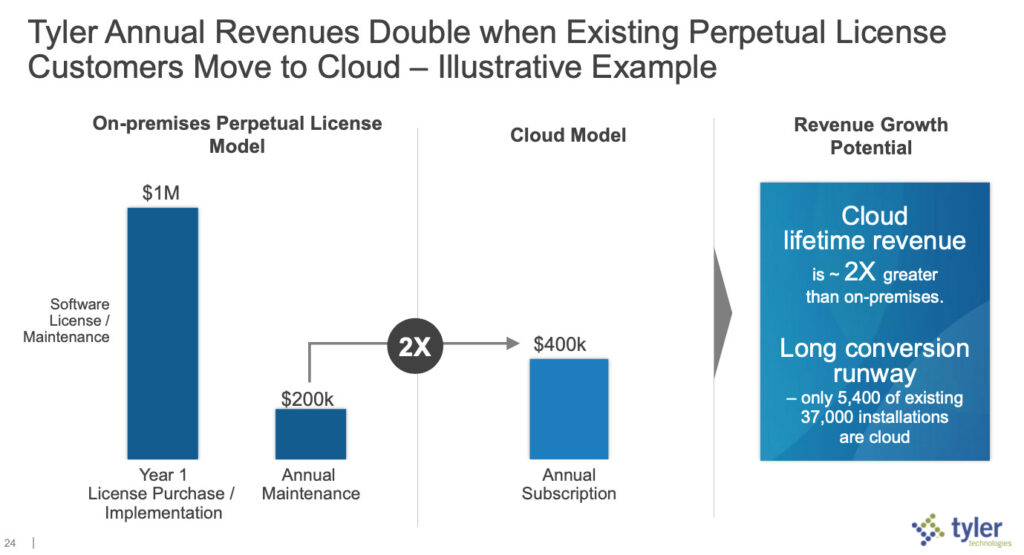
Tyler Tech offers two primary financial models for acquiring its software: transactional (perpetual licensing) and subscription (SaaS) pricing. The transactional model involves a significant one-time fee to purchase a perpetual license for the software. This grants your organization the right to use that specific version of the software indefinitely. However, this upfront cost is only part of the story. It is almost always accompanied by an annual maintenance and support fee, which is typically a percentage of the initial license fee (often 18-22%). This annual fee covers access to software updates, patches, and technical support.
In contrast, the subscription model, or Tyler Tech transactional pricing in its SaaS form, bundles the software license, hosting, maintenance, and support into a single recurring payment. This is usually billed monthly or annually. There is little to no large upfront cost, which can be appealing for organizations with limited capital budgets. The subscription fee is an operational expense (OpEx) rather than a capital expense (CapEx), which can have different implications for your accounting and budgeting processes. This model also ensures you are always on the latest version of the software without additional upgrade projects.
So, which model is better? The answer depends entirely on your financial strategy and IT capabilities. The transactional model often has a lower total cost of ownership over a very long period (e.g., 10+ years) if you plan to use the same software version for an extended time, though this is becoming increasingly rare due to rapid technological change. The subscription model offers greater predictability, reduces the burden on internal IT staff for maintenance and upgrades, and provides more flexibility to scale up or down. For most modern government agencies, the OpEx nature and included services of the subscription model make it the more attractive and manageable option despite the ongoing financial commitment.
Analyzing Tyler Tech Software Pricing Models
Beyond the broad transactional versus subscription dichotomy, Tyler Tech employs several specific pricing models tailored to different products and services. A common model is per-user licensing. This can be broken down into named users (a specific individual) or concurrent users (a pool of licenses that can be used by anyone up to a certain number at one time). For example, their ERP solutions might charge per named user for administrative staff, while public-facing portals might be priced based on the population size or expected transaction volume, which is a form of Tyler Tech transactional pricing.
Suggested read: The Complete Guide to Tyler Tech Software for Public Sector Success
Another prevalent model is modular pricing. Tyler’s ecosystem is vast, with products for case management, financials, permitting, and more. You typically purchase the core platform and then add on modules for specific functionalities. The cost escalates as you add more modules. Furthermore, for services like online payment processing or e-filing, Tyler often uses a pure transactional fee model. They charge a small fee for each transaction processed through their system. This can be a significant hidden cost if your agency processes a high volume of payments, so it is crucial to model this out based on your historical data.
Tyler also offers tiered pricing based on the size and complexity of the government entity. A small village will have access to a different product tier with a lower cost than a large metropolitan city. This tiering affects not only the software license cost but also the level of support and implementation services included. Understanding which tier your organization falls into is essential for benchmarking your quote against similar entities. Analyzing these models requires a detailed breakdown from Tyler’s sales team, and you should never accept a high-level summary quote. Demand a line-item breakdown to understand what each cost component represents.
Tips for Negotiating the Best Deal with Tyler Tech
Negotiating with a large vendor like Tyler Technologies requires preparation and strategy. First, never negotiate alone. Form a committee that includes representatives from finance, IT, and the end-user departments. This ensures all perspectives are considered and strengthens your bargaining position. Before entering negotiations, conduct thorough market research. Understand what other similar-sized jurisdictions have paid for comparable systems. Professional networks and organizations like the International City/County Management Association (ICMA) can be invaluable resources for this benchmarking.
Timing is also a powerful lever. If possible, initiate your procurement process toward the end of Tyler’s fiscal quarter or year. Sales representatives are often more motivated to close deals to meet quotas during these periods and may have more flexibility on price or additional concessions. Be clear about your budget constraints from the outset, but also be prepared to walk away if the deal does not meet your core requirements. This demonstrates that you are a serious buyer who has alternatives.
Focus negotiation not just on the sticker price but on the value-added components. You can often negotiate on the implementation timeline, training hours, data migration services, or the length of the contract. For subscription models, ask for a discount for committing to a longer-term contract, such as three years instead of one. For perpetual licenses, negotiate the percentage of the annual maintenance fee. Remember, get every concession and agreed-upon term in writing within the final contract. Verbal promises made during a sales pitch are not enforceable.
Understanding Additional Costs in Tyler Tech Pricing
The initial software quote is rarely the total cost of ownership. Many organizations are caught off guard by additional costs that emerge during and after implementation. The most substantial of these is typically implementation services. Tyler’s professional services team will configure the software, migrate your data, and train your staff. These services are almost always billed on a time-and-materials basis, separate from the software license itself. A complex implementation can easily see professional service fees that match or even exceed the cost of the software licenses.
Ongoing costs are another critical consideration. Beyond the annual maintenance fee for perpetual licenses or the subscription fee for SaaS, you must budget for internal costs. Do you need to hire additional IT staff to manage the new system? Will you need to purchase new hardware or upgrade your network infrastructure to support it? For cloud solutions, ensure you understand your bandwidth requirements. Furthermore, consider the cost of change management: training new employees, printing new forms, and the temporary dip in productivity as staff learns the new system.
Finally, be aware of potential future costs for add-ons, new modules, or increased usage. If your transaction volume grows, your fees under a Tyler Tech transactional pricing model will grow with it. If you need to add a new department to the system in a few years, you will face additional licensing and implementation costs. Proactively discussing these scenarios with your Tyler account manager and modeling the financial impact will prevent budgetary surprises down the road and help you plan for sustainable growth. The TechSoup website offers resources for nonprofits and public agencies on budgeting for technology, which can provide useful frameworks.
Case Studies: Real-world Examples of Tyler Tech Pricing
Examining how other entities have structured their deals provides invaluable context. Consider a mid-sized county with a population of 250,000 that recently procured Tyler’s integrated justice suite. Their total project cost was approximately $2.5 million over five years. This included a $800,000 upfront payment for perpetual licenses for the core system and key modules like court case management and jail management. They budgeted an additional $1 million for implementation services, data migration, and customization. Their annual maintenance fee is set at 20% of the license fee, amounting to $160,000 per year for ongoing support and updates.
In contrast, a small city of 30,000 residents opted for a SaaS model for Tyler’s Munis ERP system. They avoided a large upfront capital outlay. Instead, they pay an